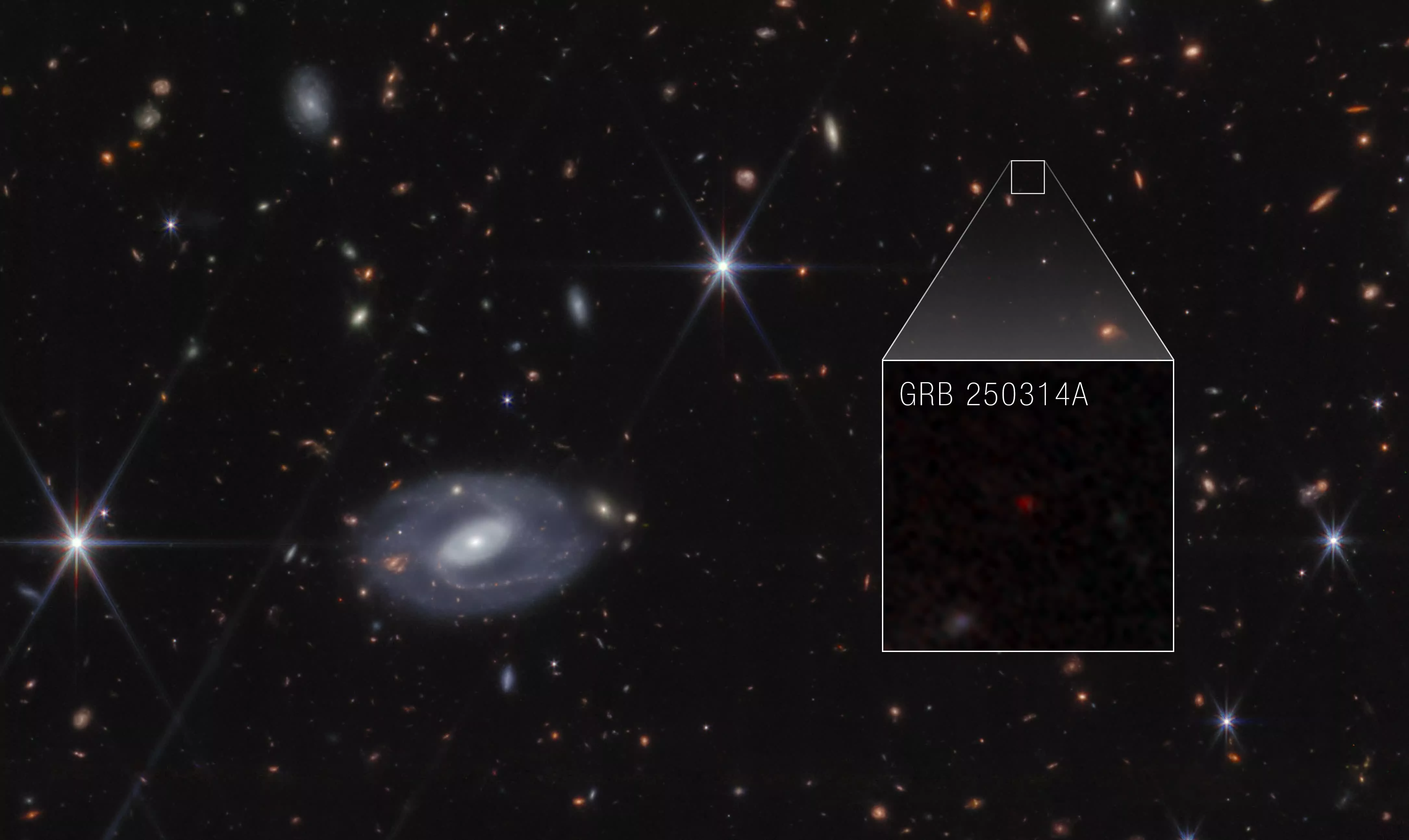
The big picture: NASA's James Webb Space Telescope recently managed to capture imagery of the oldest and farthest known supernova explosion – an event that occurred when the universe was just 730 million years old. For comparison, the previous oldest supernova burst ever captured happened at the 1.8 billion year mark.
The space agency said supernovas typically brighten rapidly over a period of several weeks before they slowly start to dim. This example, however, took months to brighten. Furthermore, because it occurred so early in the universe's history, light from the explosion stretched over time. The actual blast likely lasted around 10 seconds, NASA said.
The burst was first detected on March 14 by the space-based multi-band astronomical variable objects monitor, a Franco-Chinese telescope whose sole purpose is to detect what NASA describes as fleeting events. It took NASA less than two hours to pinpoint the source and soon, other observatories were also watching.
Astronomers waited until July to train Webb's near-infrared camera on the target as it was expected to be at its brightest at that point.
Remarkably, the space telescope was also able to locate supernova GRB 250314A's host galaxy. It shows up as a reddened smudge in the image and is only a few pixels large which limits how much we can learn about it. Still, the fact that the galaxy is visible at all is pretty incredible.
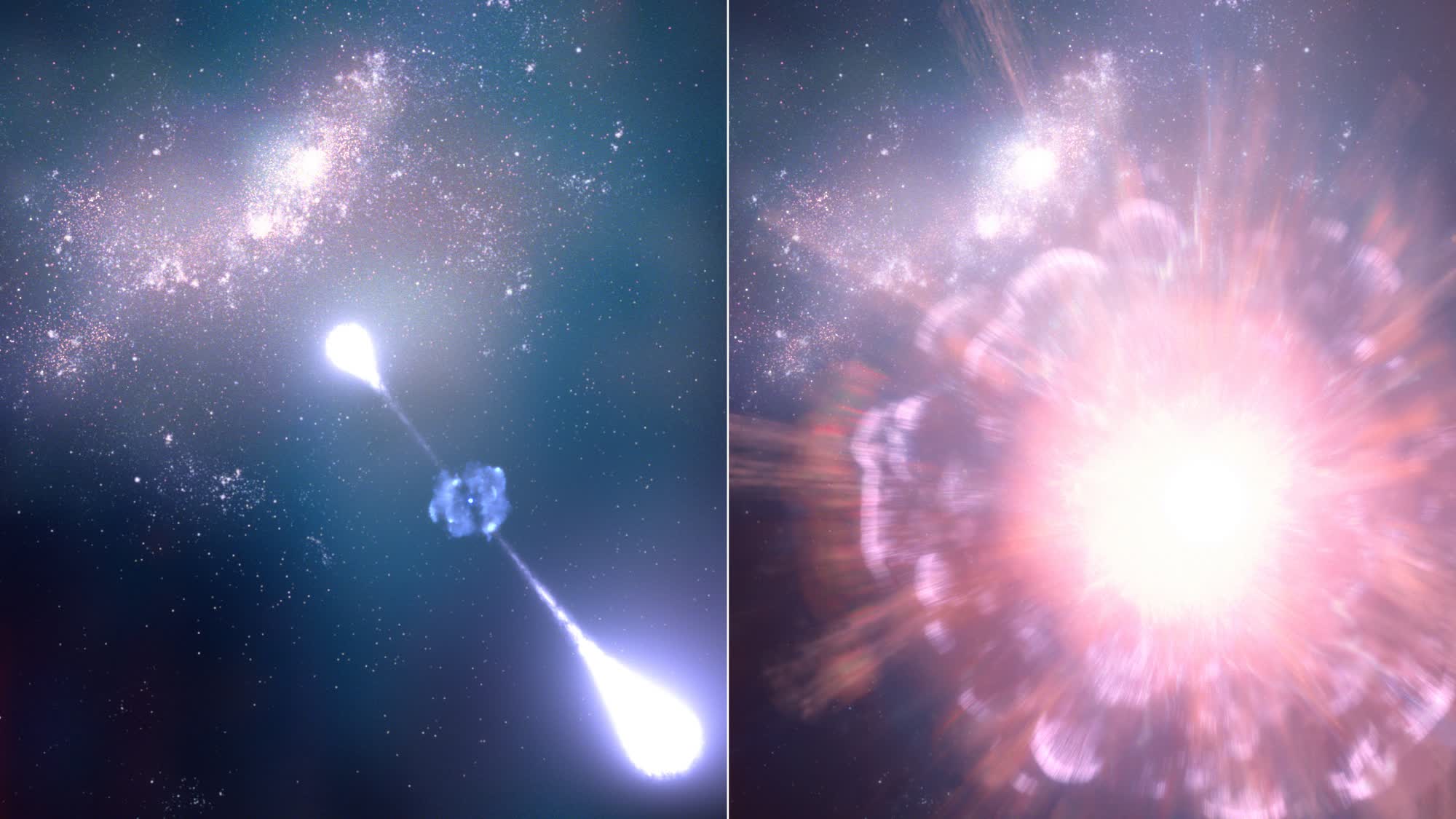
NASA compared supernova GRB 250314A to nearby supernovae and was surprised at the similarities between them. Not much is known about the first billion years of our world, but it is believed that early stars likely contained fewer heavy elements, were larger, and had shorter life spans. As such, astronomers expected to observe more differences than they found.
Ultimately, NASA and other curious onlookers will need more data to help pinpoint smaller differences between supernova GRB 250314A and others. Still, the data brings us one step closer to unlocking the mysteries of how the universe works.