
The big picture: The holidays are often considered the peak season for the video game industry, as consoles and games are frequently purchased as gifts. This year, however, has been less kind: both hardware and software sales in the US were down significantly in November.
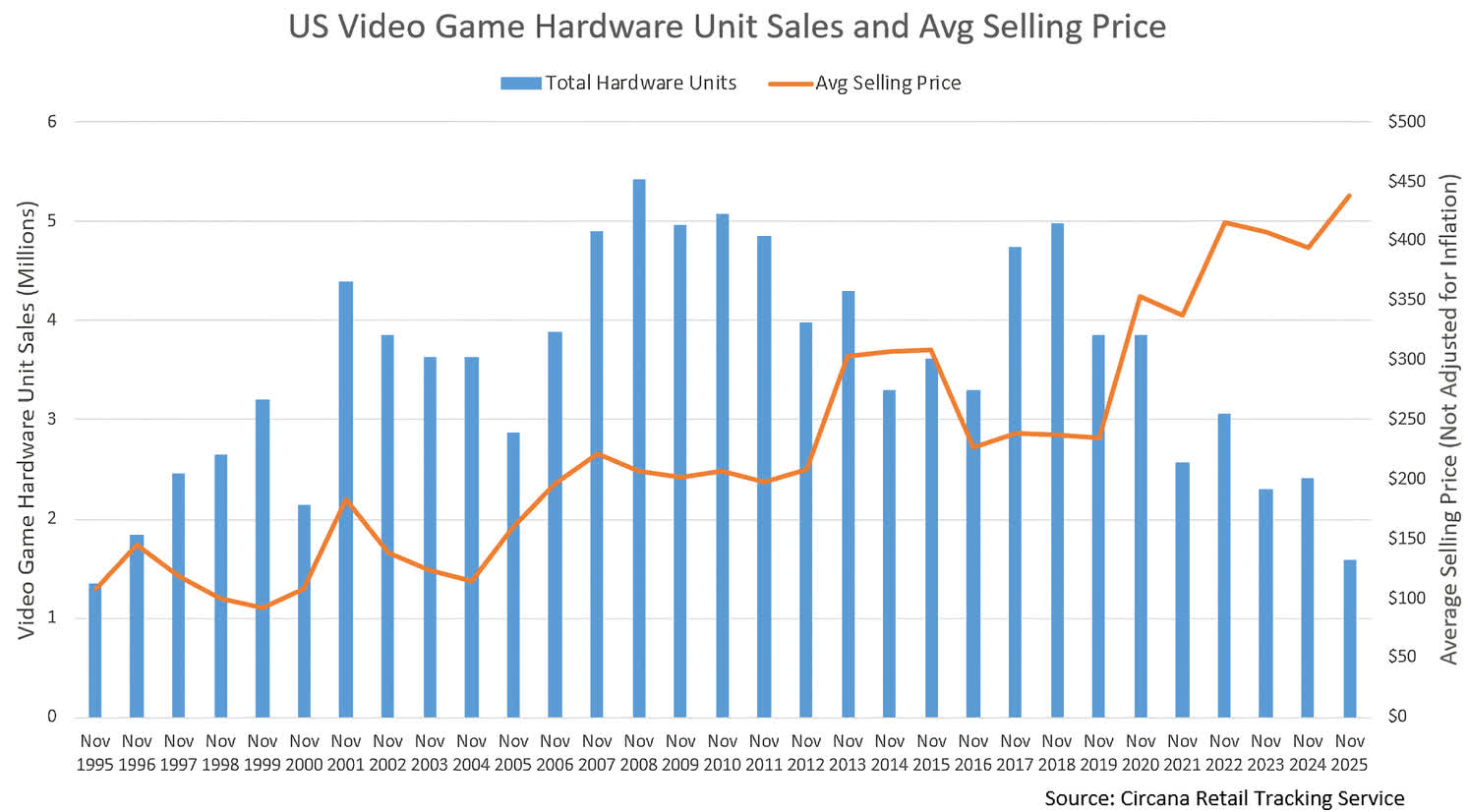
According to the latest data from Circana, monthly hardware spending in the US fell to $695 million last month – down 27 percent compared to the same period a year ago. It is the lowest November total for hardware sales in the US since 2005. Unit sales, meanwhile, slid to 1.6 million, the lowest since 1995.
One key takeaway, at least for manufacturers, is the fact that the average price paid for new video game hardware reached an all-time high of $439, an increase of 11 percent compared to a year ago.
Leading the way in the US was the PlayStation 5, both in terms of units sold and dollars generated, followed by the newly released Nintendo Switch 2. The Nex Playground finished third in unit sales while the Xbox Series took home the bronze in the revenue category thanks in part to price hikes a few months back.
Speaking of the Switch 2, Nintendo certainly deserves some praise for how it handled the console's launch. As Piscatella highlights, it is extremely rare for a successful new device not to suffer supply constraints heading into its first holiday sales period.

On the software side, content spending actually grew one percent to $4.8 billion in November, but that is largely thanks to a rise in subscription and mobile spending. Call of Duty: Black Ops 7 was the best selling game in November despite the fact that it's nowhere near as popular as last year's entry.
Physical software spending, meanwhile, was down 14 percent year-over-year, hitting a low that hadn't been previously seen since industry tracking began in 1995. I am personally still a fan of physical software, but perhaps I'm in the minority now?
Image credit: Curated Lifestyle, Petar