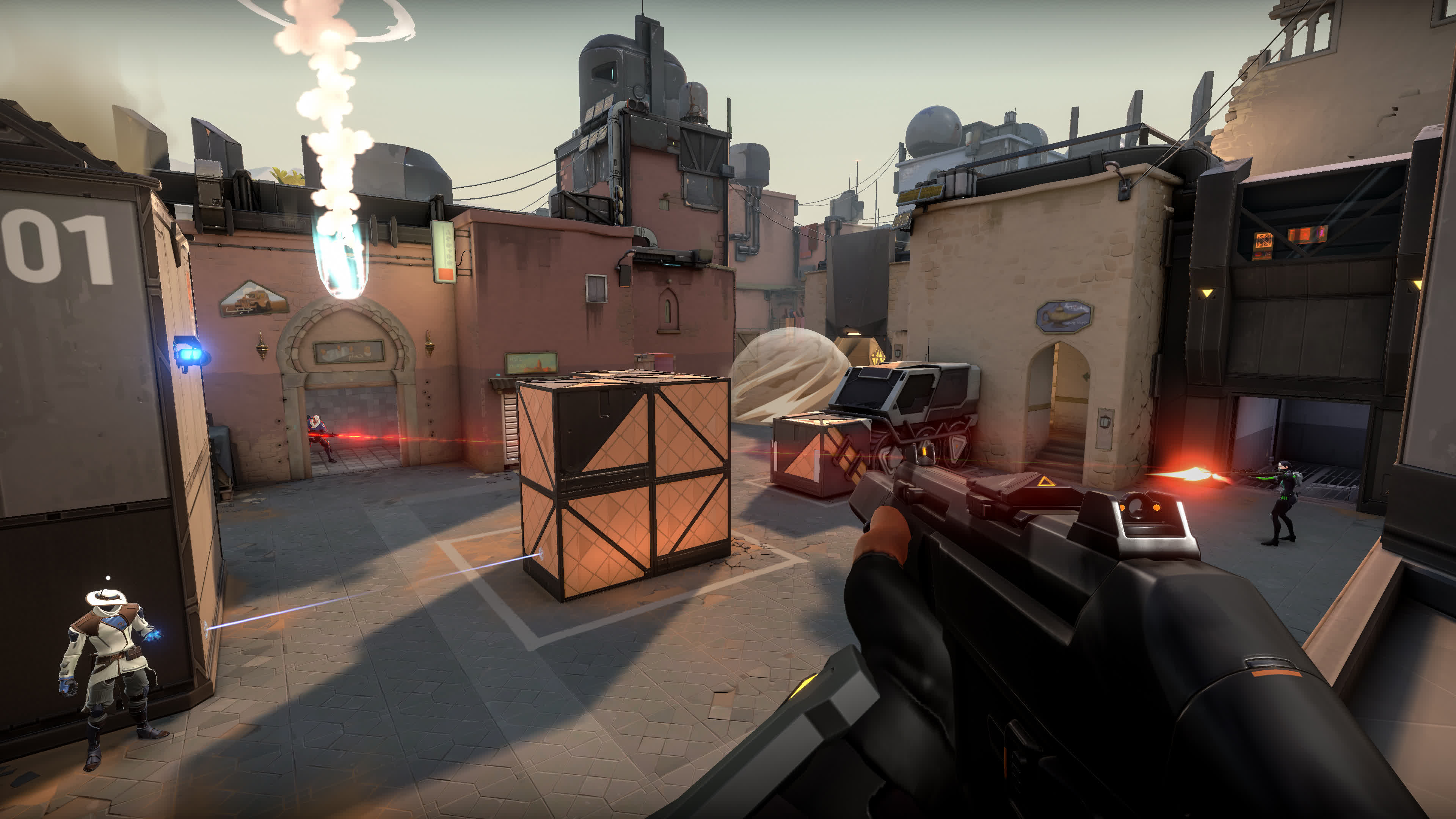
WTF?! Vanguard is possibly the most intrusive anti-cheat system ever released for gaming. Developer Riot Games insists it is an essential requirement for playing its free-to-play titles, and now the company is asking gamers to update one of the most sensitive components in their PCs just to keep doing so.
The push follows Riot's disclosure of a critical flaw it uncovered in several popular motherboard models. The vulnerability can be exploited by well-funded cheaters targeting Valorant, prompting Riot to effectively mandate a UEFI firmware update for all players at once.
According to Riot's engineers, the issue lies in how UEFI firmware initializes the system's Input-Output Memory Management Unit (IOMMU). The IOMMU is intended to protect against Direct Memory Access (DMA) attacks before the operating system boots, using a feature known as Pre-Boot DMA Protection. In theory, this prevents DMA-based cheating devices from accessing or manipulating Valorant's memory once Windows has loaded.
In practice, however, Riot found that the protection was improperly initialized. While the firmware reported to the operating system that Pre-Boot DMA Protection was active, it wasn't actually providing effective defense against DMA-based hardware cheating devices.
Valorant relies on Vanguard, Riot's much-debated kernel-level anti-cheat system, to protect its online games. Vanguard has long been controversial, largely because it requires players to enable a range of hardware-level security features simply to participate in online matches. Now, Riot is extending those requirements further by enforcing UEFI firmware updates to address the IOMMU and pre-boot DMA vulnerability.
Riot says it identified the flaw earlier this year and collaborated with major motherboard manufacturers to resolve it. The company points to newly released UEFI updates from Asus, Gigabyte, MSI, and Asrock, claiming that installing the updated firmware ensures the boards' advanced security features activate properly shortly after power-on.
From Riot's perspective, the mandatory update is a net positive and part of a broader, non-negotiable security baseline designed to curb cheating. DMA-based cheats require costly hardware and direct access to the PCIe bus, making them relatively uncommon compared to software-based alternatives.
Still, the approach raises concerns. Forcing users to update firmware just to launch a game feels like a step too far. UEFI firmware is a foundational component of any modern PC setup, and it's not something most users should update casually. If a system is functioning as intended, there's often little reason to intervene. For normal consumer PCs that don't require tightly locked firmware configurations, older UEFI versions can remain perfectly viable.
Firmware updates also carry real risk. A failed update can leave a system permanently unusable, with no easy path to recovery. For many gamers, the prospect of potentially bricking their hardware to satisfy an anti-cheat system – one that already behaves more like malware than a typical game component – is a trade-off that's increasingly hard to justify.