In context: NASA estimates that a single galaxy may harbor trillions of rogue planets. These starless worlds drift alone through interstellar space and have no parent star. They remain challenging to detect using conventional astronomical methods, making each discovery a rare glimpse into planetary formation.
Two separate research teams have observed a previously unseen microlensing event, confirming the existence of a particular type of rogue planet. The event – designated KMT-2024-BLG-0792 by the Korea Microlensing Telescope Network (KMT) and OGLE-2024-BLG-0516 by the Optical Gravitational Lensing Experiment (OGLE) – was likely caused by a wandering exoplanet slightly smaller than Saturn.
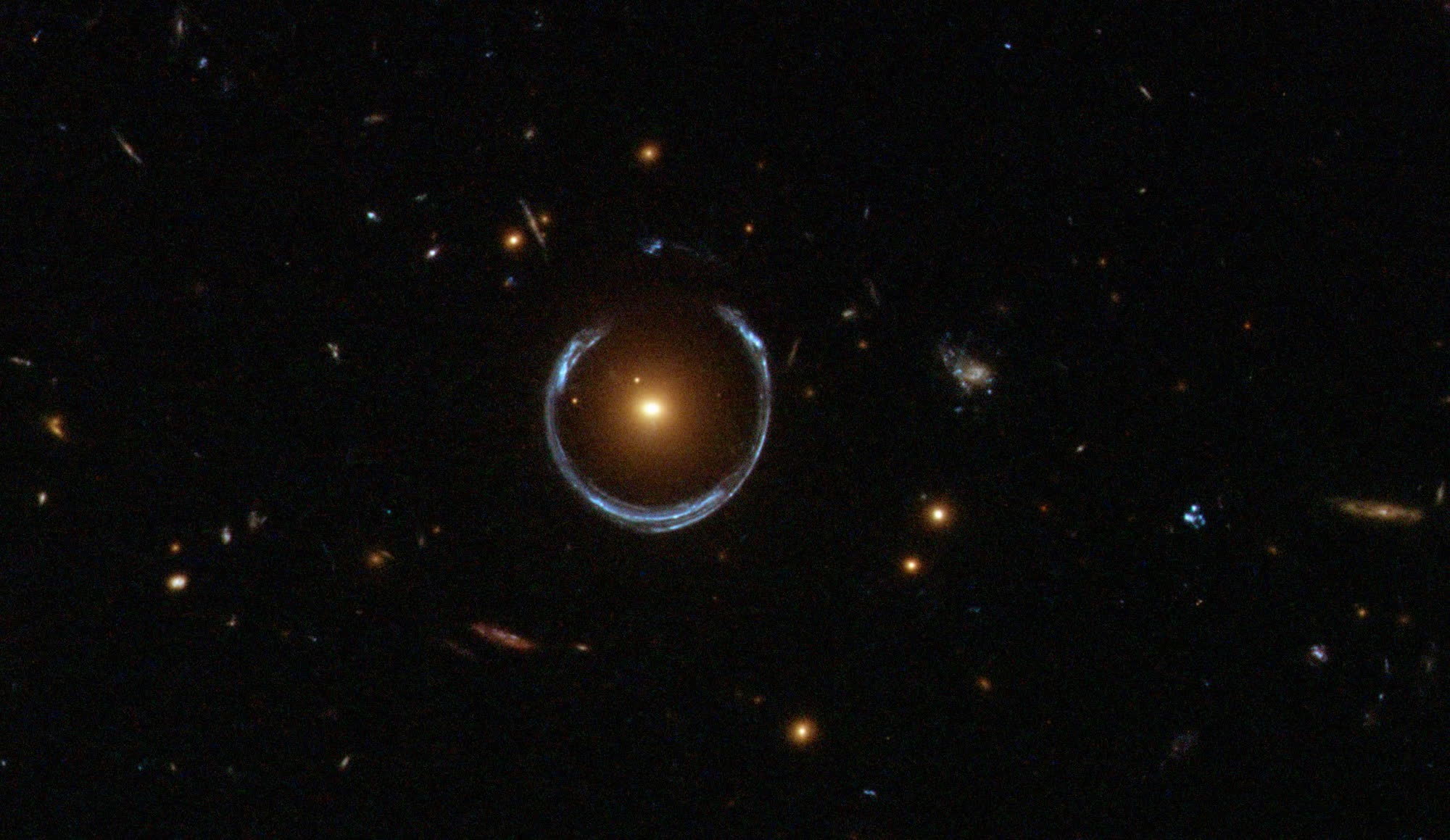
Gravitational microlensing occurs when the brightness of a background star is subtly altered by a foreground object passing along the observer's line of sight. Ars Technica notes that when a planet and star align from Earth's perspective, microlensing can also produce a circular ring of light known as an Einstein ring.
Rogue planets are notoriously elusive, but astronomers have already identified a few. Current research suggests that starless planets can form in two ways. The first occurs through the same process that creates stars, as gas and dust collapse into a single gravitational center. The second type forms within a protoplanetary disk around a young star – the process that likely created the Solar System. After the planetary system develops, a passing star or other disruptive event can eject one or more planets from their orbits, sending them on a solitary journey through interstellar space.
So far, astronomers have detected a few Jupiter-sized rogue planets of the first type. However, this newly reported microlensing event involves a much smaller planet. The OGLE/KMT observation likely represents the first time scientists have spotted an exoplanet ejected from its original star system.
The researchers combined data from the two ground-based telescope networks with space-based observations from ESA's Gaia telescope to estimate the rogue planet's mass. The object lies in the so-called "Einstein desert," a gap between the two known formation pathways for rogue planets.
The KMT team estimates a 27 percent chance of detecting a Saturn-sized exoplanet even if the Einstein desert does not exist. Rogue planets remain a challenging area of study, meaning further observations are needed to reach reliable conclusions.