
The takeaway: The global smartphone market grew for the second consecutive year, finishing 2025 with modest but still positive growth of two percent year over year. According to Counterpoint Research, premiumization brought about by successful marketing campaigns and flexible financing options helped drive growth last year, in addition to increased adoption of 5G devices in emerging markets.
Tariffs were expected to have a significant impact on the market. Many OEMs frontloaded shipments in the first half of the year to help soften the blow but as the year progressed, they proved not to have much of an impact on the smartphone industry.
Shilpi Jain, a senior analyst with Counterpoint, said the market as a whole continued shifting toward higher-priced devices as consumers increasingly opt for premium devices.
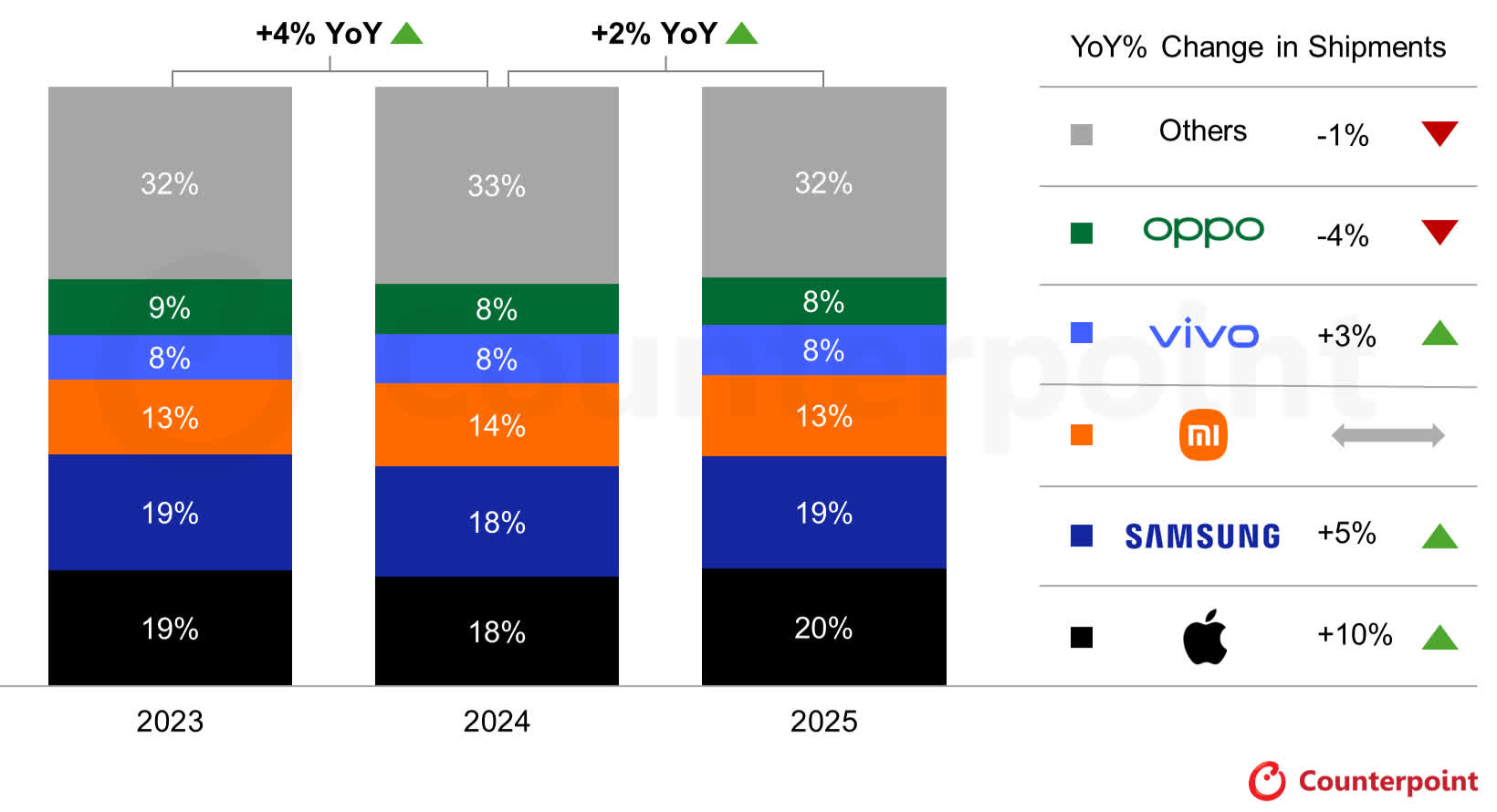
Apple led the pack in 2025, accounting for 20 percent of all smartphones shipped worldwide. The company's iPhone shipments increased 10 percent YoY – the highest among the five leading brands. The iPhone 17 was a strong performer in Q4 in established markets following launch, while the iPhone 16 continued to shine in regions like India, Japan, and Southeast Asia. Momentum was also fueled by the Covid-era replacement window shrinking.
Samsung narrowly trailed with 19 percent market share and five percent YoY shipment growth. The South Korean firm leaned on its affordable Galaxy A series in the mid-range and Galaxy Fold7 and S25 models in the premium segment.
Xiaomi captured third place, accounting for 13 percent of smartphone shipments last year. The Chinese tech titan benefited from a balanced product portfolio and strong demand in emerging markets, and was also able to manage shipments effectively to counter industry headwinds. Vivo, another Chinese brand, finished in fourth place with eight percent of global shipments.
Two others outside of the top five – Google and Nothing – also had strong performances in 2025.
Looking ahead, Counterpoint expects the market to soften in 2026 amid rising component costs and continued memory shortages. As a result, the firm revised its yearly forecast and reduced shipment estimates by three percent.
Image credit: Kuaileqie Re