
Connecting the dots: If there's one thing governments don't want in their Chinese embassies, it's a concealed underground chamber located near some of their most sensitive communications cables. But according to a new report, that's Beijing's plan for China's new "super embassy" in London.
The Telegraph reports that it has seen plans for the Chinese embassy complex, which is planned for the former Royal Mint Court near the Tower of London. Redacted versions are available to the public, but the publication claims it has uncovered unredacted documents.
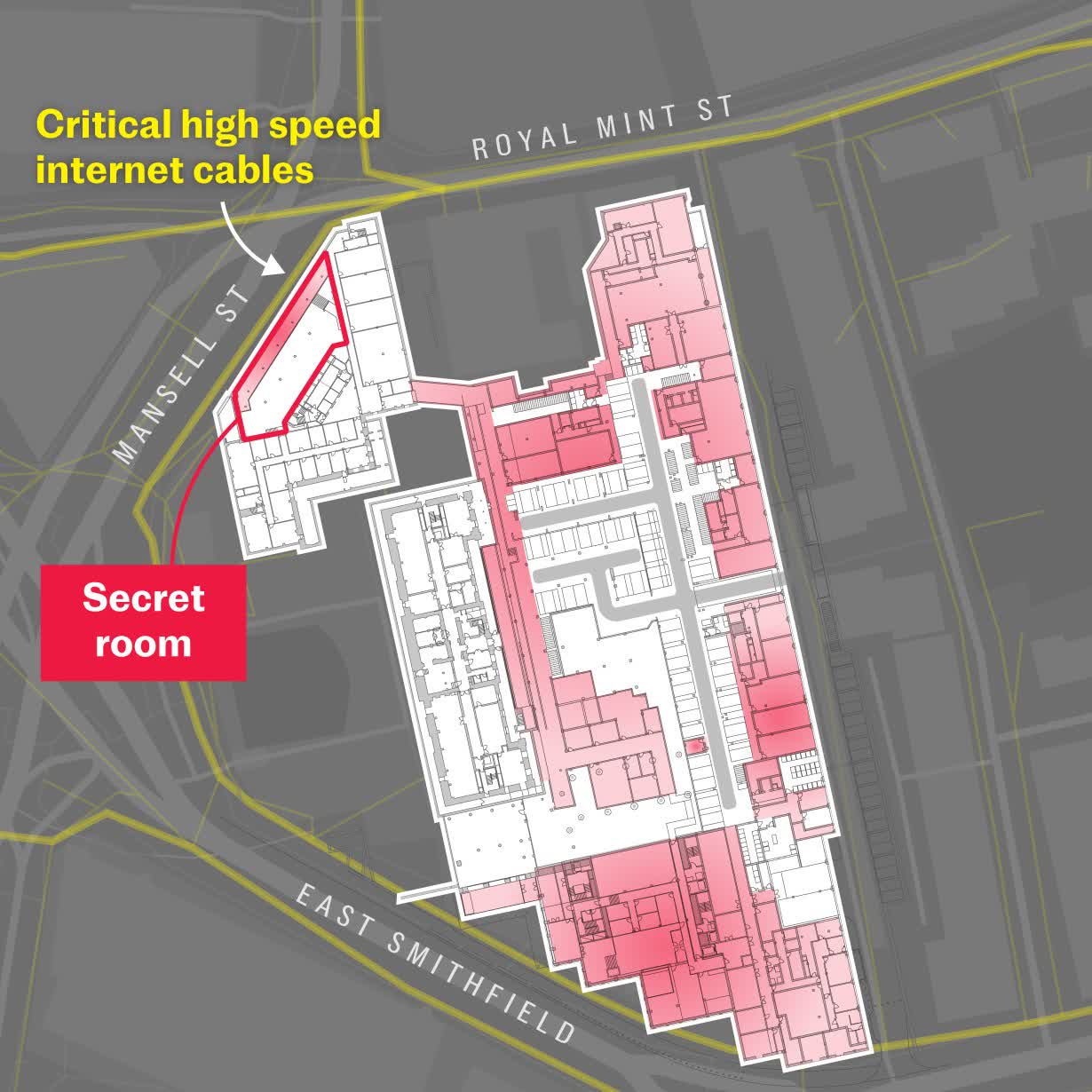
The drawings show a basement area situated close to major fiber-optic cables that carry government, financial, and international communications to the UK's capital city. Critics have seized on the allegation, branding it a potential "spy basement."
The room is also fitted with hot-air extraction systems, suggesting it will have heat-generating equipment installed. While this could be computers and other hardware used for spying, the report admits that it could equally be a café or gym.
🚨 The Telegraph obtains unredacted plans showing how close the underground complex will come to cables carrying sensitive British financial data
– The Telegraph (@Telegraph) January 12, 2026
Look at the uncovered plans below ⬇️https://t.co/DO35bujFP2 pic.twitter.com/CPxYvnPuWU
The Telegraph adds that contractors plan to demolish and rebuild a basement wall directly beside the fiber-optic cables, owned by companies such as BT Openreach, Colt Technologies, and Verizon Business.
With the cables carrying data to and from London's financial hub and connecting to 11 data centers that form part of the London Internet Exchange, the concern is that China could use the room's close proximity to tap the cables for surveillance purposes.
Opposition politicians and former intelligence officials have renewed calls for the UK government to block or reassess the development. They argue that allowing extensive subterranean facilities at such a sensitive location could create opportunities for espionage, whether through signal interception, physical access, or future modifications that are difficult to monitor.
China's embassy plans were first approved by Tower Hamlets Council in 2022 but were later "called in" by the UK government for further review, citing national security considerations.
Chinese officials have repeatedly dismissed espionage accusations surrounding overseas diplomatic sites as "groundless" and politically motivated. In previous statements, Beijing has said the London embassy project is intended to improve consular services and accommodate growing diplomatic needs, not to conduct surveillance.
The report itself concedes that the true purpose of the alleged chamber is unclear – a few assumptions are being made. Large embassies often include extensive underground areas for mundane reasons such as secure storage, utilities, parking, or blast protection.
The UK government said "government security experts have been involved throughout the process so far," and that security implications of the planning application have been identified and addressed. Meanwhile, cable operator BT Openreach said it has robust security measures in place and has worked with the government to protect its assets.