Editor's take: Microsoft's push to turn Windows into a showcase for generative AI and chatbots is colliding with a far more immediate concern: reliability. Over the past two years, users have been forced to wade through a steady stream of increasingly unstable Windows updates, raising uncomfortable questions about whether Microsoft's focus on AI is coming at the expense of the operating system millions still depend on every day.
Microsoft rolled out the latest cumulative updates for Windows on January 13, 2026. Soon after installing the patches, users began reporting erratic behavior on both home PCs and enterprise systems. To its credit, Redmond moved quickly, issuing several out-of-band (OOB) updates intended to fix problems introduced during this month's Patch Tuesday cycle.
Despite the millions of unpaid beta testers checking the latest code changes through the Windows Insider program, Windows reliability continues to be a contentious issue and an untangled mess of broken functionality. In January, Microsoft acknowledged two major new problems affecting an unknown number of users still clinging to its proprietary "agentic OS."
The first issue involves the inability to access Azure Virtual Desktop and Windows 365 cloud services. After installing the January update, remote desktop connections began failing. The second problem affects devices protected by Secure Launch, a virtualization-based security feature designed to guard against firmware-level threats. On these systems, shutdown and hibernation stopped working properly, instead triggering repeated restarts.
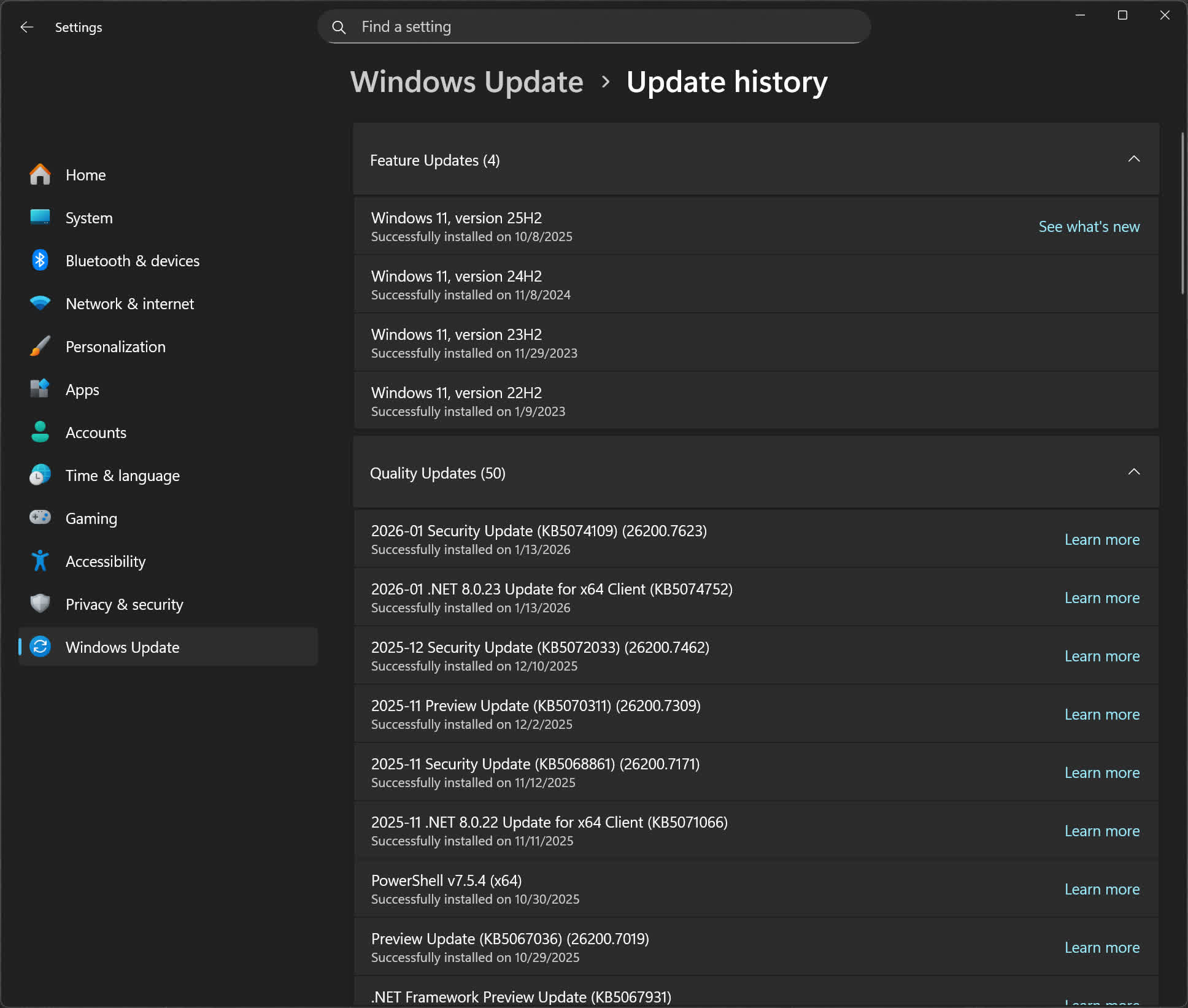
Both issues are likely affecting a large number of users, prompting Microsoft to release stand-alone fixes rather than waiting for next month's Patch Tuesday. The company published six different OOB updates for supported versions of Windows 11 (23H2 through 25H2), Windows 10 (22H2), and Windows Server versions from 2019 through 2025. These updates are currently available as standalone downloads via the Microsoft Update Catalog, but they are expected to be folded into the February 2026 update cycle.
A broken cloud connection or a system that refuses to shut down would be frustrating enough on its own, but the problems with January's Patch Tuesday didn't end there. Users have also reported additional issues, including Outlook failing to launch, black screens, and other reliability glitches.
The sad state of Windows development continues to fuel debate, with a growing minority of PC users openly frustrated by how Microsoft now treats its flagship operating system.
The company recently predicted that AI models will soon generate most software code, with CEO Satya Nadella claiming that up to 30% of Microsoft's own projects are now "vibe coded" using AI.
In response, some angry users have adopted the nickname "Microslop," but Nadella would very much like you stop using the slop word to fully embrace the hallucinated AI paradigm.