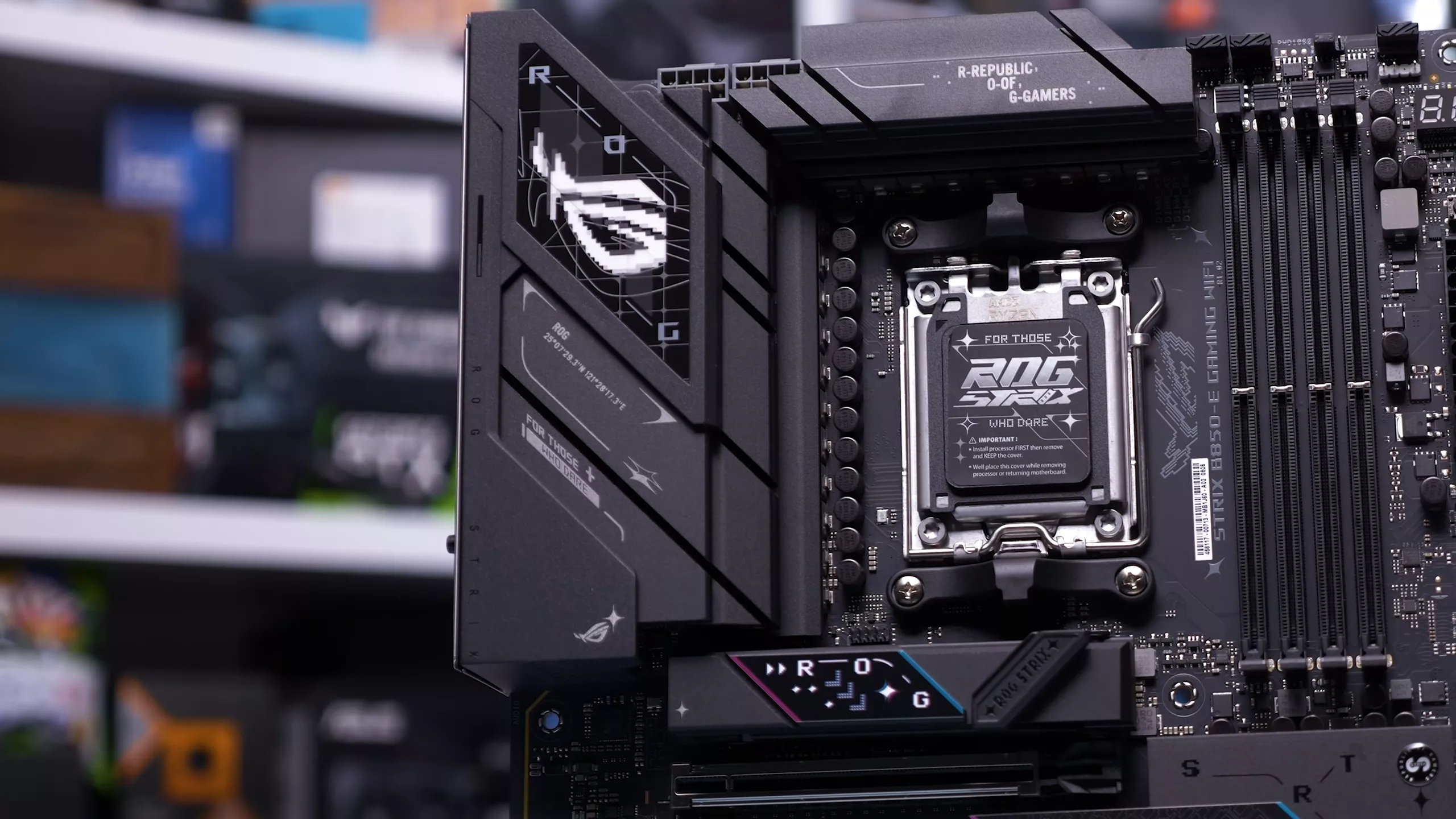
In a nutshell: It seems Asrock isn't the only one whose motherboards have been causing Ryzen 9000 CPU failures. Asus says it has started an internal review after several reports of Ryzen 7 9800X3D CPUs dying in its 800-series mobos.
There have been at least five documented cases over the last two weeks of Ryzen 7 9800X3D systems that have stopped posting on Asus AM5 boards, including B850 and X870E models – though some reports go back to the 9800X3D's launch.
According to the reports, the problem involves the systems running normally until a reboot, waking the PC from sleep, or another desktop action causes a black screen and the board showing the 00 error code. This indicates that the system is not detecting the CPU or has failed to wake up. The usual troubleshooting steps don't fix the problem, either.
The age of affected systems ranges from one year to a new build that was a couple of days old.

Now, Asus has responded to the Ryzen 7 9800X3D CPU incidents by conducting an internal review. "Our teams are conducting preventive checks on product compatibility and performance, working closely with AMD to validate reported cases and ensure ongoing stability and quality," the company wrote.
"We are looking to provide timely solutions to ensure our products and services meet expected standards."
Asus advises users of AMD 800-series motherboards to update to the latest BIOS via ASUS EZ Flash or BIOS Flashback to help ensure system stability. It adds that any customers who are affected should contact Asus customer service.
Last year saw more than 100 cases of Ryzen 9000 chips failing in Asrock motherboards. In one case, the company blamed debris in the CPU socket for the problem, but an exec later admitted that the issue relates to Asrock's BIOS settings, and that it isn't an AMD fault.
An Asrock rep said at the time that the failures were due to the Electric Design Current (EDC) and Thermal Design Current (TDC). Essentially, it was an amperage problem in the Precision Boost Overdrive (PBO) settings. Asrock said these had been set too high for early CPU samples.
The number of cases involving Asus boards is quite low compared to how many people are using Ryzen 7 9800X3D CPUs with the company's boards, but Asus obviously feels it's enough to warrant investigating. Given some of the controversies it's been involved in over the years, Asus won't want another PR black eye.