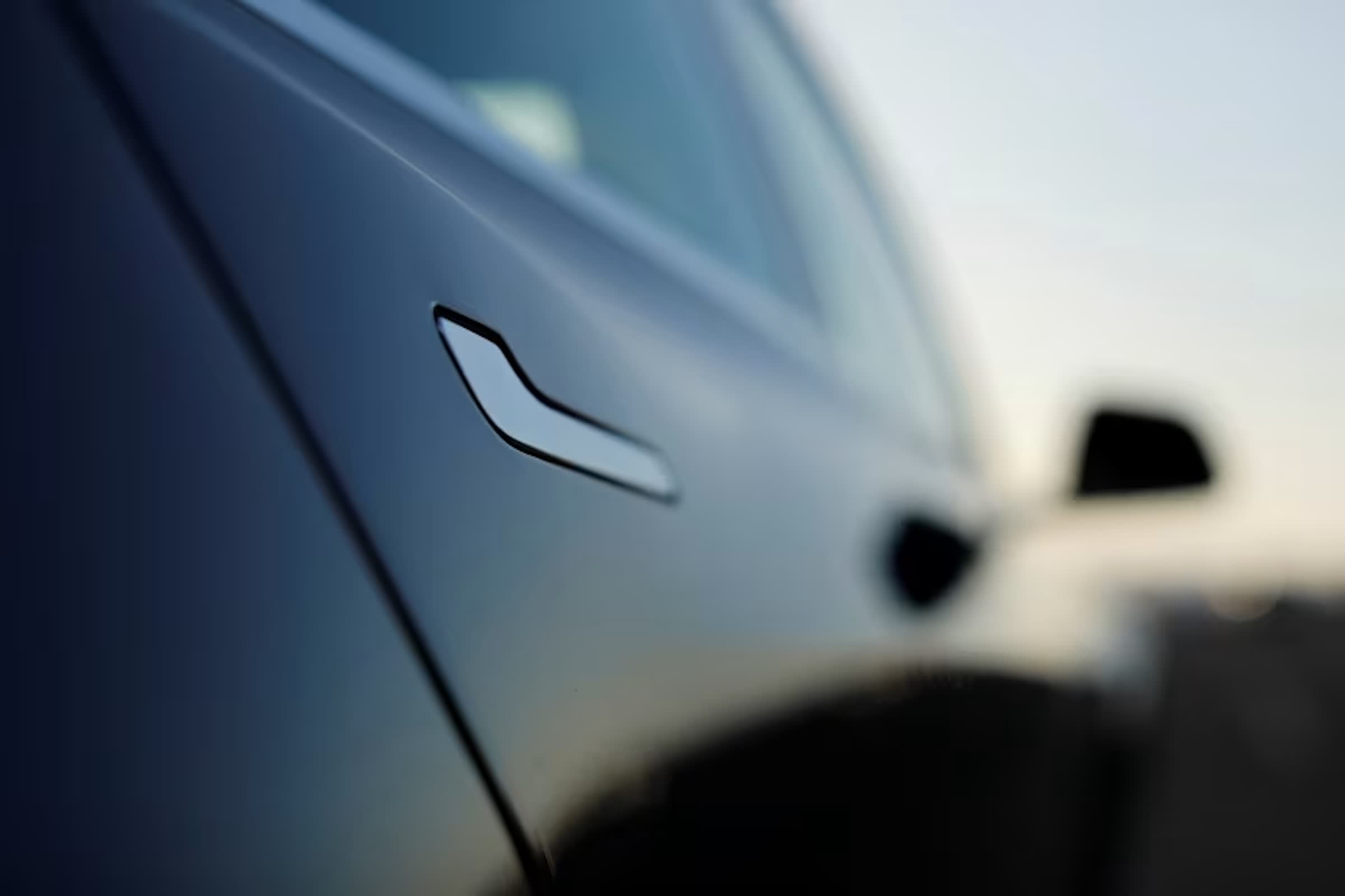
Crystal ball: Flush door handles, a hallmark of modern electric vehicles, are now officially outlawed in the world's largest car market. Chinese regulators have ruled that all new cars sold after January 1, 2027, must include door handles with a defined recess large enough for a person's hand to grip. The decision marks the first national ban of its kind, targeting a feature once celebrated for its clean lines and aerodynamic efficiency.
The new standard stems from growing safety concerns. While retractable or hidden handles improve airflow and aesthetics, they can become a deadly obstacle in emergencies.
China's Ministry of Industry and Information Technology concluded a year-long review into whether such mechanisms meet safety standards, ultimately deciding they pose unacceptable risks. The change echoes global scrutiny over similar incidents – particularly in Tesla vehicles – where malfunctioning or unpowered handles prevented rescuers from reaching trapped occupants.
To eliminate those failures, China's new regulations leave little room for interpretation. Car doors must include a recessed space at least 2.4 inches wide, 0.8 inches tall, and 1 inch deep. Handles can still be semi-flush, but they must be mechanically operable without requiring battery power or special tools.
In crash scenarios that trigger airbags or battery fires, doors on the non-impact side must open from the outside, while every interior door must feature a mechanical release positioned where occupants naturally reach.
For automakers, compliance will be a complex retrofit. Companies introducing new models after 2027 must adhere immediately, while existing vehicles already approved for sale have until January 1, 2029, to comply.

That transition window will affect major global brands as well as domestic players. Tesla's rear-door designs in some model years cannot be opened without tools, and BMW's soon-to-launch iX3 for the Chinese market will also need reconfiguration. Local EV giants – including Xiaomi, Nio, Li Auto, and Xpeng – face similar redesigns.
Even supercar makers known for sculpted minimalism aren't exempt. Unless regulators carve out a low-volume exception, Ferrari, McLaren, and other boutique brands will need revised door systems to maintain access to China's lucrative market.
Given China's significance to global auto manufacturing, these standards are unlikely to stay contained. Multinational OEMs may find it more efficient to adopt compliant handles across all production lines, effectively ending the era of fully flush exterior handles.