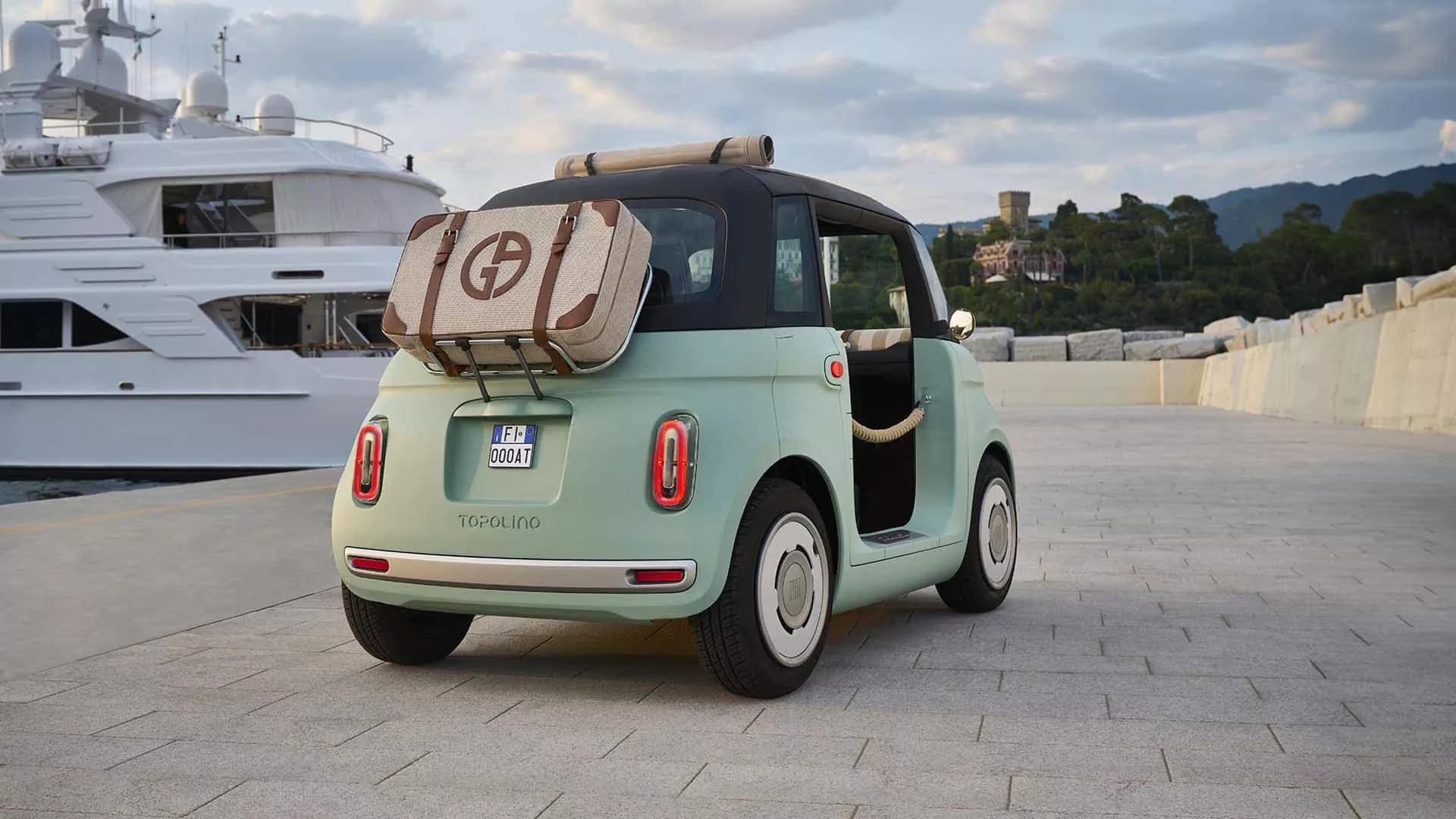
TL;DR: Earlier this month, Stellantis opened US orders for the Fiat Topolino, an electric micro-car that starts at $13,995 before a mandatory $990 destination fee, for an out-the-door price of $14,985 before tax. That makes it the least expensive new vehicle sold in America today, undercutting even the base Nissan Versa by more than $2,000.
To put $14,985 in perspective: it's less than cycling enthusiasts pay for a top-tier carbon road bike, and it's roughly half of what the average American paid for a three-year-old used car in early 2026, according to Edmunds data.
The Topolino is also small enough that its footprint is close to that of the cargo bed on a full-size pickup truck.
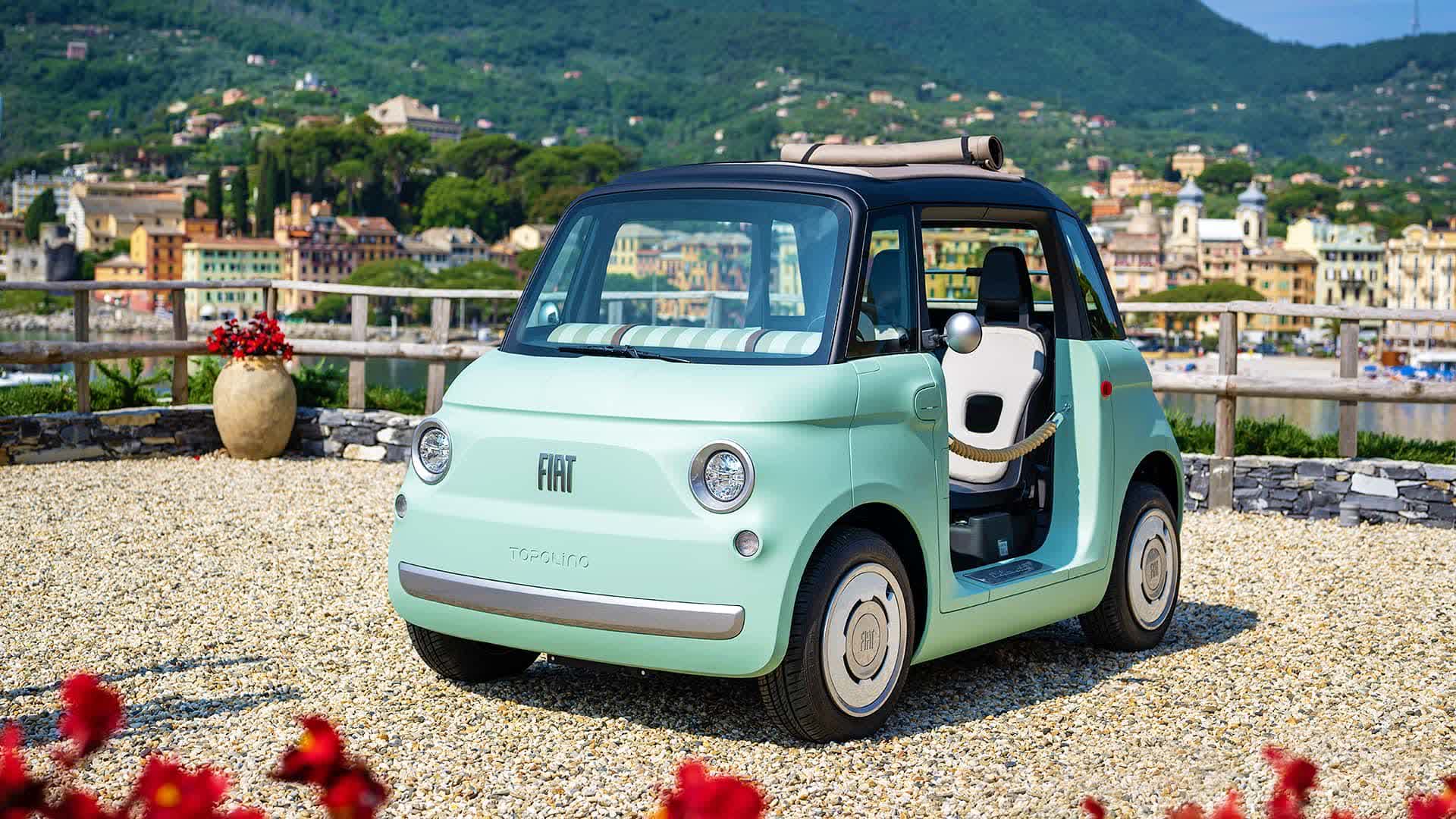
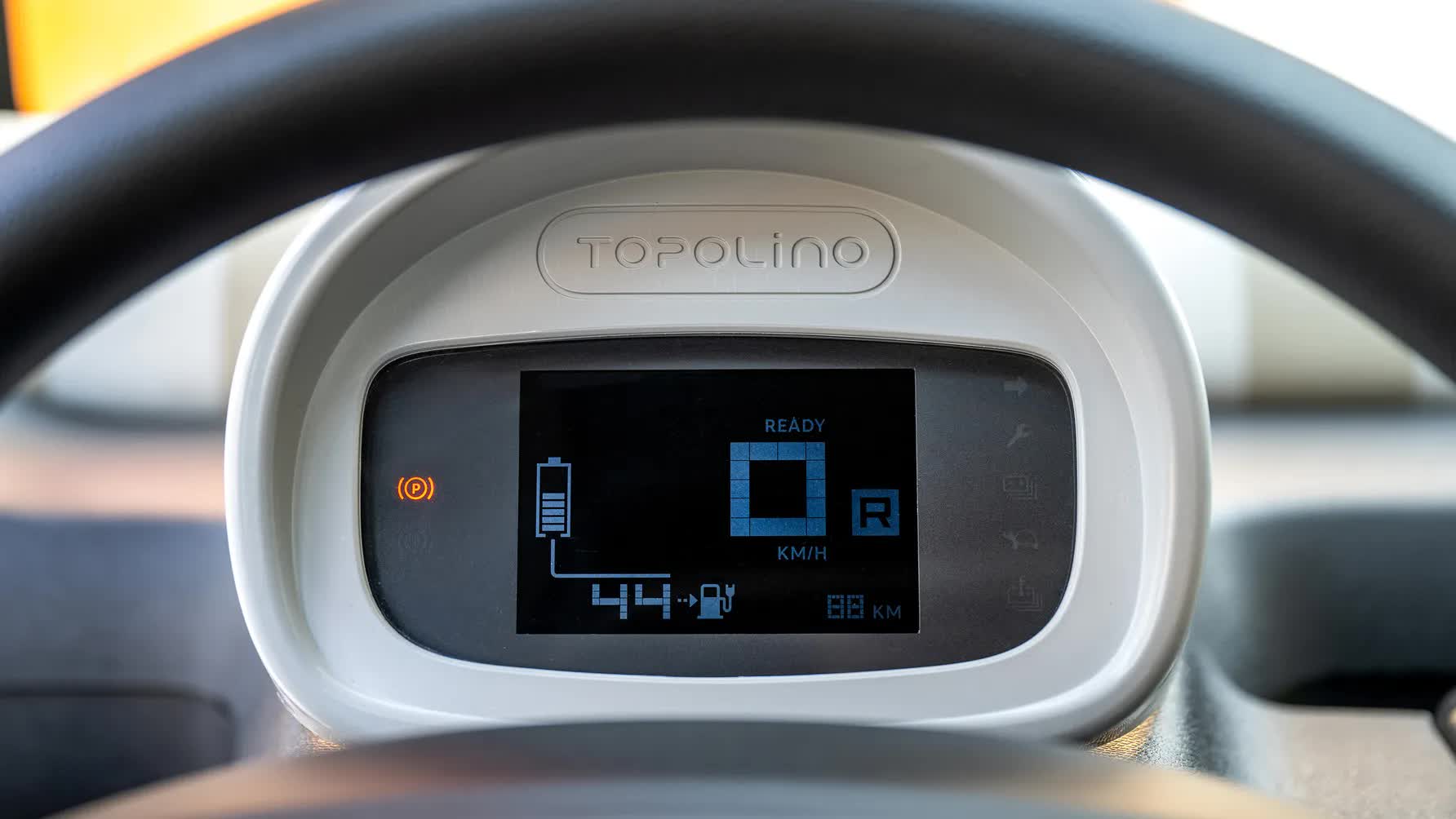
Now, legally, the Topolino isn't a car. Fiat describes it as a "compact, low-speed, on-road vehicle," and in Europe it's classified as a quadricycle, a category that sits closer to a golf cart than to a Fiat 500e in the eyes of regulators. It's a two-seater with a single 8 hp motor, a 5 kWh battery, 46 miles of range, and a 19 mph top speed.
A full charge takes about five hours off a standard AC outlet; there's no DC fast-charging, because nothing this slow needs it.
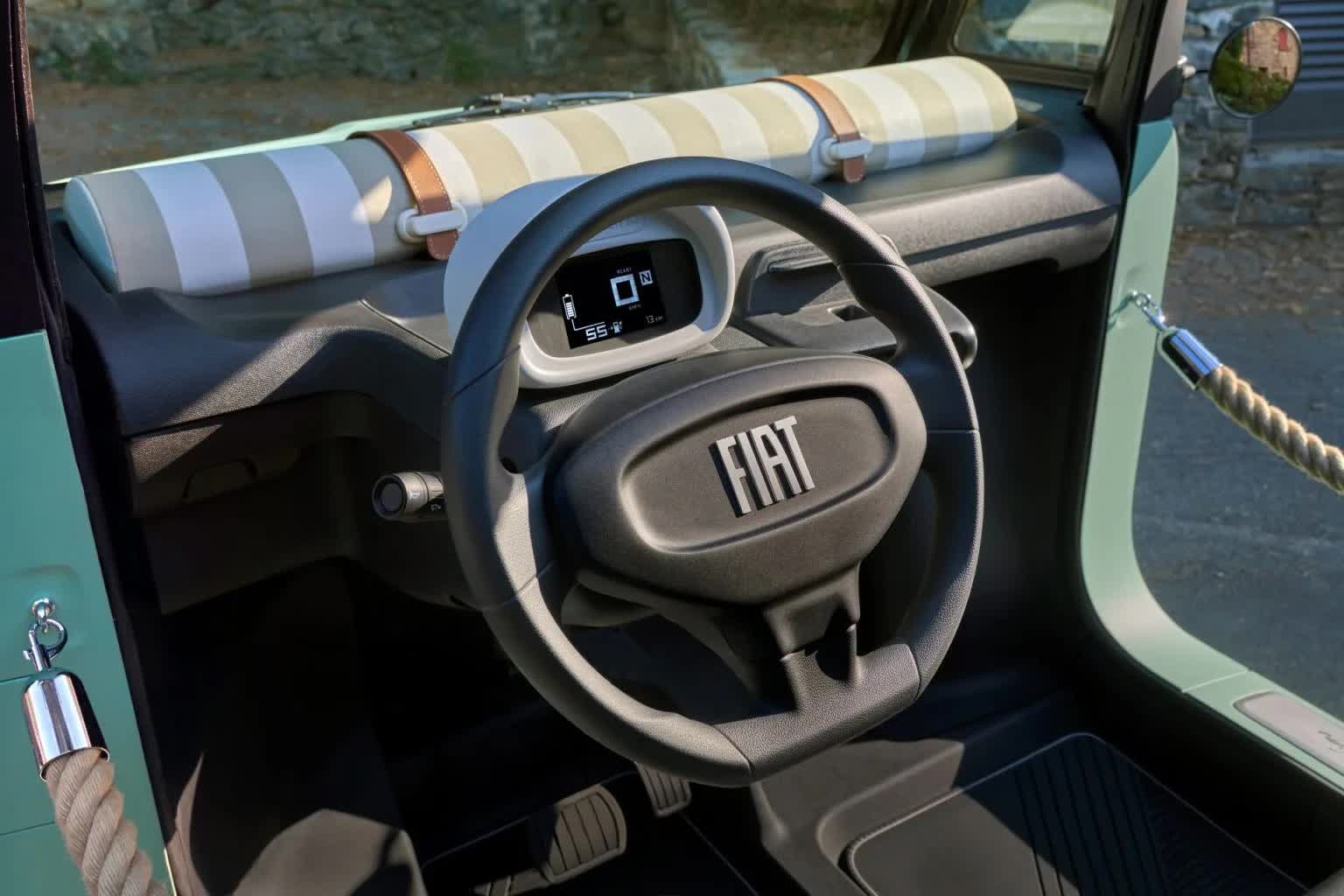
That low top speed is also why you can't drive one on public roads just yet. Topolinos arriving to the US are restricted to private property like gated communities, resorts, beach towns, and the like. Fiat says a free conversion kit is coming by the end of summer, adding a backup camera, rearview mirror, and pedestrian-alert system, and raising the top speed to 25 mph, enough to qualify as a federally recognized Low-Speed Vehicle on roads posted 35 mph or under. Highways are off-limits by design.
None of this hardware is new, either, and it isn't even a Fiat exclusive. Strip away the retro Italian styling and it's running the same platform, the same motor, and the same lithium-ion battery pack as the Citroën Ami and the Opel Rocks Electric, all three assembled at Stellantis's plant in Morocco.
Citroën's version leans utilitarian, Opel's is close to a straight reskin, and Fiat's got the most extensive redesign of the three: rounder headlights, pastel color options, and customization gear. The Ami's been on sale since 2020, three years before the Topolino, and in France, all three can be legally driven without a full license from age 14, since regulators there classify them as quadricycles rather than cars.
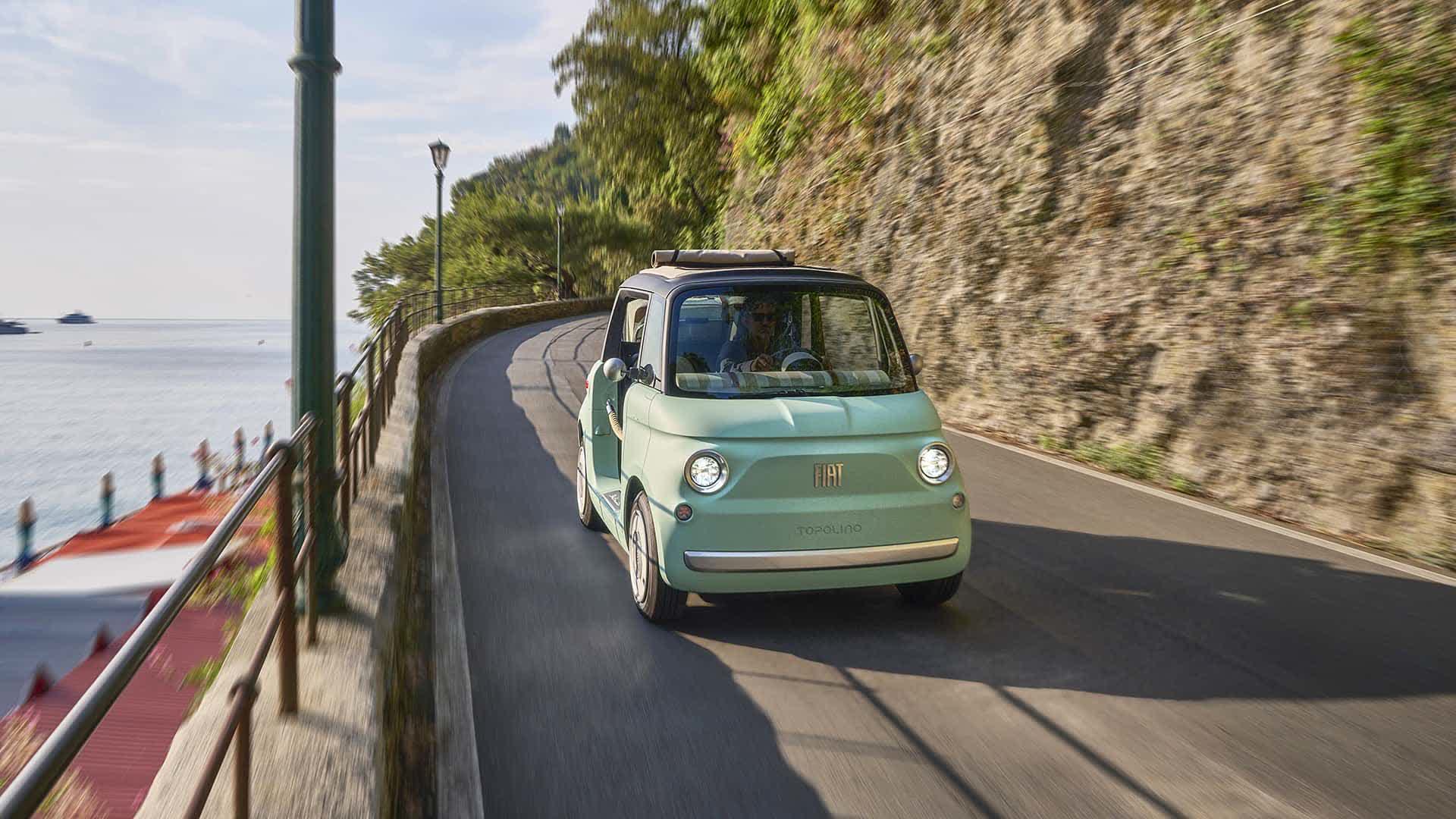
American buyers get none of that, however: no license workaround, one color (Verde Vita green), and a choice of two body styles, the hardtop with a panoramic sunroof or the doorless, roped Dolce Vita, both are priced the same.
Whether this kind of offering adds up to real sales is the open question. Fiat sales in the US have collapsed over the last decade, from nearly 44,000 cars sold in 2012 to roughly 1,300 last year.
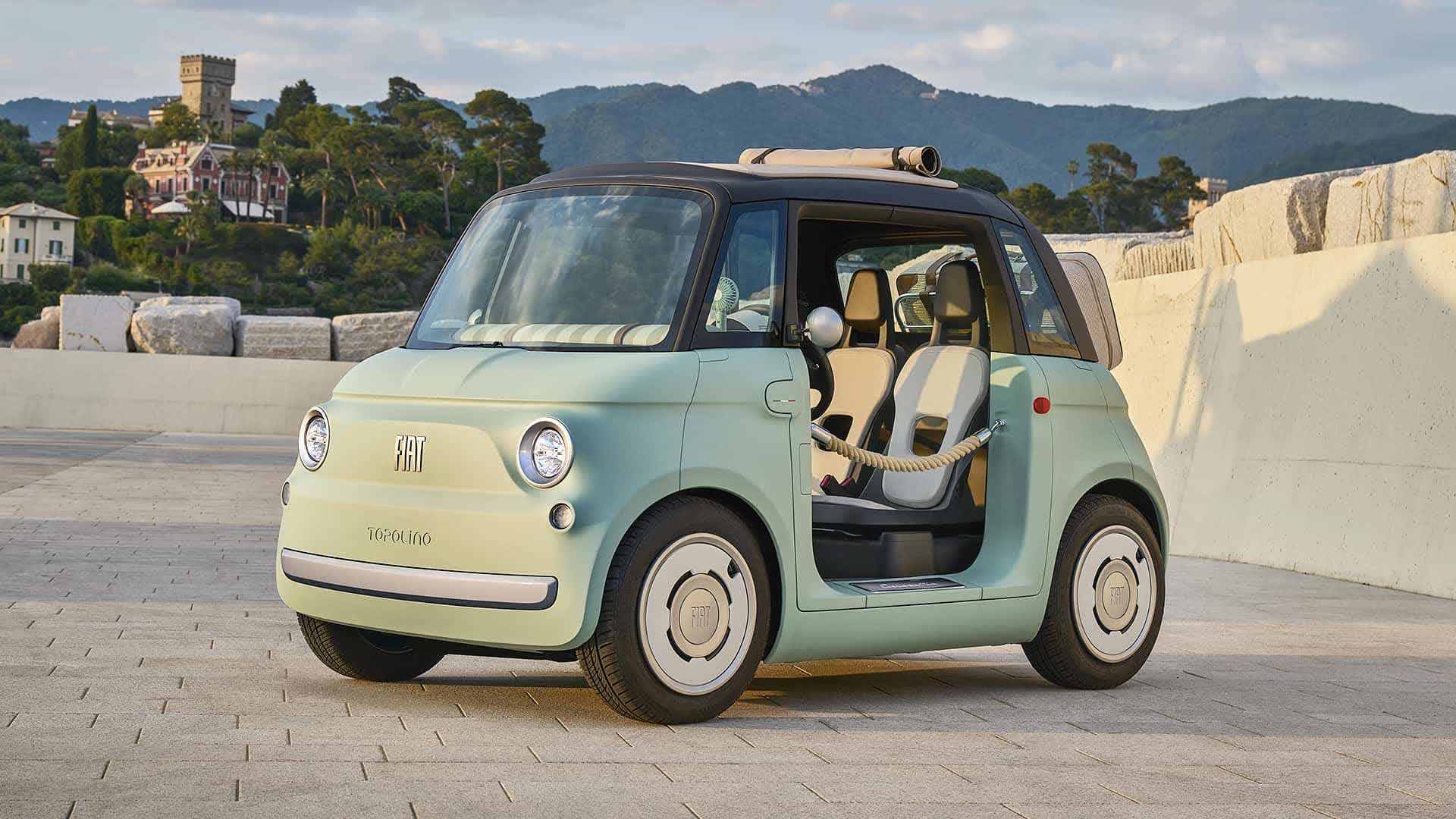
Reviewers who've driven the Topolino in Europe tend to like it: it's charming, easy to park, and genuinely useful in dense cities. But even its fans admit that at $15,000 for what is, functionally, a very stylish golf cart, it's hard to see the Topolino as anything more than a novelty for people who already own a real car.
Still, license-light EVs appears to keep gaining cultural traction, so Fiat's little car might be worth watching as an early data point for how much smaller Americans are actually willing to go on cars.