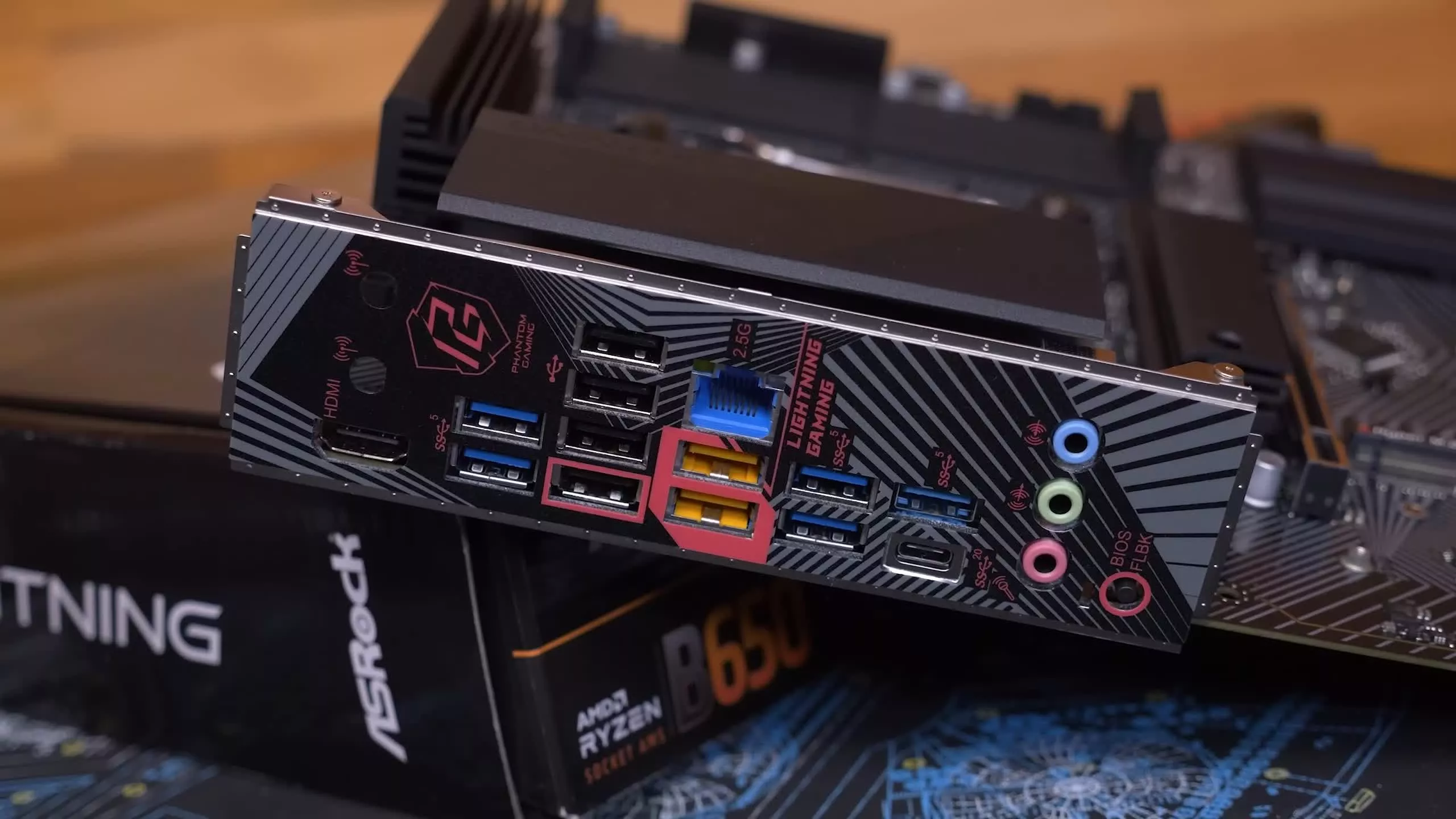
What just happened? Just a few weeks after Asus said it had started an internal review following reports of Ryzen 7 9800X3D CPUs dying in its AM5 motherboards, Asrock, the original company to be affected by this issue, has released a statement addressing the problem.
Last year saw more than 100 cases of Ryzen 9000 chips failing in Asrock motherboards. The manufacturer initially blamed the faults on several areas, including memory compatibility conflicts, user error, and even debris in the CPU socket.
A rep later said that the failures were due to the Electrical Design Current (EDC) and Thermal Design Current (TDC). Essentially, it was an amperage problem in the Precision Boost Overdrive (PBO) settings. Asrock said these had been set too high for early CPU samples, and that a BIOS update would address the issue.
But reports of failures in Asrock boards haven't gone away. Now, the company has finally posted an official statement on the matter in the News section of its website.
According to the statement, Asrock is closely monitoring the performance and behavior of AMD Ryzen 9000 series processors on its AMD platforms.
Asrock adds that, in response to the reports, it has implemented comprehensive internal reviews and rigorous verification processes. It has also been working in coordination with AMD to further validate system performance across a wide range of hardware configurations, while optimizing BIOS and enhancing overall system stability.
At the end of last month, Asus responded to the reports of Ryzen 7 9800X3D systems that stopped posting on its AM5 boards, including B850 and X870E models.
According to the reports, the problem involves the systems running normally until a reboot, waking the PC from sleep, or another desktop action causes a black screen and the board displaying a 00 error code. This indicates that the system is not detecting the CPU or has failed to wake up. The usual troubleshooting steps don't fix the problem, either.
Like Asrock, Asus simply said that it was conducting preventive checks on product compatibility and performance, working closely with AMD to validate reported cases and ensure ongoing stability and quality.
It's estimated that around 350 people have experienced failures involving Ryzen 9000 CPUs in Asrock and Asus motherboards. That's no small number, but still just a tiny percentage of people who use this hardware combination.
Earlier this week, system integrator Puget Systems released its annual reliability report for 2025. The two consumer CPU lines with the fewest failures were the Ryzen 9000 and Intel Core 200 series – AMD's Ryzen X3D series saw a tiny 1.5% failure rate.