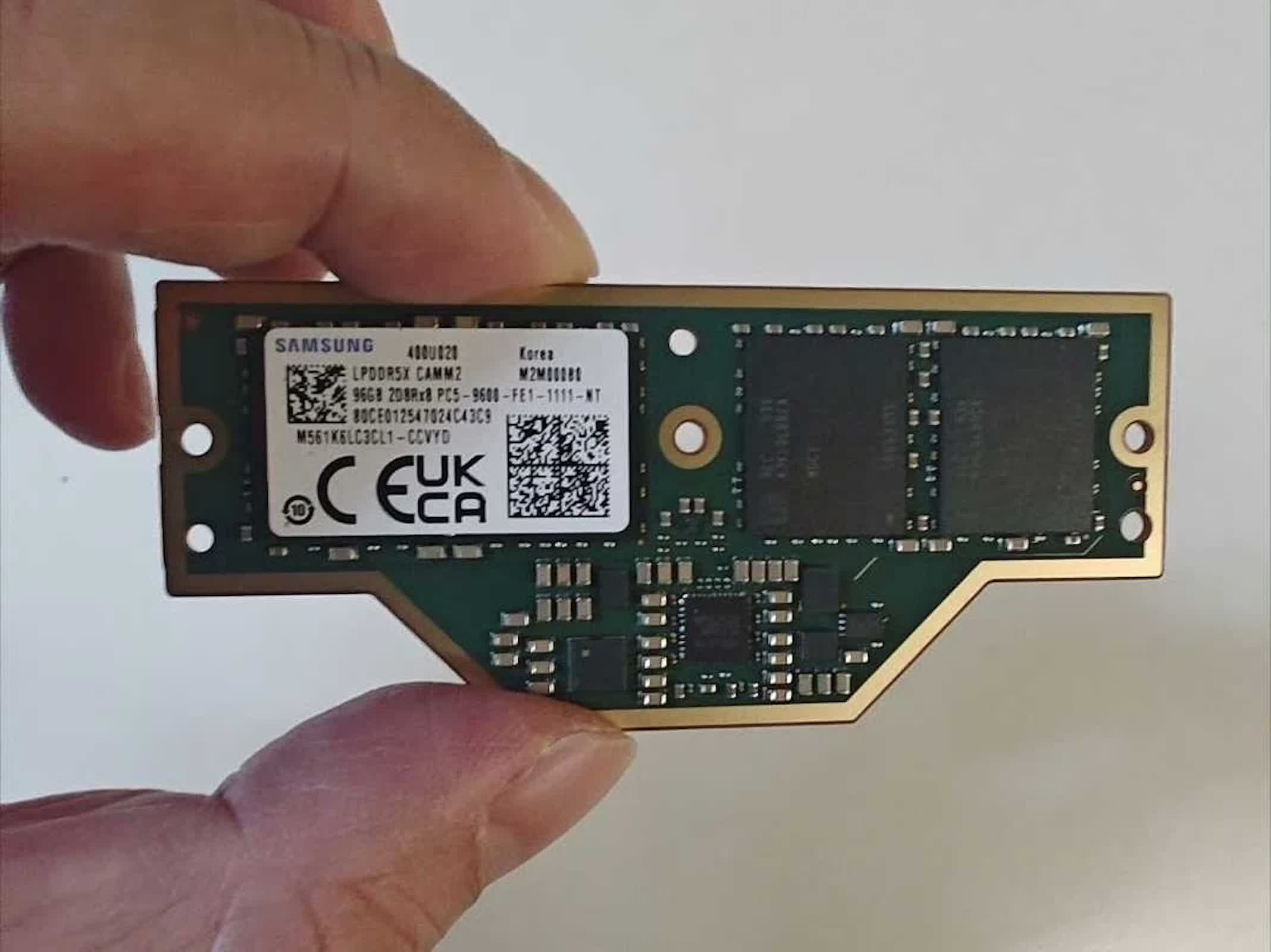
In brief: Samsung is preparing a new wave of LPCAMM2 modules powered by LPDDR5X memory, further advancing compact, high-performance computing. Production is expected to begin soon, with the upcoming modules offering capacities of up to 96GB and transfer speeds reaching 9,600 MT/s.
The LPCAMM2 design is part of an ongoing effort to replace soldered LPDDR in mobile and ultra-thin systems with memory that is both upgradeable and space-efficient. It builds on first-generation LPCAMM2 modules, which typically shipped with LPDDR5 memory. The new LPDDR5X variant continues that evolution, delivering higher efficiency and faster data throughput while providing additional performance headroom without increasing power consumption.
Lenovo's China manager recently posted a photo on Weibo of Samsung's LPCAMM2 LPDDR5X module featuring a dense 2D8Rx8 PC5 configuration, rated at 96GB and reaching speeds of up to 9,600 MT/s. At present, those specifications align with only one processor family on the market – Intel's newly released Core Ultra Series 3, also known as Panther Lake.
Intel's platform is the first to officially support memory speeds at that level, targeting both high-end mobile devices and edge AI systems.
The collaboration between Intel and memory manufacturers around LPCAMM2 has been developing for some time. Intel previously demonstrated early LPCAMM2 modules from Crucial running on reference validation platforms. Those Crucial modules offered capacities of up to 64GB and speeds reaching 7,500 MT/s under the part number CT64G75C2LP5X.M48C1. Intel has since confirmed official support for modules reaching 9,533 MT/s and capacities up to 96GB with its Panther Lake CPUs.
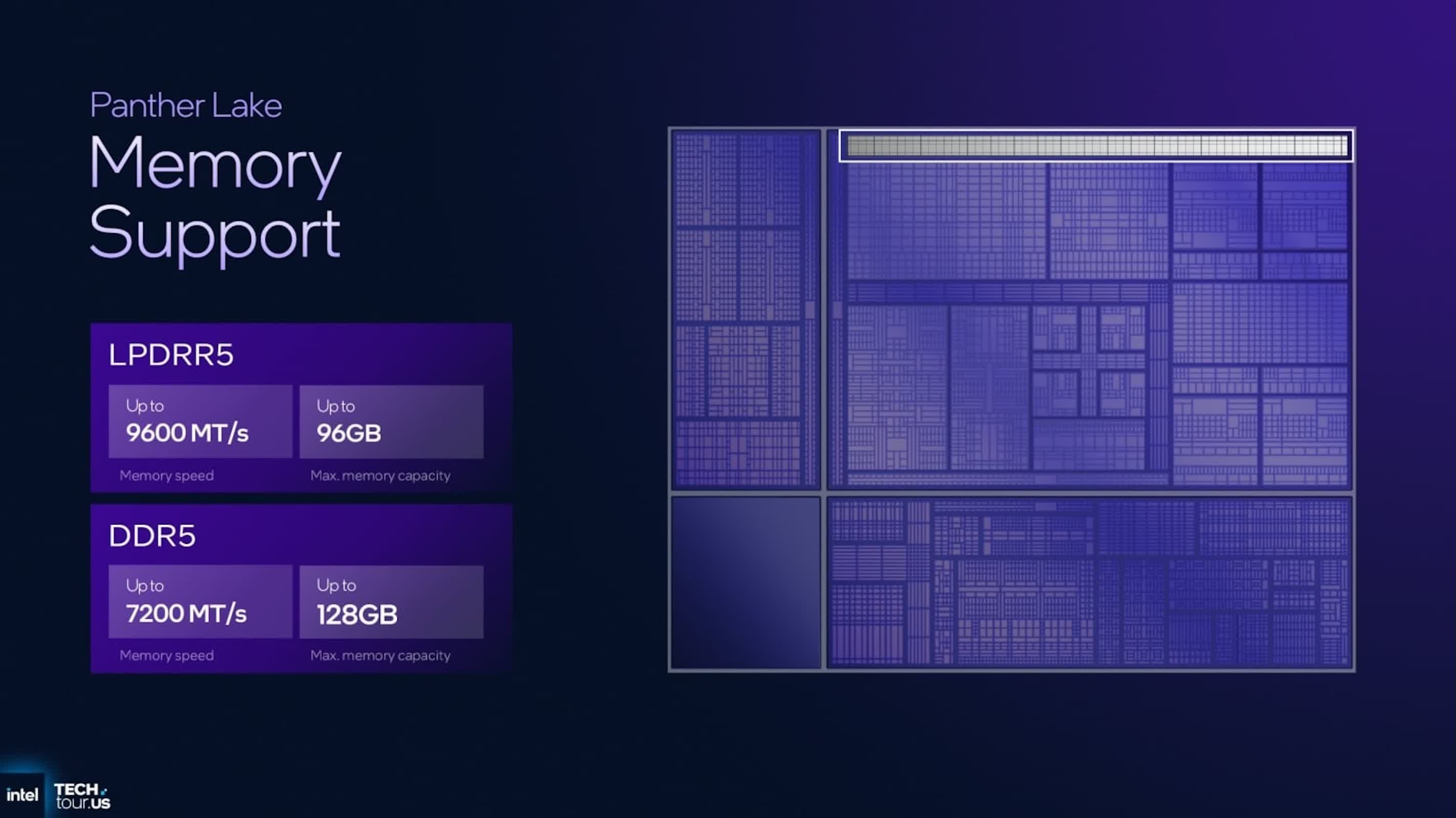
Recent engineering samples indicate that the first LPCAMM2 memory kits shipping with upcoming devices will operate at around 8,533 MT/s, with top-tier 9,600 MT/s variants expected to reach the market in the second half of the year.
As production ramps up, these modules are expected to appear across a broad range of mobile platforms, AI inference systems, and embedded computing environments that demand both compact designs and high throughput.
Samsung's entry marks an important milestone for modular, low-power memory. Although LPCAMM2 remains a relatively new technology, its impact could extend well beyond laptops to edge and industrial computing, where flexibility and upgradeability are becoming increasingly valuable.
The combination of LPDDR5X efficiency, a 96GB capacity ceiling, and speeds of up to 9,600 MT/s suggests that the next generation of portable and edge systems could soon approach desktop-class performance – within far tighter power and thermal envelopes.