First look: Ford is rebuilding its electric vehicle strategy around a mid-size pickup that has yet to be unveiled but is already prompting a wholesale rethinking of batteries, wiring, aerodynamics, and manufacturing within the company. The truck will be the first model built on Ford's Universal Electric Vehicle (UEV) platform, a dedicated EV architecture designed to hit a target price of about $30,000 by optimizing efficiency rather than simply increasing battery capacity.
In a technical briefing that included Car and Driver, Ford's advanced EV group detailed how the platform abandons compromises inherited from internal-combustion vehicles in favor of a tightly integrated set of technologies: structural lithium iron phosphate (LFP) battery packs, a 48-volt zonal electrical system, in-house power electronics, large unicastings, and a strong emphasis on aerodynamics.
The first UEV-based truck, due in 2027, is designed to deliver more range per kilowatt-hour than any mid-size pickup currently on the market.
The UEV platform is dedicated solely to battery-electric powertrains. Eliminating the need to package engines, transmissions, and conventional crash structures frees up volume for passengers and cargo, while allowing the underbody to be organized around a structural battery pack.
Ford says the mid-size pickup will combine a front trunk and traditional bed with cabin space exceeding that of a 2025 Toyota RAV4, with the flat floor and integrated battery pack maximizing interior volume.
The battery system is central to the platform's cost and performance strategy. Ford is using prismatic LFP cells, which are 20 – 30 percent cheaper per kilowatt-hour than many nickel-rich chemistries, and the battery pack itself serves as a structural component of the vehicle.
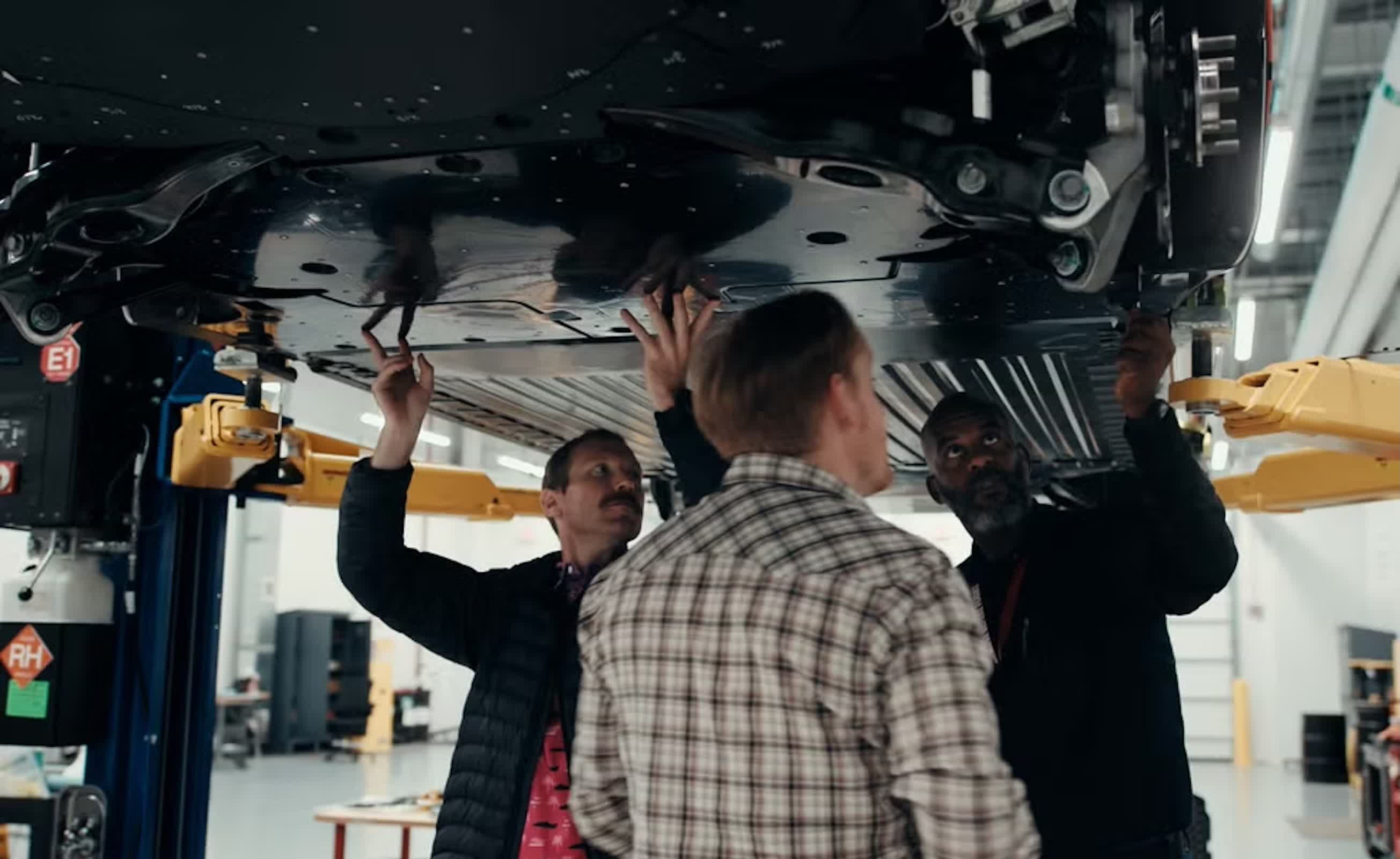
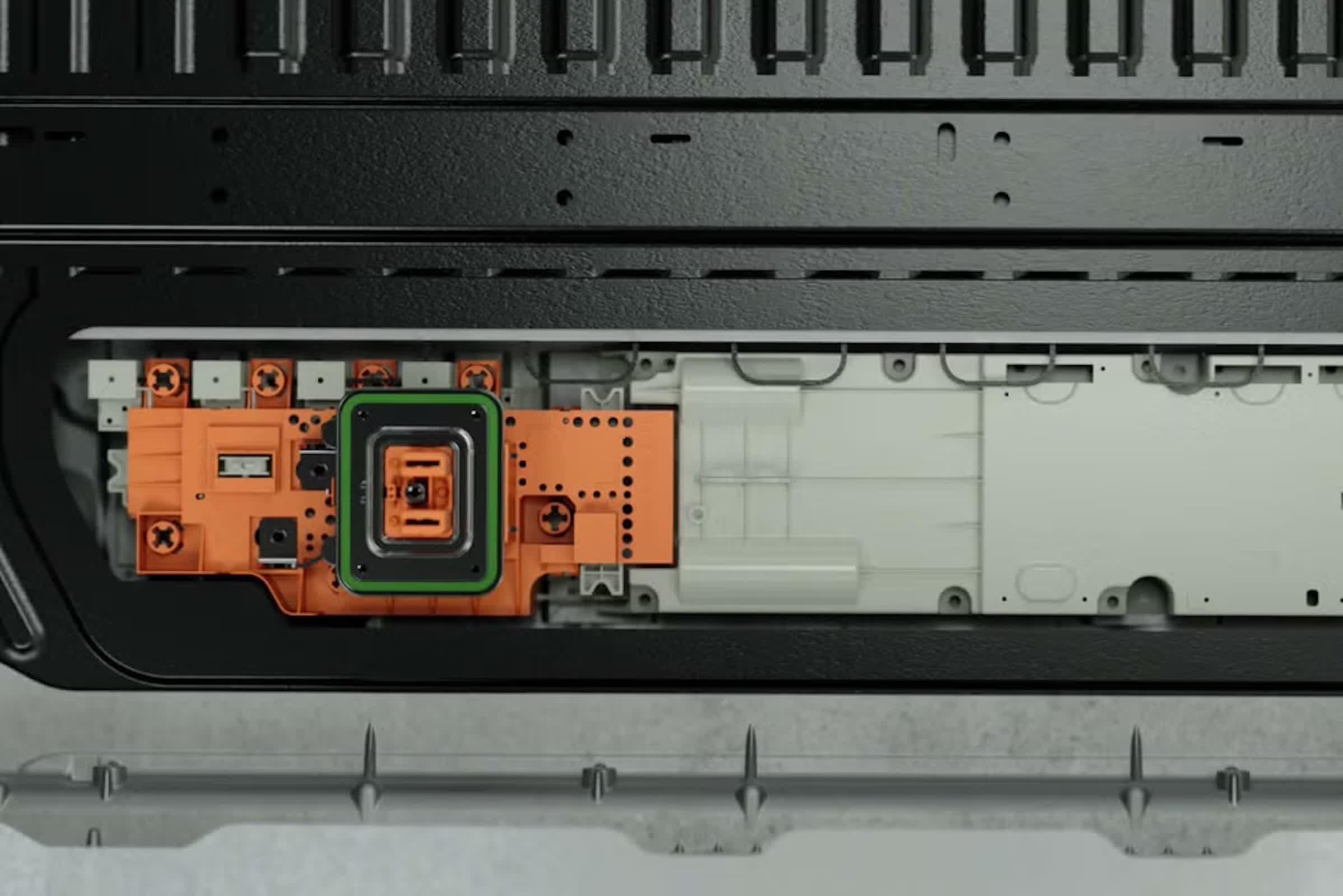
Cells are integrated directly into the underbody, and a multi-layer flexible circuit board manages low- and high-voltage connections, thermal sensing, and module monitoring. This design replaces a web of bus bars and wiring with a single integrated element, reducing weight and simplifying assembly as well as cooling interfaces.
Ford has also engineered the UEV platform to accommodate alternative battery chemistries and formats, allowing future cells with different energy densities or performance profiles to be adopted without redesigning the fundamental structure. The company projects that the resulting truck design could deliver roughly 50 more miles – or about 15 percent – of range from the same battery capacity compared with today's lowest-drag mid-size pickups, a claim currently being validated in on-road testing.
Traditional vehicles rely on dozens of supplier-sourced control units with dedicated wiring, but Ford's UEV platform replaces them with a zonal architecture built around five in-house compute modules that manage most of the truck's functions. These modules communicate over automotive Ethernet, reducing the need for separate signal and control lines throughout the vehicle.
Ford is also introducing its first 48-volt power system for key vehicle functions while retaining 12-volt rails for accessories such as lighting and audio. Basic physics drives the shift to 48 volts: for the same power, a higher voltage reduces current, and resistive heating in conductors scales with the square of the current. This allows for smaller-gauge copper, lower heat buildup, and reduced weight – particularly when combined with a zonal layout that shortens the distance between power sources and loads.
Ford says the UEV truck's wiring harness will be roughly 4,000 feet shorter and 22 pounds lighter than the harness in the original Mustang Mach-E, and it will no longer require oven heating to bend into place during assembly.
The company is also rethinking how power flows through the vehicle. Rather than sourcing inverters, onboard chargers, and other high-voltage components individually, Ford is designing its own power-electronics and energy-management hardware and software. Central to this approach is the E-box, a compact unit that consolidates roles typically split across multiple components.
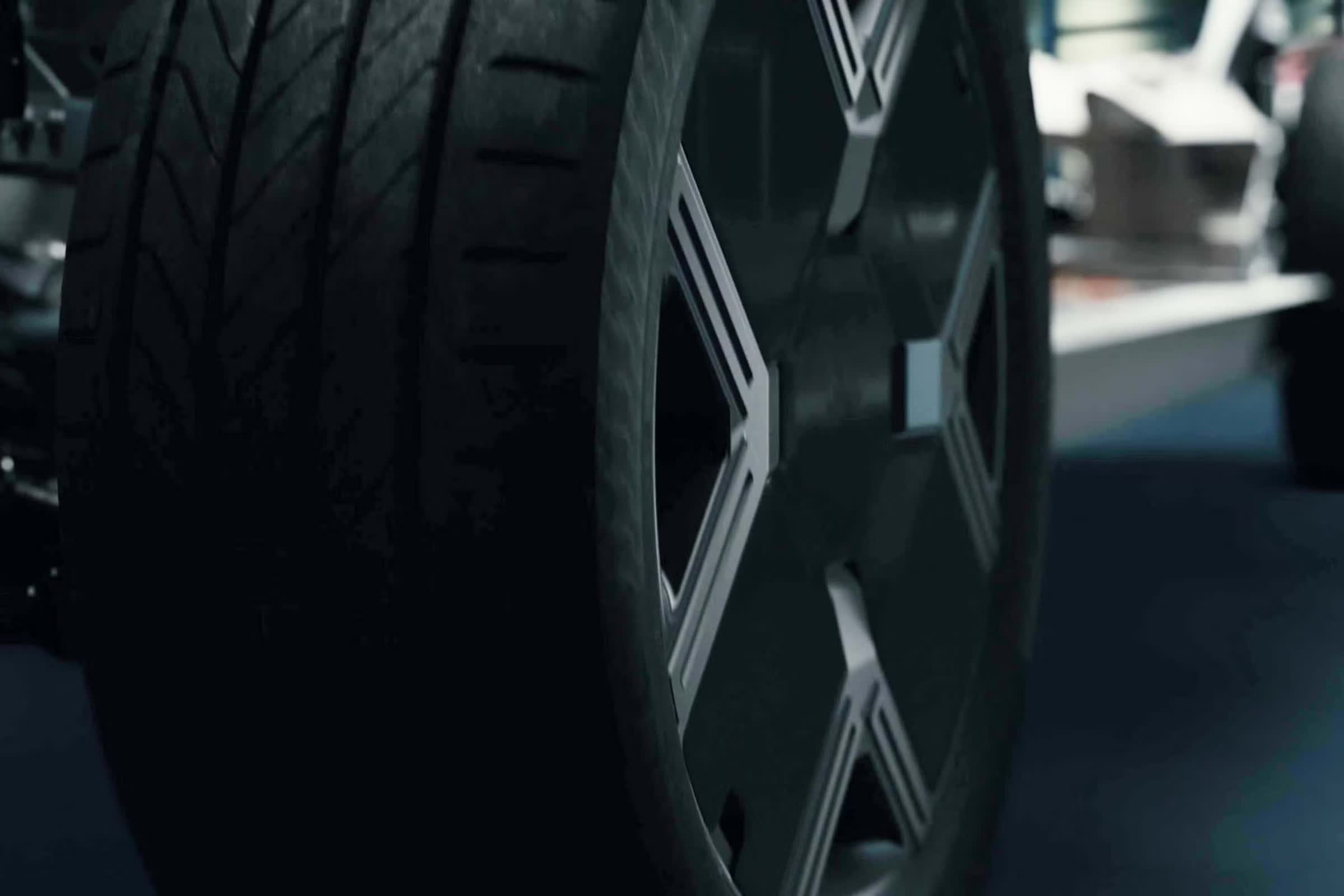
The E-box integrates functions for DC fast charging, AC charging, battery management, and high-voltage distribution into a single enclosure, sharing sensors, cooling, and control logic. This reduces component count and packaging complexity, frees up additional space for the cabin and storage, and gives Ford tighter control over charging behavior and efficiency. The E-box also supports bidirectional charging, enabling the truck to export power for tools, electronics, and even home backup.
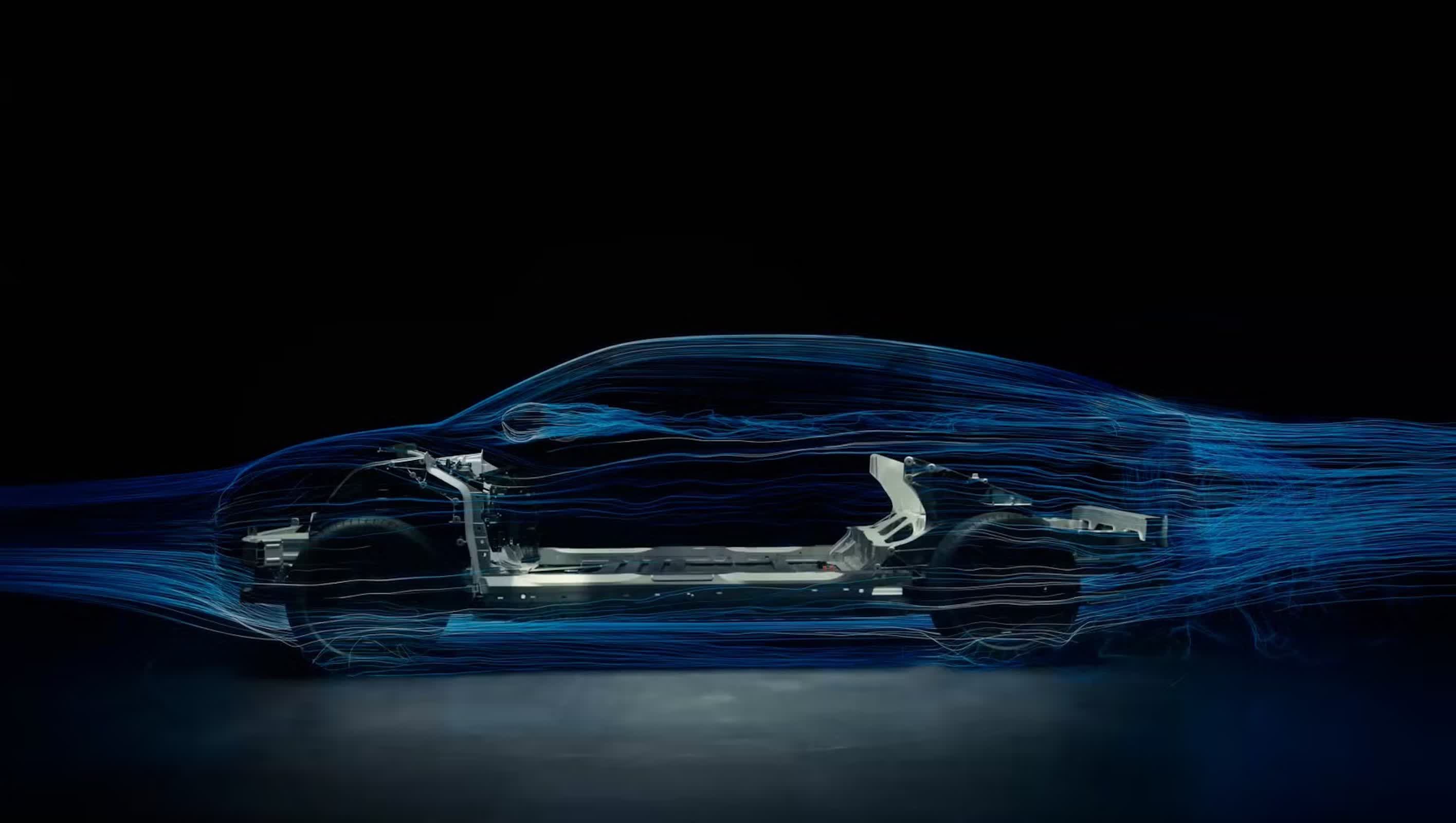
Aerodynamics are another major focus, as drag dominates energy consumption at highway speeds. Ford's aerodynamics team, which includes engineers with experience in Formula 1, treated airflow as an early design constraint rather than an afterthought.
Ford presented airflow simulations comparing the UEV truck to a conventional compact pickup silhouette, similar to its Maverick, showing how the traditional shape generates a high-drag wake behind the cab and over the bed.

For the UEV truck, the team sculpted a roofline and body that maintains a cohesive airflow and directs it past the bed in a teardrop pattern, dramatically reducing wake. Internal testing suggests this design reduces drag by more than 15 percent compared with any pickup currently on the market.
Even details such as the exterior mirrors were redesigned with efficiency in mind. By combining the motors for glass adjustment and folding into a single unit, Ford reduced the mirror housing by more than 20 percent, lowering frontal area and mass while gaining roughly 1.5 miles of range.
The platform's mechanical structure is built around a radical reduction in part count. Ford is using large aluminum unicastings at the front and rear of the truck to replace dozens of individual stamped or cast pieces that would typically be welded or bonded together.

Together with the structural battery pack, these front and rear castings form a three-piece understructure that acts as the vehicle's backbone. The front and rear subframes, which carry the suspension and wheels, bolt to this core, creating a rolling chassis with fewer joints and welds.
Ford has not yet released final specifications, images, or pricing for the UEV-based pickup, and the company's recent decision to end production of the F-150 Lightning has raised questions about its long-term EV commitment. The technology behind the UEV platform suggests that Ford is betting the path to a mainstream electric truck lies in structural battery packs, simplified wiring, integrated power electronics, and careful aerodynamics – not merely larger batteries.