In brief: Perplexity has taken a rare step in the crowded generative AI landscape: the company is walking away from advertising entirely. The San Francisco – based startup, valued at $18 billion, has decided that maintaining user trust outweighs any near-term revenue gains from ads, even as industry giants pursue increasingly aggressive monetization strategies.
The company quietly phased out sponsored content late last year, ending an experiment that began in 2024 when labeled promotions occasionally appeared beneath chatbot responses. On Tuesday, executives confirmed to the Financial Times that Perplexity would not pursue advertising further, citing trust and accuracy as the cornerstones of its business.
One executive explained that for users to continue relying on – and paying for – the service, they must trust that the results are objective. "We are in the accuracy business," the executive said, adding that the company's mission is "giving the truth, the right answers."
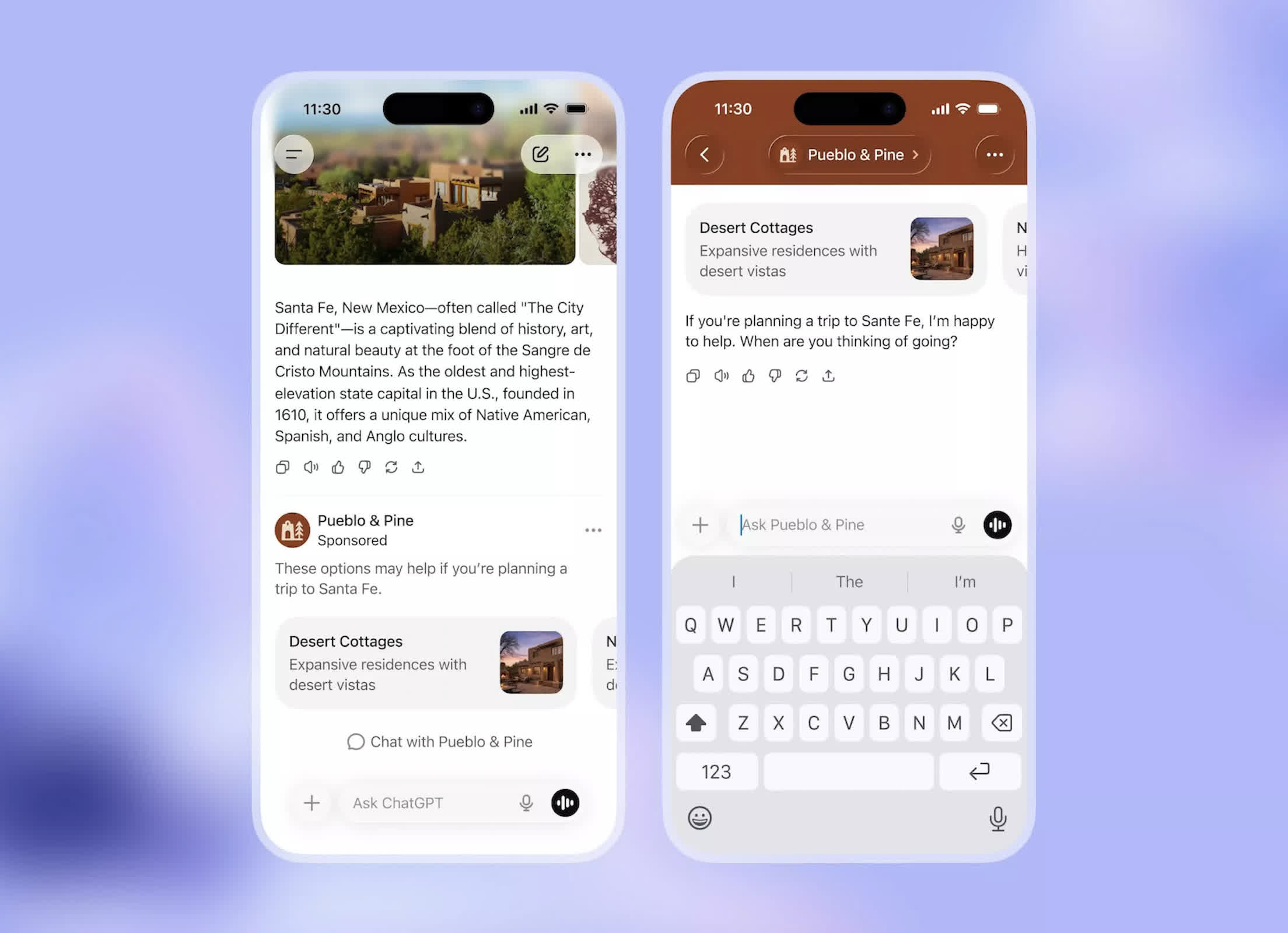
Perplexity's refusal to adopt advertising comes as many of its competitors move in the opposite direction. OpenAI recently began testing ads in the free version of ChatGPT, displaying sponsored links below outputs while insisting these do not influence responses.
Google's AI Overviews in Search already integrate ads in certain answers, though its Gemini chatbot remains ad-free for now. Anthropic, the developer of Claude, has publicly declared it will keep its chatbot free of advertising.
Perplexity views advertising as fundamentally misaligned with the role of a trusted AI assistant. Even with visible disclaimers separating sponsored results, company leaders believe ads could prompt users to second-guess the neutrality of every response. "The challenge with ads," one executive said, "is that a user would just start doubting everything."
Instead, Perplexity's revenue strategy relies on subscriptions. The company reports more than 100 million users and annualized revenues around $200 million, largely from paid tiers ranging from $20 to $200 per month. A free version is also offered to attract new users. Executives said the ad decision reflects a deliberate choice to strengthen the product's reliability rather than chase advertising income.
The company has also experimented with shopping integrations, allowing users to compare products directly through its platform. Unlike Google or OpenAI, however, Perplexity has not monetized these features and takes no commissions on sales.
For now, the company's stance makes it one of the few major AI firms resisting the pressure to commercialize user attention. While it may revisit the idea in the future, leadership insists that advertising is currently incompatible with the trust required for AI-driven search.