
The takeaway: The ability of AI models to produce convincing, human-like images has gone too far. A new study suggests that detecting AI-generated faces is now too difficult for most people. Even more concerning, so-called "super recognizers" perform only marginally better. The visual clues that once exposed AI-generated images are becoming increasingly difficult to spot, though they have not disappeared entirely.
Think you can quickly identify fake faces generated by AI models? Think again. According to a recently published study by Australian researchers, AI-generated faces are now essentially too difficult to spot – except for a small minority of people who are exceptionally skilled at analyzing facial features. As a result, security and identity verification processes could suffer, though there are still steps we can take to mitigate the problem.
The study was conducted by researchers at UNSW Sydney and the Australian National University (ANU) and has now been published in the British Journal of Psychology. The team warns that "synthetic AI faces" can appear more realistic than photographs of actual people – and their data supports that conclusion.
According to James Dunn, a researcher at the UNSW School of Psychology, people have long been confident in their ability to detect AI-generated faces. Early AI systems were notorious for producing distorted or garbled images, but newer, more advanced models can now generate ultra-realistic faces with remarkable ease.
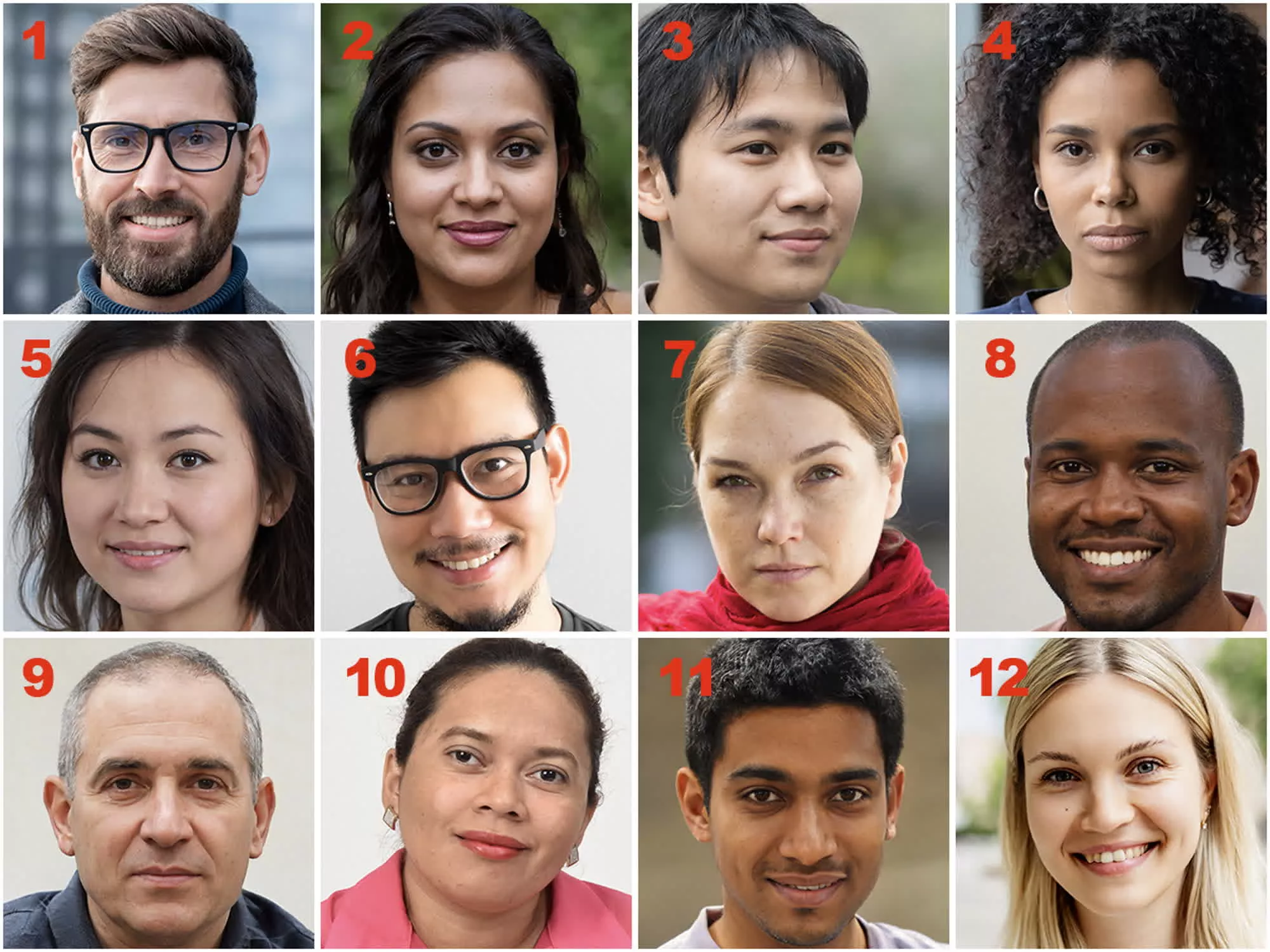
The two Australian universities recruited 125 participants, including 36 "super recognizers" known for their exceptional face-recognition abilities. The control group consisted of 89 participants. Researchers asked all of them to complete an online test in which they were shown a series of both AI-generated and real human faces.
Dunn said the results showed that people with average detection skills performed only slightly better than chance. Even the super-recognizer group outperformed the average participants by only a small margin. However, all participants were equally overconfident in their perceived ability to spot AI-generated images.
Modern AI-generated faces can appear highly realistic, displaying none of the obvious visual artifacts produced by earlier models. These kinds of errors are now far less common, making AI-generated faces more effective at deceiving users. As a result, the researchers warn that a dangerous combination of overconfidence and increasingly convincing deepfakes could put individuals and organizations at risk. Scammers, fraudsters, and cybercriminals are likely already exploiting realistic AI faces for illegal activities.
According to ANU Associate Professor Amy Dawel, today's AI-generated faces "aren't given away by what's wrong with them, but by what's too right. Rather than obvious glitches, they tend to be unusually average – highly symmetrical, well-proportioned, and statistically typical."
High levels of symmetry and overly average-looking traits should now be considered potential red flags for AI-generated fakes, Dawel said. Super recognizers may be somewhat better at detecting these subtle patterns.
The researchers now plan to study how certain individuals function as "super AI face detectors" in order to improve anti-fake technologies and detection strategies for the broader public.
The UNSW Face Test is available online with a free demo, allowing anyone to assess their own AI face-detection skills. According to my results, I may qualify as a "super recognizer," having correctly identified 12 out of 20 AI-generated faces – twice. The average score is around 11 out of 20.