Why it matters: The idea that falling spacecraft quietly burn away without consequence is beginning to look outdated. Scientists have observed that rocket hardware disintegrating on reentry leaves behind lithium, altering the chemical balance in the upper atmosphere.
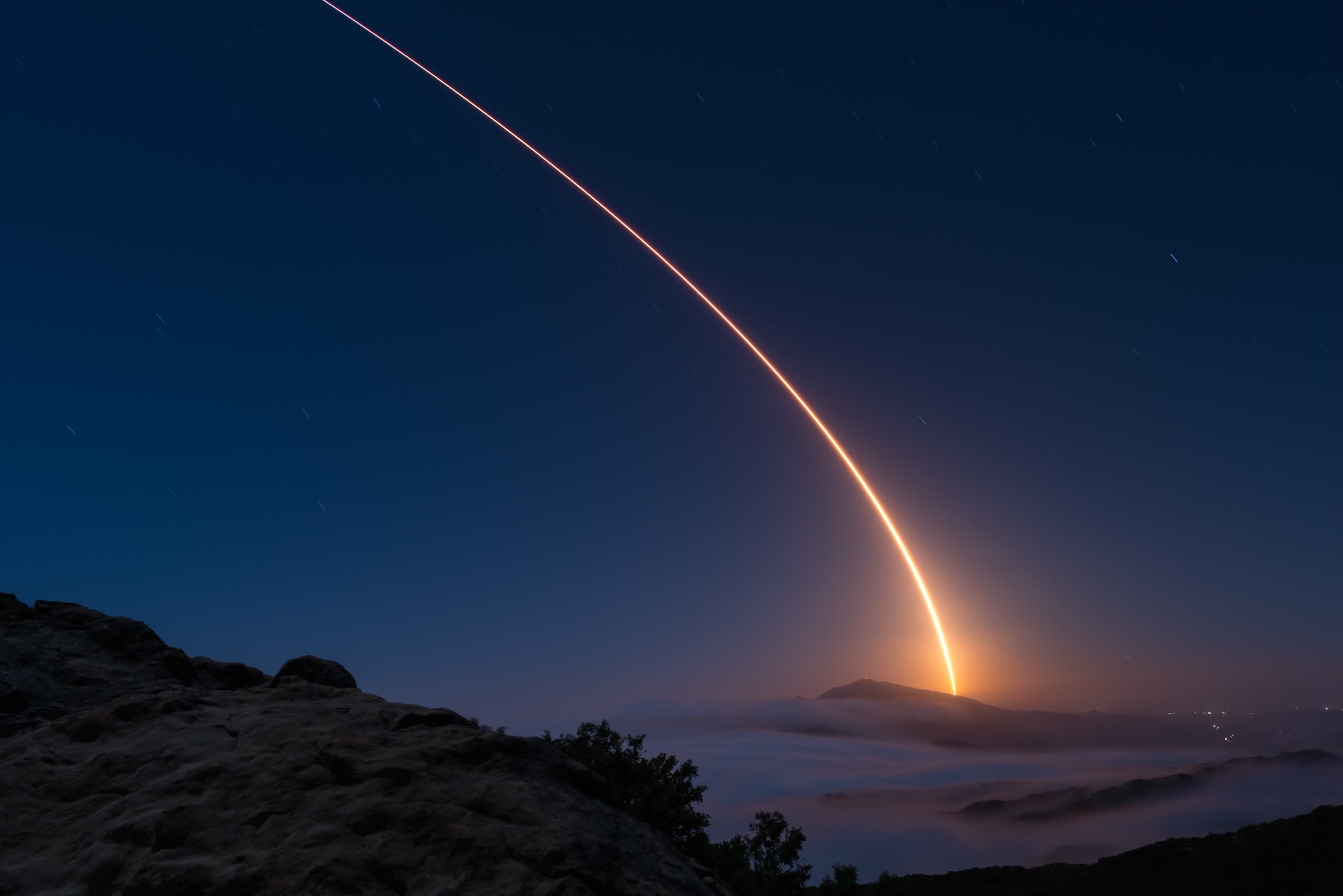
On February 19, 2025, a SpaceX Falcon 9 booster fell back toward Earth, its fiery descent slicing across Europe's night sky. Researchers at the Leibniz Institute of Atmospheric Physics in Germany captured the event using their lidar system, running it during the predicted reentry window. A new study published in Communications Earth & Environment reports that the uncontrolled reentry coincided with a tenfold spike in lithium atoms high above Earth's surface.
Lidar, short for "light detection and ranging," uses laser pulses to map atmospheric composition. In this case, the instruments at a research station in Saxony detected a narrow plume of lithium atoms between 94 and 97 kilometers above sea level – about 10 times the concentration normally present at those altitudes. The unplanned observation shows that rocket hardware disintegrating on reentry can leave measurable traces in the upper atmosphere.
Robin Wing, a lead author on the study, said his team specifically chose lithium because they expected it could serve as a tracer for spacecraft material during reentry. Aerospace-grade lithium-aluminum alloys are common in spacecraft structures, making lithium an ideal marker for human-made debris.

Previous research had already demonstrated that metals from decaying satellites and rockets – including aluminum, copper, and lead – now exceed the natural influx of those elements from cosmic dust. Until now, however, there had been no direct measurement linking a single reentry to a localized, quantifiable metal plume.
What happens next inside that thin atmospheric band is still unclear. The metals could interact with charged particles or other compounds, subtly shifting how the upper atmosphere absorbs solar radiation or forms noctilucent clouds. Scientists simply don't know. That uncertainty is driving a growing concern among atmospheric chemists. As the global launch cadence rises and old spacecraft reenter the atmosphere almost weekly, the cumulative effect could amount to a long-term chemical transformation above the stratosphere.
"There are many elements present inside spacecraft which are not very present in our atmosphere due to natural causes," Wing told Gizmodo. "We know very little about what metals actually exist in the atmosphere and how that relates to re-entry pollution."