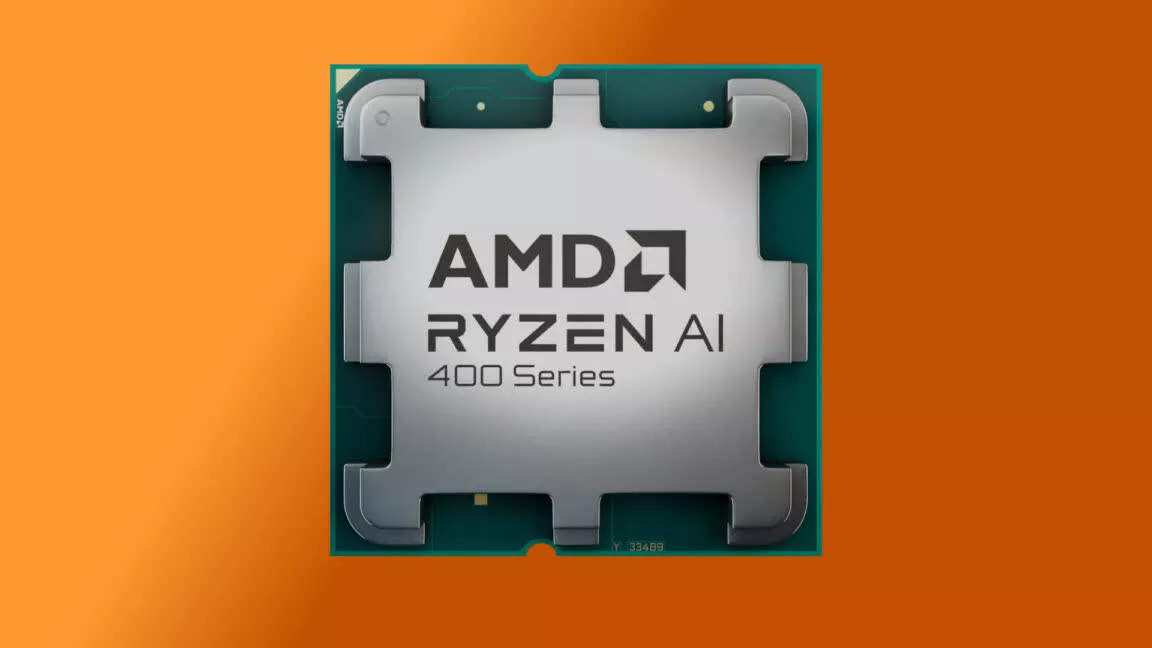
What just happened? AMD has been slapping its "Ryzen AI" branding on laptops for over a year now. At MWC, the company announced that it is finally dragging the name into the desktop world with three new AM5 Ryzen AI chips featuring dedicated NPUs.
Announced today, the new Ryzen AI 400 Series and Ryzen AI PRO 400 Series desktop processors are being positioned as AMD's first real "AI PC" desktop lineup. They pair Zen 5 CPU cores with RDNA 3.5 integrated graphics and an XDNA 2 NPU rated at up to 50 TOPS for local acceleration.
The new chips are being positioned as direct replacements for the 8000G-style APUs rather than anything meant to rival the Ryzen 9000 desktop CPUs – something the specs make clear. These are mainstream, iGPU-equipped parts designed for compact desktops, office machines, and budget builds that might not have a dedicated GPU.
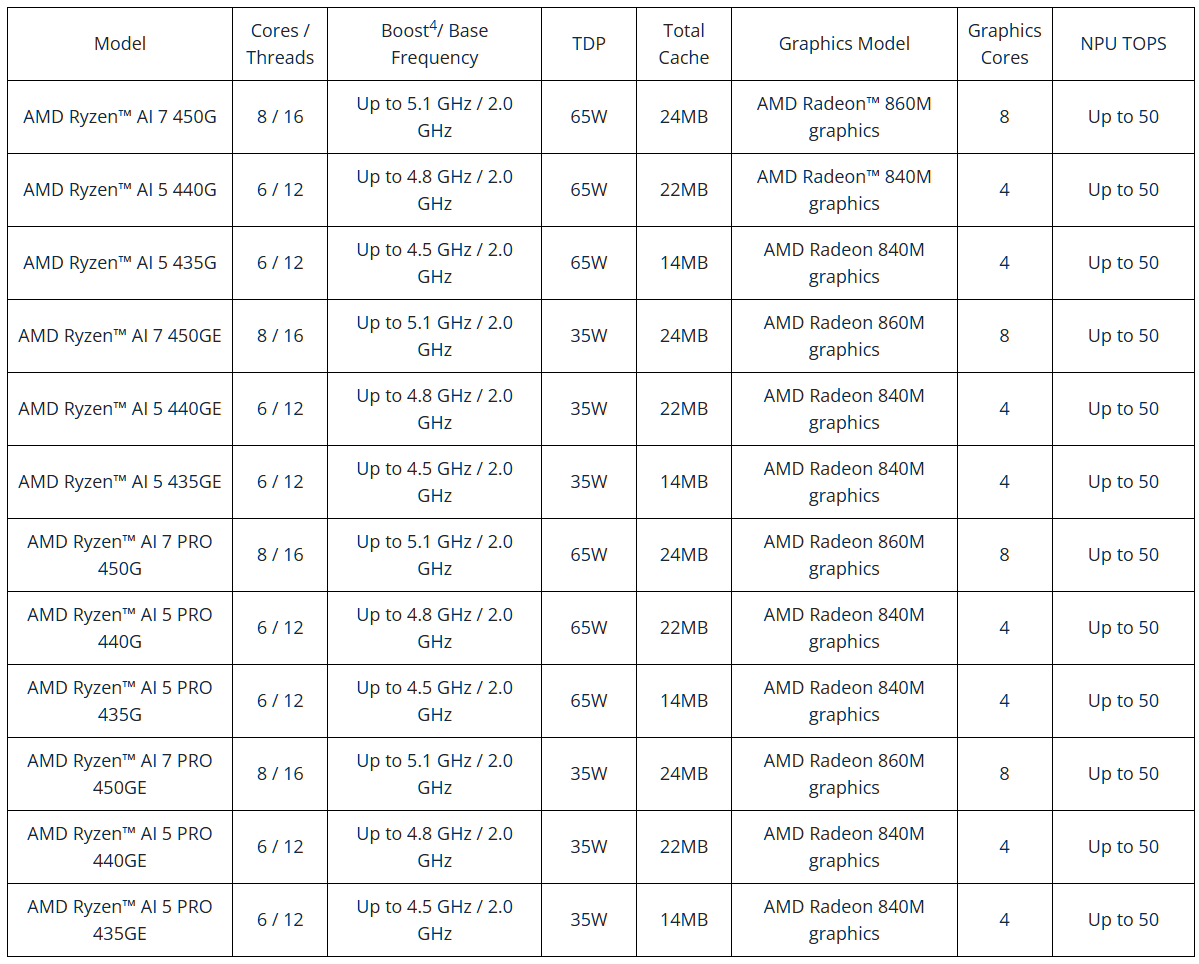
AMD's initial Ryzen AI 400 Series consists of three chips split into six SKUs, with each model offered in a standard 65W "G" version and a 35W "GE" low-power variant.
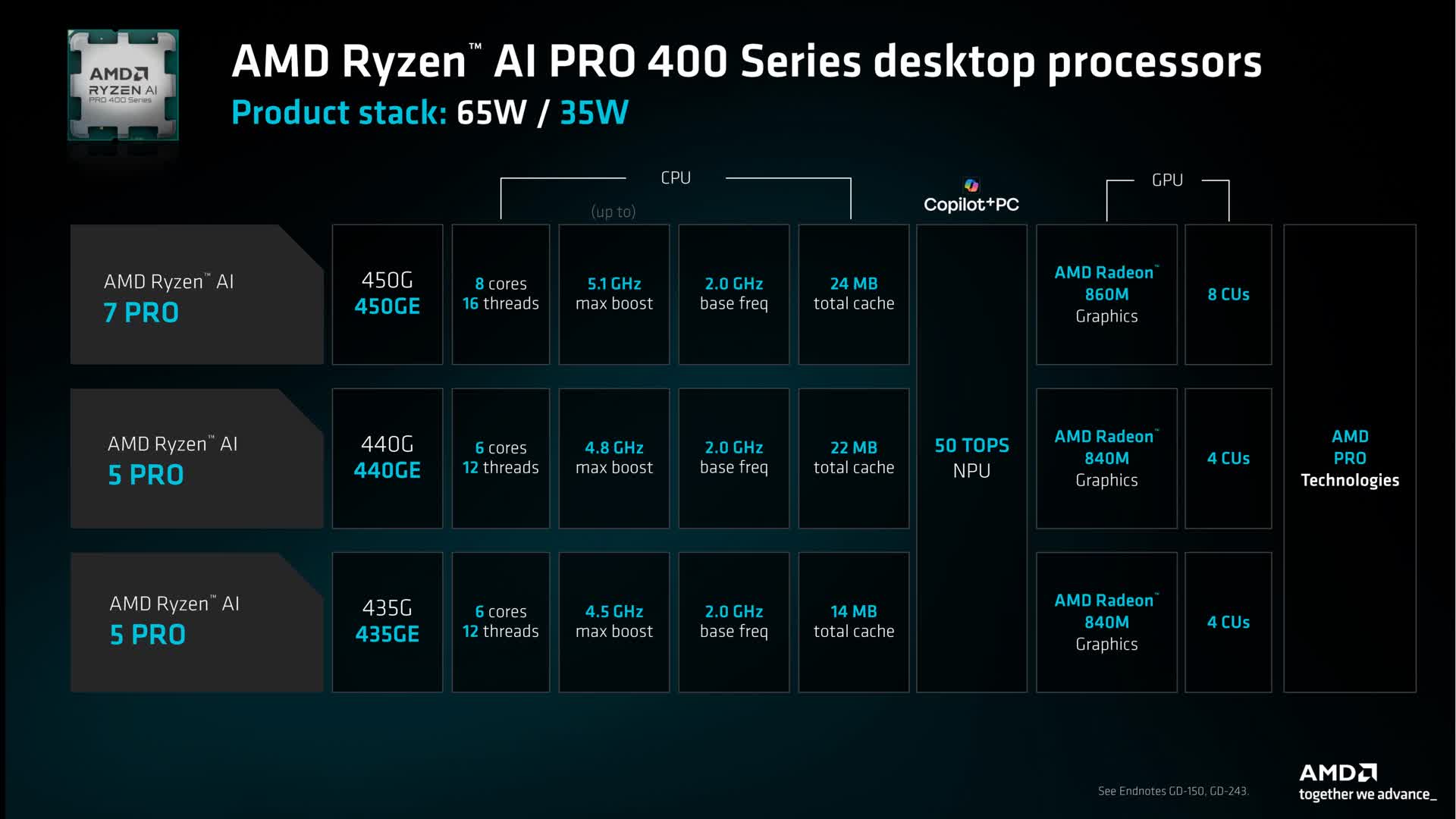
At the top of the stack is the Ryzen AI 7 450G/450GE, an 8-core/16-thread part with up to a 5.1GHz boost clock, 24MB of total cache, Radeon 860M graphics, and the full 50 TOPS NPU.
The Radeon 860M packs 8 RDNA 3.5 compute units, which is a meaningful step up from the iGPU configurations typically seen in desktop CPUs that aren't APUs.
The two Ryzen AI 5 options are both 6-core/12-thread: the 440G/440GE boosts up to 4.8GHz with 22MB cache, while the 435G/435GE tops out at 4.5GHz and drops to 14MB cache. Both use Radeon 840M integrated graphics (4 RDNA 3.5 CUs), but still keep the same "up to 50 TOPS" XDNA 2 NPU rating as the flagship.
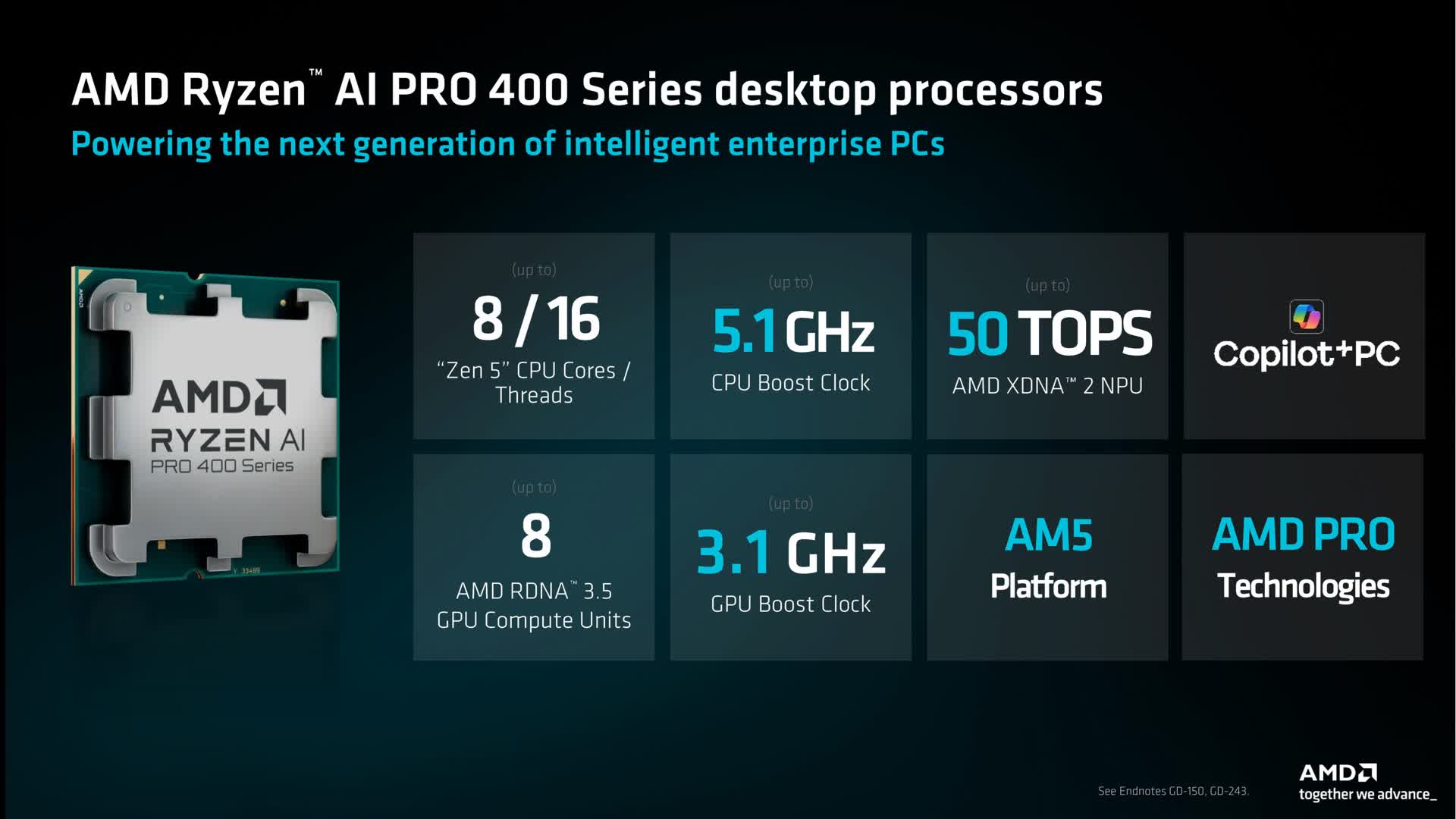
AMD is explicitly pitching the chips' on-device AI features for office work, developer tools, and "Copilot+ PC" experiences – the 50 TOPS number aligns with Microsoft's current minimum requirement for that category of machine.
Whether you care about Copilot branding or not, the point is that AMD now has a path to offload certain AI workloads without leaning entirely on a discrete GPU (or just hammering CPU cores), which could matter in small-form-factor desktops and all-in-ones where power and thermals are tight.
AMD and multiple reports say these won't be sold as typical boxed retail CPUs at launch, with availability focused on OEM systems first. AMD specifically calls out major partners and says the first desktop systems with Ryzen AI 400 chips are expected in Q2 2026; that likely means you'll see them show up in prebuilds before they ever land on a shelf.