Crystal ball: The next leap in battery innovation may arrive not from a new electrode material but from a redesigned electrolyte. A team of researchers has created a monofluorinated hydrofluorocarbon solvent system that pushes lithium-metal pouch cells to energy densities exceeding 700 Wh/kg at room temperature, and around 400 Wh/kg even at temperatures as low as -50 °C. Their findings, published in Nature, point to potential applications in electric vehicles, aerospace, and grid storage operating in extreme climates.
Unlike much of the news in the energy storage field, which often focuses on cathode breakthroughs, this study zeroes in on the chemistry of electrolytes – the medium that shuttles lithium ions between electrodes.
The electrolyte's solvent molecules determine how easily those ions move, how fast the battery can charge, and whether it survives wide temperature swings.
Traditionally, scientists have relied on solvents that contain oxygen or nitrogen ligands, which strongly coordinate with lithium ions but limit ionic mobility. While these solvents promote stability, they can slow charge transfer and perform poorly at low temperatures.
This challenge has persisted despite many attempts to tweak solvent structures. Efforts to weaken the lithium-solvent interaction have often increased viscosity or degraded cold-temperature performance. Hydrofluorocarbons, or HFCs, long known for their use as refrigerants, have been considered as alternatives, but poor salt solubility and instability with lithium-metal electrodes have limited their use.
Researchers behind this new study approached the issue differently. They theorized that if bonding between fluorine atoms and lithium ions could be tuned carefully, strengthening fluorine's Lewis basicity without overbinding, it might produce an electrolyte capable of dissolving lithium salts effectively while maintaining favorable electrochemical kinetics. In practical terms, they sought weak, well-controlled F – Li+ coordination that helps ions move quickly instead of trapping them.
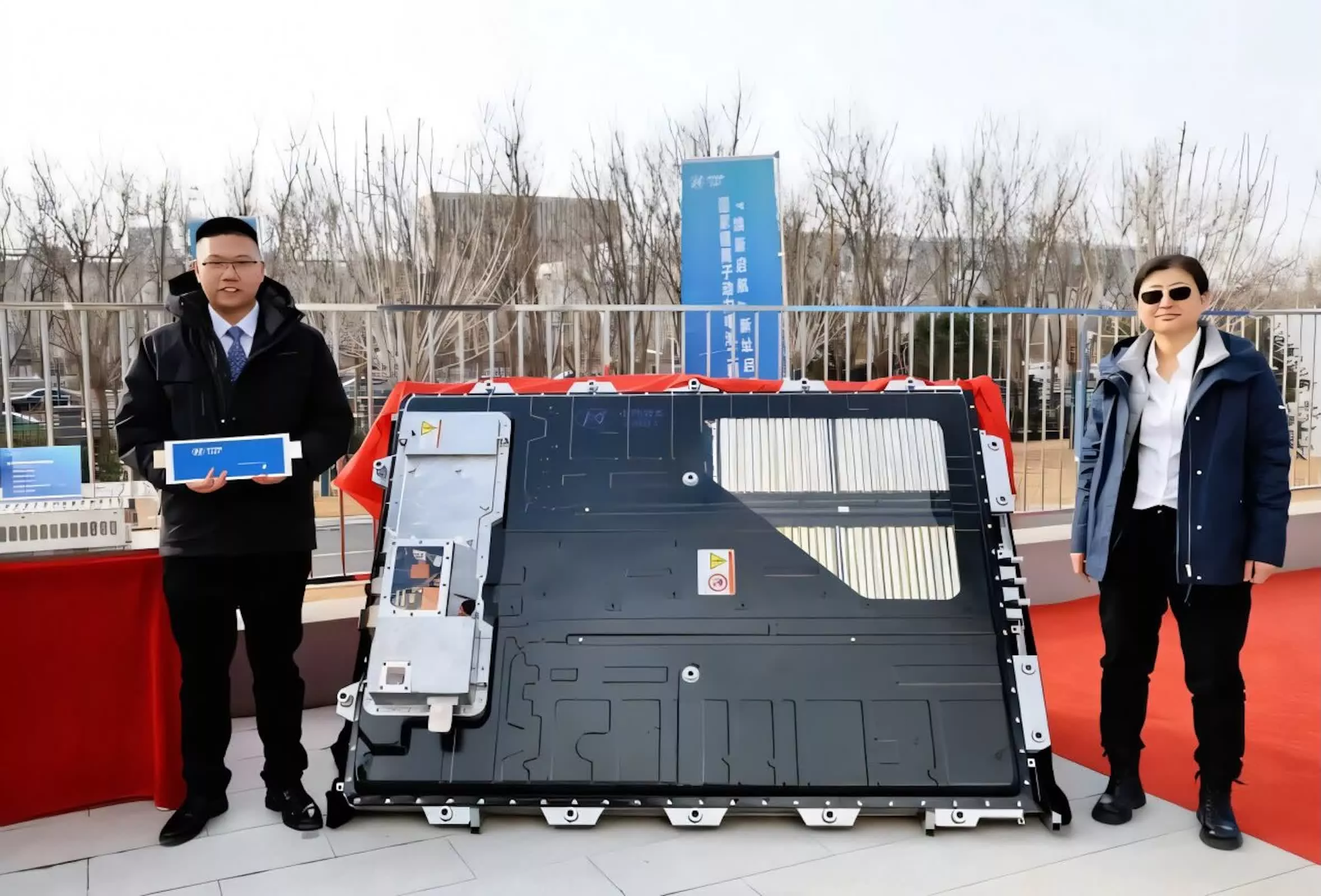
To test this idea, the team synthesized six distinct HFC-based solvents and evaluated them in coin and pouch cells over a wide temperature range. The results were strong. Each solvent demonstrated lithium salt solubility above 2 mol/L, a level suitable for building high-energy batteries. One compound stood out in particular: 1,3-difluoropropane (DFP).
The DFP-based electrolyte combined a rare set of characteristics, including low viscosity (0.95 centipoise), oxidation stability above 4.9 V, and ionic conductivity of 0.29 mS cm⁻¹ at -70 °C. Most strikingly, this formulation enabled lithium plating and stripping with a Coulombic efficiency reaching 99.7%, and current exchange densities an order of magnitude higher than those achieved with conventional oxygen-based electrolytes at -50 °C.
In simpler terms, the DFP solvent not only allowed the cells to operate in extreme cold but also supported highly efficient charge and discharge cycling.
From a systems standpoint, the impact is substantial. When paired with lithium-metal anodes in pouch cell configurations, the DFP electrolyte enabled operational energy densities above 700 Wh/kg at ambient temperature, far higher than the roughly 250 to 270 Wh/kg typical of today's top-tier lithium-ion packs. Even under subzero conditions, where many cells lose much of their performance, the electrolyte supported around 400 Wh/kg at -50 °C.
The study's authors attribute much of this performance to the balance of fluorine coordination in the solvent design. By adjusting the numbers of carbon and fluorine atoms, they engineered the "first solvation shell" around lithium ions so that fluorine atoms occupy key positions and coordinate weakly with Li+. This coordination pattern improves ion transport at the interface and supports faster electrochemical reactions.
The research also suggests that HFC-based solvents can be tuned for broader practical use. The paper notes that by further modulating the carbon and fluorine numbers, the team can design high-boiling-point HFCs that still work with lithium metal. This points to future electrolytes that could pair high energy density and low-temperature performance with better handling and safety in real systems.
The broader implications extend beyond the lab. A stable low-temperature electrolyte of this kind could improve the range and reliability of EVs in cold regions, enhance the robustness of grid-scale batteries exposed to harsh weather, and support power systems in aviation and aerospace where temperature swings are extreme.
While the work is still at the proof-of-concept stage, it highlights an increasingly important direction for the battery industry: innovating around electrolyte chemistry, not only electrodes. By rethinking how lithium ions travel through the cell, rather than focusing solely on where they are stored, researchers are opening another pathway that could help push past the long-assumed energy density ceiling of lithium batteries.