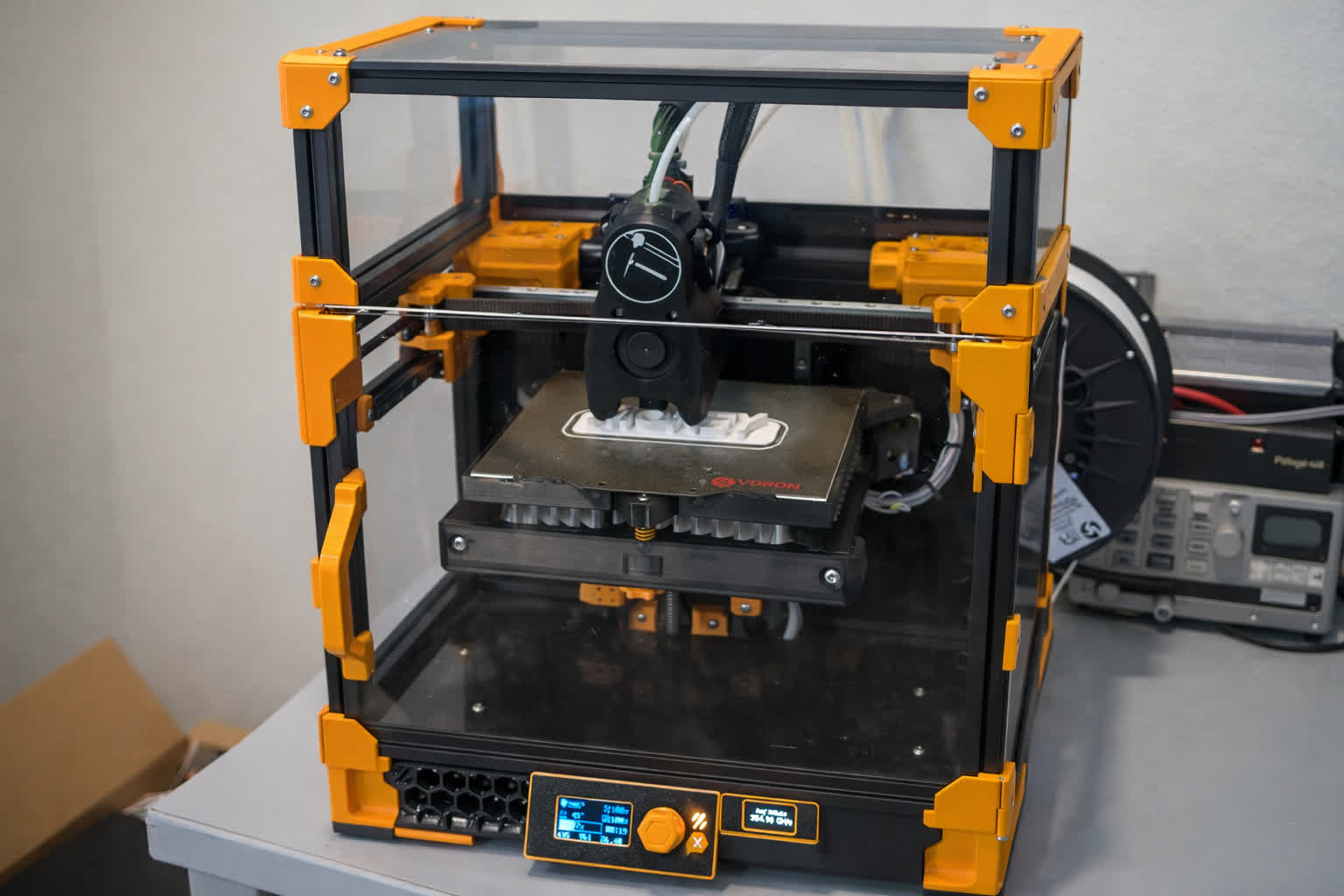
WTF?! A 3D printer that also mines Bitcoin sounds like the stuff of fantasy, but there really is a working prototype device. It's a machine that turns excess ASIC heat into something useful instead of just venting it away.
The printer, developed by mechanical engineer and Bitcoin tinkerer Andy "PizzAndy" Prokopyk under the Proof of Print name, replaces a standard heated print bed with a modified ASIC-powered system.
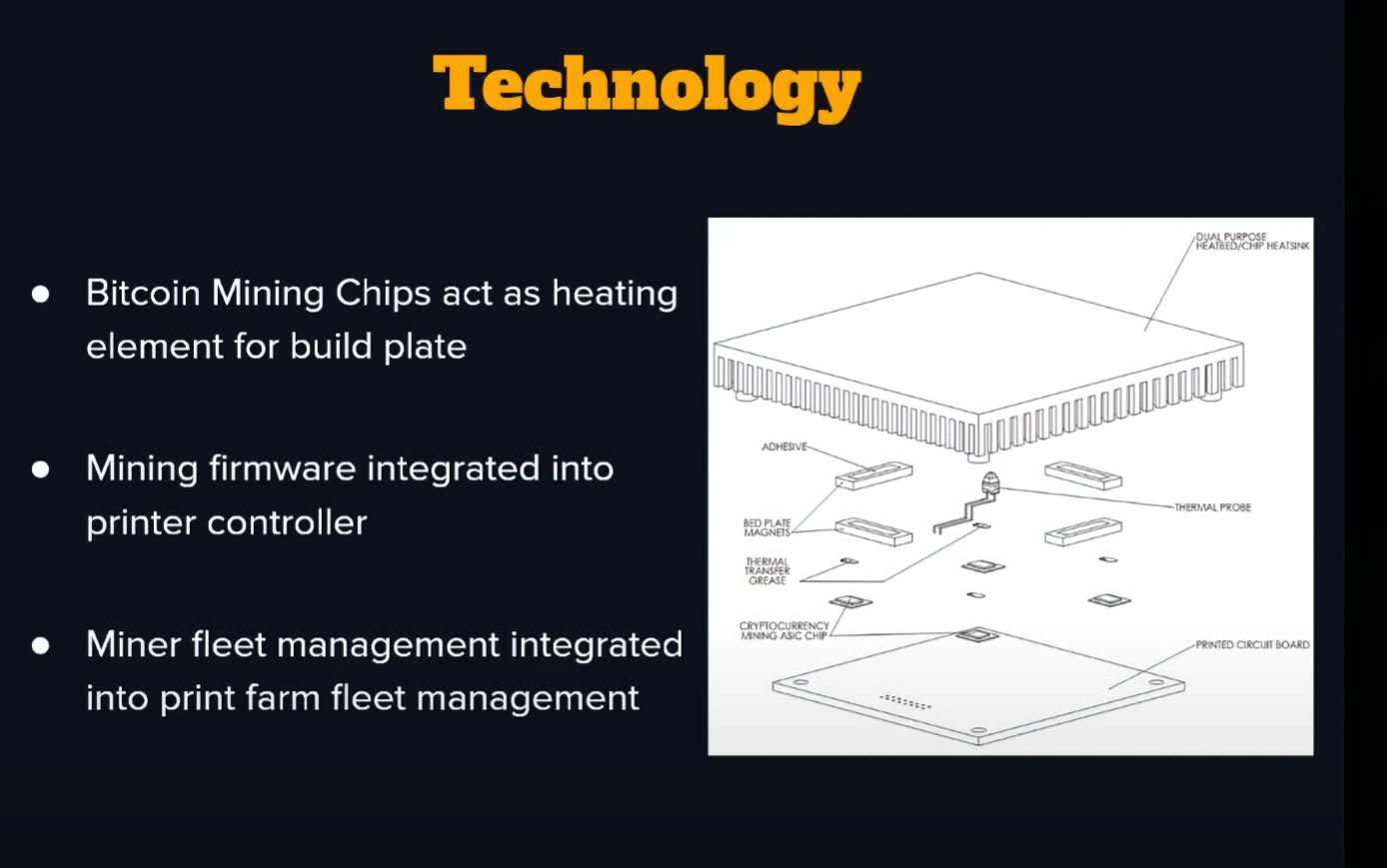
The same chips normally used to mine Bitcoin are also generating the heat needed to keep the printer bed at the right temperature.
Rather than treating mining heat as a waste product, the design turns it into the printer's heating element.
The current prototype is based on an open-source Voron printer design and uses four Bitmain BM1362 ASIC chips taken from a GekkoScience "Mein Coffee" mug warmer miner. Those chips are attached to a custom metal bed that doubles as a heatsink, allowing the printer to draw heat away from the ASICs while putting it to use.
Instead of running the chips at a fixed speed for maximum mining efficiency, the system varies the ASIC clock rate to hit a target bed temperature. When the bed needs more heat, the chips hash faster. When it is up to temperature, they throttle back.
During the recent Home Mining Podcast interview, Prokopyk said the prototype averages around 500 GH/s while printing materials that need a bed temperature of roughly 75C to 80C. Hashrate fluctuates depending on the amount of heat required, with the unit reportedly able to climb much higher when the bed is still warming up.
– PizzAndy🍕 (@Real_PizzAndy) February 1, 2026
This is not being pitched as a consumer toy, at least not primarily. The idea is to use these mining beds in print farms, where machines can run around the clock and where every watt already being used for heat could theoretically earn back a little value.
Proof of Print's website describes the concept as a way to replace traditional resistive heating elements in print beds and chambers with Bitcoin mining hardware.
There are obvious caveats. Bitcoin mining is an economically volatile pastime, and selling a 3D printer on the promise that it might mine enough to offset part of its cost is a tricky pitch.
The prototype also remains early-stage, and scaling it into a practical commercial product will mean solving the usual challenges around cost, reliability, firmware integration, and support.