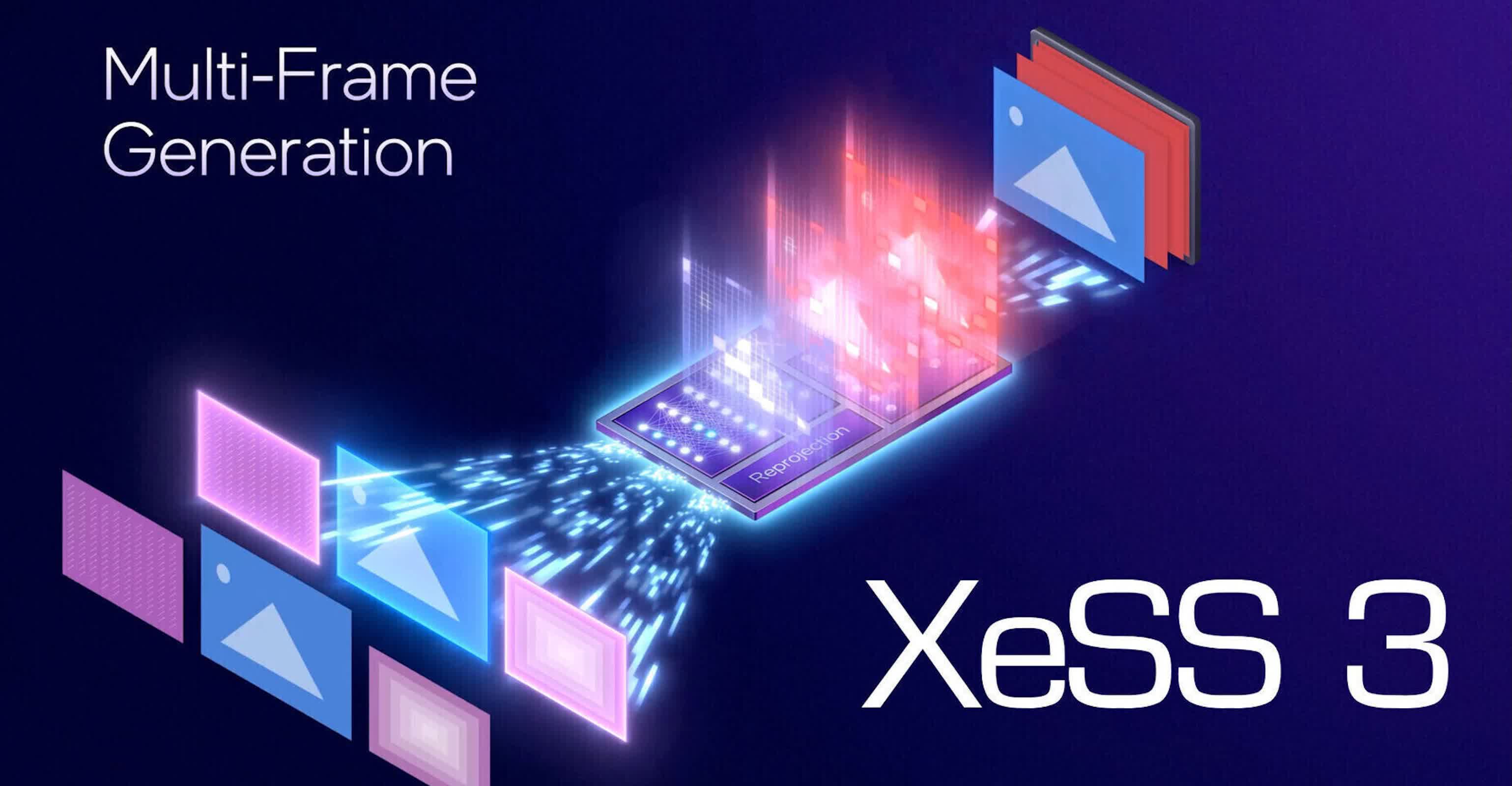
What just happened? Intel's latest XeSS 3.0 launch brings major advances in AI-assisted upscaling – but not the open-source transparency many developers were expecting. Team Blue released the software development kit this week, offering game developers the tools to integrate the updated version of its Xe Super Sampling technology into modern engines and titles.
The SDK introduces a substantial technical leap in multi-frame generation (MFG). By inserting up to three AI-generated frames, MFG can boost performance by up to 4x, rivaling Nvidia's DLSS frame generation. The new model uses data from surrounding frames to predict smoother motion and reduce blur or ghosting, making fast-moving scenes look more natural. It improves frame stability without adding noticeable lag. This improves both performance and image quality.
Intel's new SDK also improves memory handling through support for external memory heaps. The change allows XeSS to draw directly from GPU memory allocated by the game engine rather than carving out separate space, minimizing fragmentation and redundant buffers. With more control over memory use, developers are able to improve performance and make integration easier.
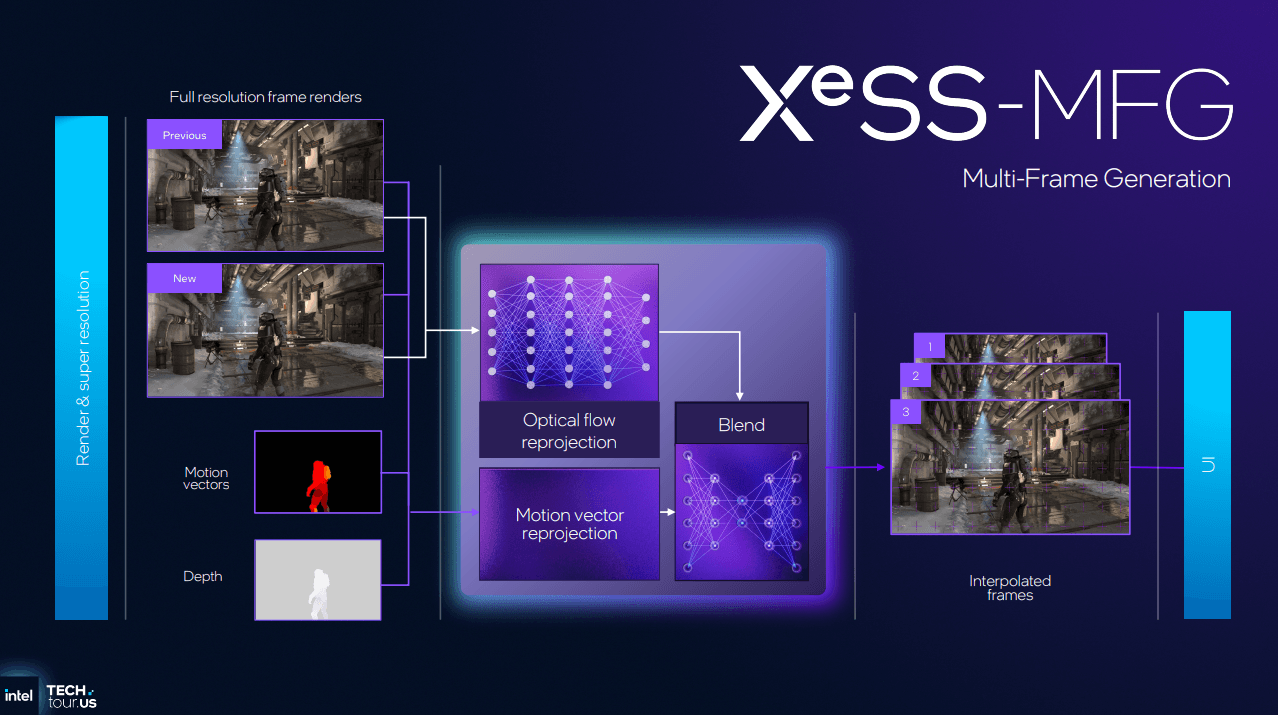
Despite these engineering accomplishments, the release carries a familiar limitation. Intel has once again opted to deliver XeSS 3.0 as a proprietary, precompiled binary rather than fulfilling its long-standing promise of an open-source model. Developers have awaited access to XeSS source code for four years, but each release, including this one, has arrived under Intel's closed license and remains restricted to Windows systems.
The binaries, distributed through GitHub, appear as dynamic-link library files, leaving Linux developers dependent on compatibility layers for any attempt at integration.
For gamers running Windows, installation remains straightforward – updating to XeSS 3.0 involves replacing a few existing library files from earlier versions. But on Linux, support remains problematic. Some games have forced users to rely on workarounds to bypass issues with Intel graphics stacks, a lingering frustration for users who favor open ecosystems.
XeSS 3.0 represents a meaningful technical step forward for Intel's upscaling ambitions, tightening the competition with both Nvidia and AMD. Yet by maintaining a binary-only licensing model, Intel risks alienating developers who increasingly expect transparency and cross-platform flexibility in rendering tools tied to AI. For now, XeSS remains a Windows-centric technology – powerful, but not yet open.