
The big picture: Valve is preparing to challenge New York's effort to classify its loot box systems as illegal gambling. The complaint frames Valve's design as an online casino, pointing to slot machine – like animations and alleging particular harm to minors, whom James says are being conditioned to gamble. Valve sees the case as a test of how digital item economies should be regulated in the state and potentially beyond.
New York Attorney General Letitia James sued Valve in February, arguing that mystery boxes in Counter-Strike 2, Dota 2, and Team Fortress 2 constitute "quintessential gambling" because players pay for a chance to obtain rare cosmetic items that can carry significant monetary value and be traded for real money.
Valve's response, published on a dedicated Steam Support page, challenges that premise on both legal and technical grounds. The company argues that its mystery boxes – crates, cases, and chests – fall within a much older model of randomized collectibles, equating them to baseball card packs, Magic: The Gathering and Pokémon card boosters, blind boxes, and Labubu figurines, where buyers have long accepted probabilistic rewards and secondary markets.
Valve stresses that these items are purely cosmetic, do not affect gameplay, and that "most" players never open boxes at all, instead playing without engaging with the loot economy.
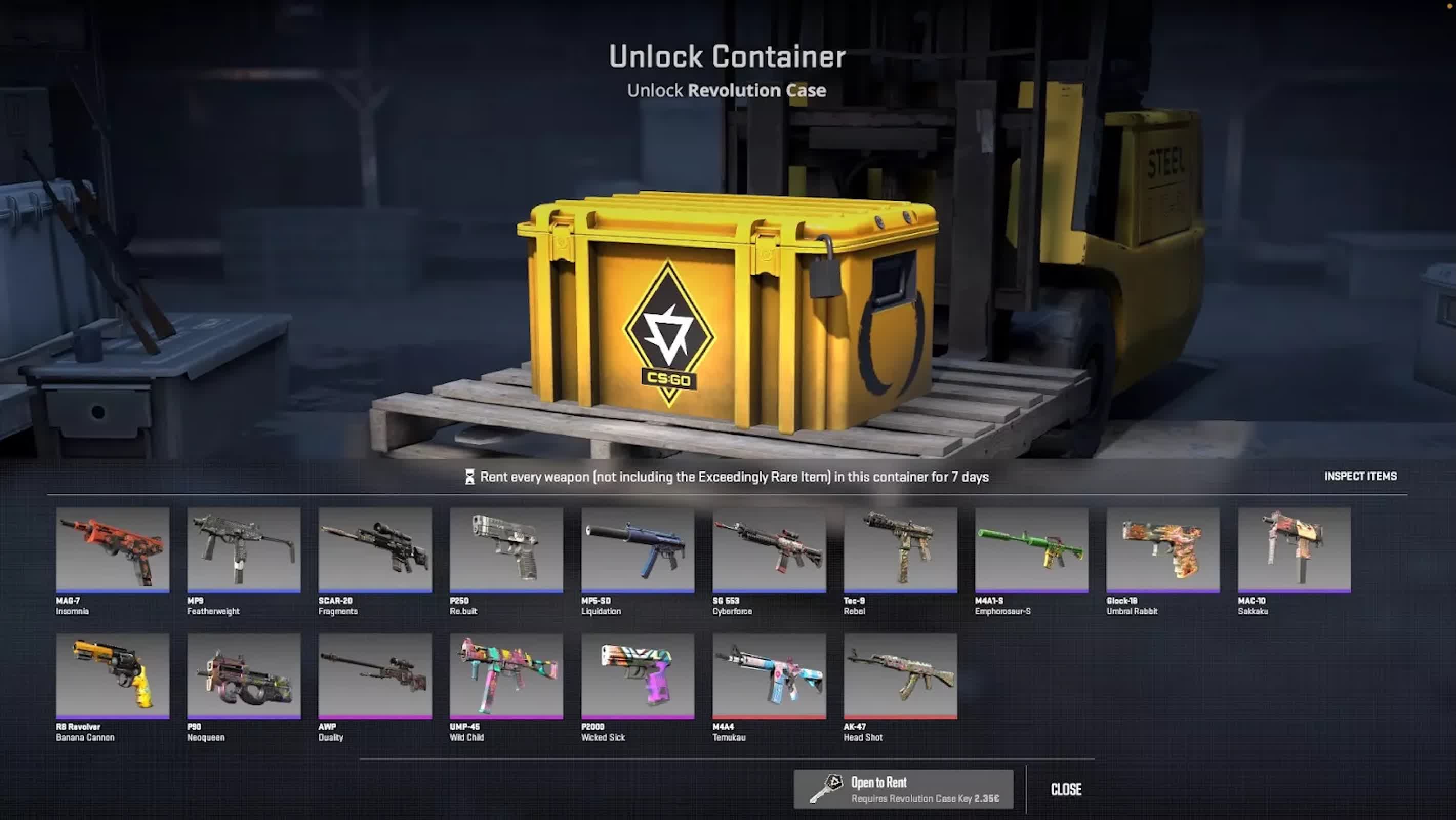
Under the hood, Valve has built a tradable-item economy around these cosmetics, presenting it as a consumer-friendly feature rather than a gambling vector. Skins and other drops can be transferred through Steam Trading or sold between users on the Community Market, which Valve says mirrors how physical cards are traded or sold in hobby markets.
The New York attorney general has reportedly pushed to strip transferability from these digital items, but Valve says it "refuse[s] to do that," describing the ability to move items between users as a fundamental right that should not be removed.
At the same time, Valve outlines a series of technical countermeasures designed to curb third-party gambling around these items. The company says it has locked more than a million Steam accounts that were being misused by third-party operators for gambling, fraud, or theft, and has introduced features like trade reversals and trade cooldowns to make it harder for skin-betting sites to exploit users and inventory flows. Valve also prohibits gambling-related businesses from sponsoring tournaments for its games and insists that it does not cooperate with gambling sites.
A key point of friction is data collection and geo-compliance. Valve says New York wanted it to deploy invasive technologies globally to detect users masking their location – for example, via VPNs – and to gather more personal data for age verification than it currently does during payment processing, despite many payment methods already performing their own age checks. Valve argues that expanding surveillance and data retention in this way would undermine user privacy and exceed what New York law currently requires.
On the policy side, Valve says it will comply with any loot box – specific laws the New York legislature passes, but contends that the attorney general is effectively trying to enforce rules that do not yet exist and push obligations beyond the state's borders. The company also objects to rhetoric linking games to real-world violence, pointing to studies it says show no causal connection and arguing that such claims are a familiar mischaracterization of the medium.
For now, both sides are staking out positions that could reshape how randomized monetization and item trading function in one of the largest digital game ecosystems. Valve has told New York players that it is ready to defend its systems in court rather than accept a settlement it believes would harm users, third-party developers, and its ability to experiment with game design.