
What just happened? Google has quietly dropped an AI-powered search feature called What People Suggest, which offered crowdsourced health advice from people who share similar medical conditions or experiences. The company insists that the decision has nothing to do with the safety or quality of the tool, despite the controversies that often come from combining AI and healthcare.
Launched in March 2025 on mobile in the US, What People Suggest leveraged AI to collate information from various online discussion platforms, such as Reddit, Quora, and X, and share it with users. An example Google gave was someone with arthritis wanting to know how others with the condition exercise.
Google said the feature showed "the potential of AI to transform health outcomes across the globe."
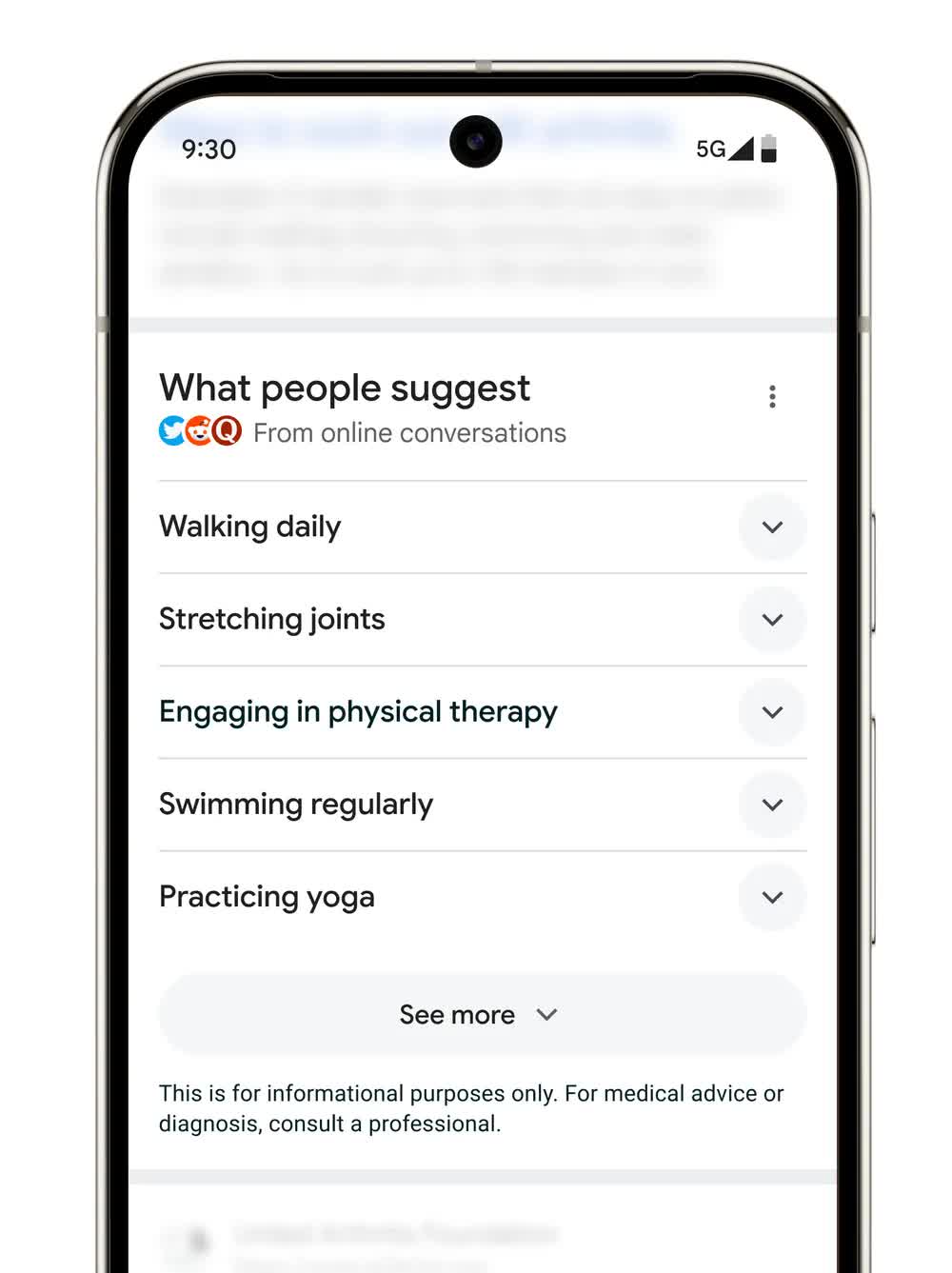
The tech giant confirmed that What People Suggest has been removed. A spokesperson emphasized that it had nothing to do with the quality or safety of the feature, but was part of a "broader simplification" of its search page.
Google has been very quiet when it comes to revealing the removal of What People Suggest. The spokesperson said it was killed off months ago, and that news of efforts to simplify the search results page was shared publicly.
When The Guardian asked where this was shared, the spokesperson pointed to a post from November last year written by John Mueller, a search advocate at Google Switzerland. There is no mention of What People Suggest in the post.
Google is no stranger to controversy when it comes to AI and medical advice. In January, the company removed several of its AI Overviews following a report that found inaccurate information was being shown to users that could put their health at risk.
One example was the AI Overviews advising people with pancreatic cancer to avoid high-fat foods. Experts say this is exactly the opposite of what should be recommended, and may increase the patient's risk of death.
The summaries also showed incorrect information about crucial liver function tests, which could leave people with serious liver disease wrongly thinking they are healthy. Answers for women's cancer tests showed the wrong information, too, which experts say could cause people to dismiss serious symptoms.