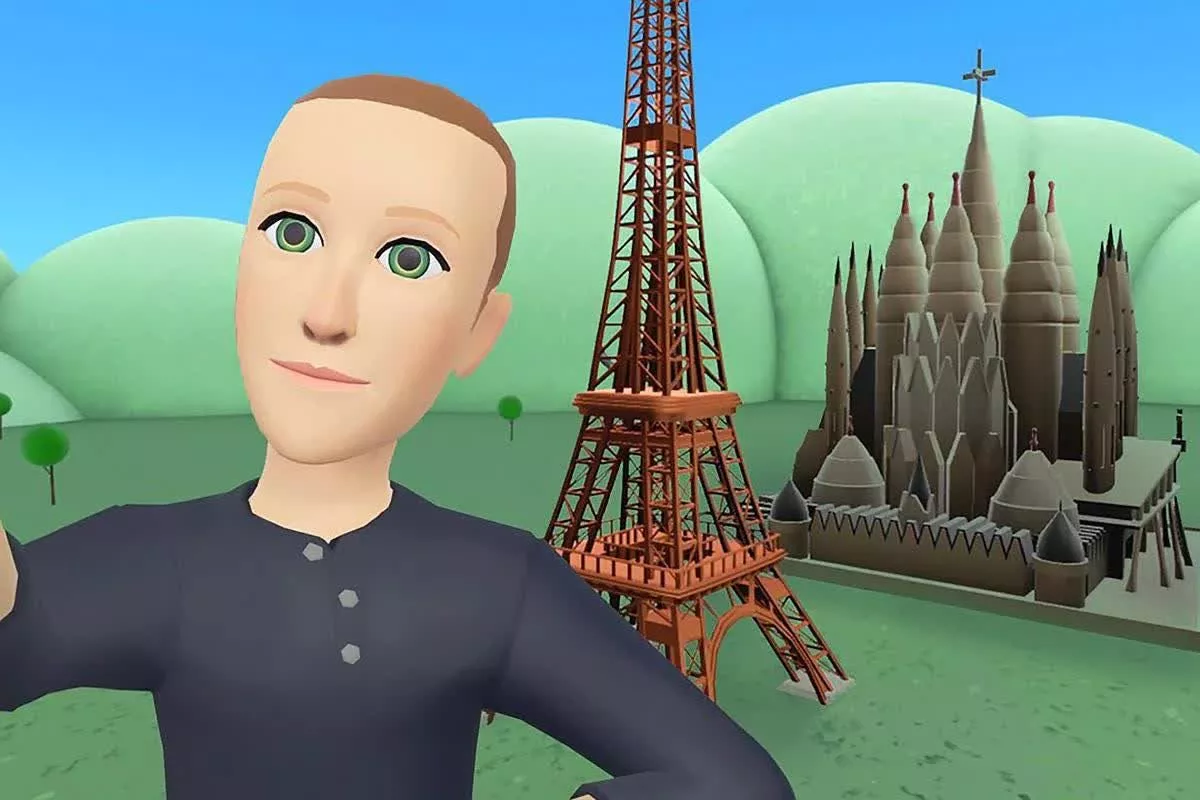
Editor's take: Meta likes to claim that the metaverse dream it spent billions on and believed in so much that it adopted the name isn't dead. But moving its Horizon Worlds app off the Quest store and making it an online-only experience doesn't send positive signals.
Update (March 20): Meta has walked back its earlier plan to phase out VR support for Horizon Worlds, opting instead to keep the experience running on Quest headsets for existing content. The reversal, confirmed by CTO Andrew Bosworth, means current VR-compatible worlds will remain accessible, but future development is shifting decisively toward mobile.
New experiences will be built primarily for phones, leaving VR in a maintenance mode rather than a growth area as Meta continues to redirect resources toward broader platform priorities.
Meta announced in February that it was making Horizon Worlds, its first attempt at creating a shared immersive VR world that Mark Zuckerberg was once obsessed with, a mobile-only experience.
Now, Meta has given a timeline for the move. Horizon Worlds and Events will no longer appear in the Store on Quest from March 31, 2026. Also, the Horizon Central, Events Arena, Kaiju, and Bobber Bay worlds will no longer be available in VR.
Anyone who has downloaded the app will be able to use it in VR until June 15, after which point it will stop working in virtual reality.
Meta also writes that Hyperscape Capture, a feature it recently introduced in beta that allows Quest headset owners to capture, share, and visit each other in 3D scans of real-life locations, will be removed from Horizon Worlds by March 24. Meta says users will still be able to capture and view Hyperscapes, but sharing, inviting, and co-experiencing Hyperscapes with others will no longer be supported.
Meta claims separating VR and Horizon allows the two platforms to grow with greater focus. But the reality is likely an admission that AI has put the final nail in its metaverse plans.
It was reported in December that Zuckerberg was planning to slash Reality Labs' budget by 30% as Meta shifted some of its investment from the metaverse group toward AI glasses and wearables.
Things got even worse for the group in January, when it was reported that around 1,500 people from Reality Labs, about 10% of its total staff, were being laid off. The vast majority of those losing their jobs were said to be working in the metaverse unit on virtual reality headsets and virtual social networks.
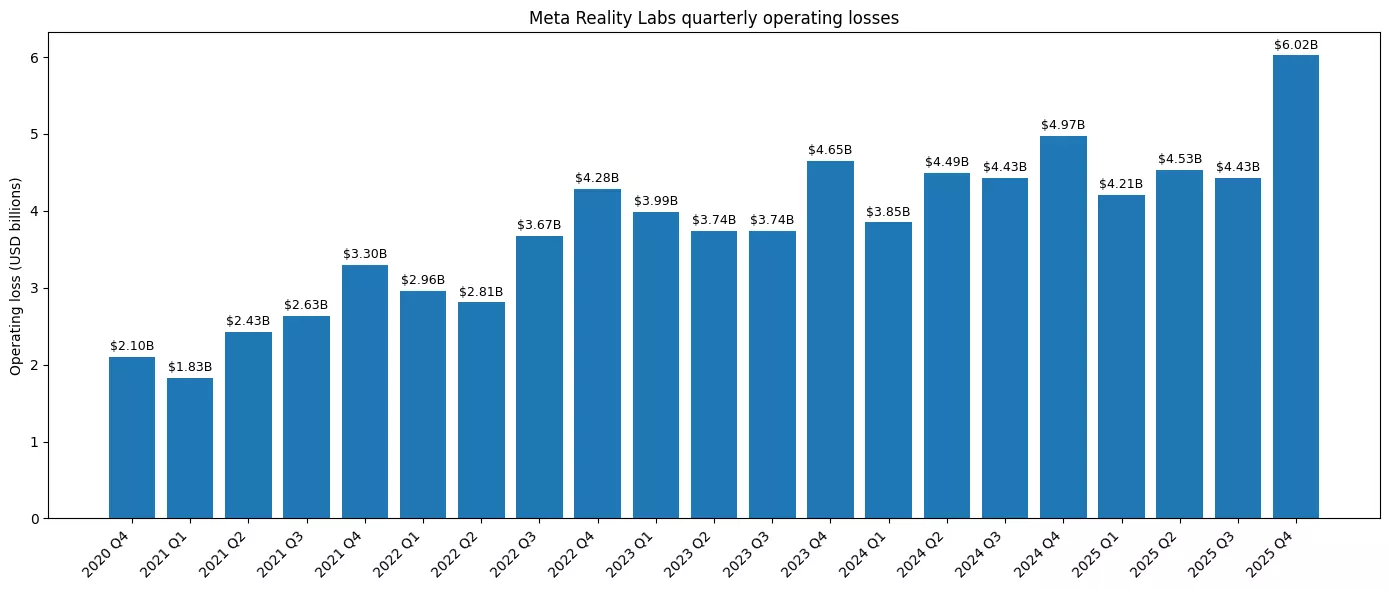
The actions appeared justified a few weeks later when Reality Labs posted its worst quarter ever. With losses growing 21% year over year to a massive $6.02 billion, Reality Labs has burned through at least $80 billion since 2020. One has to wonder if Zuckerberg now regrets changing his company's corporate name from Facebook to Meta Platforms.