
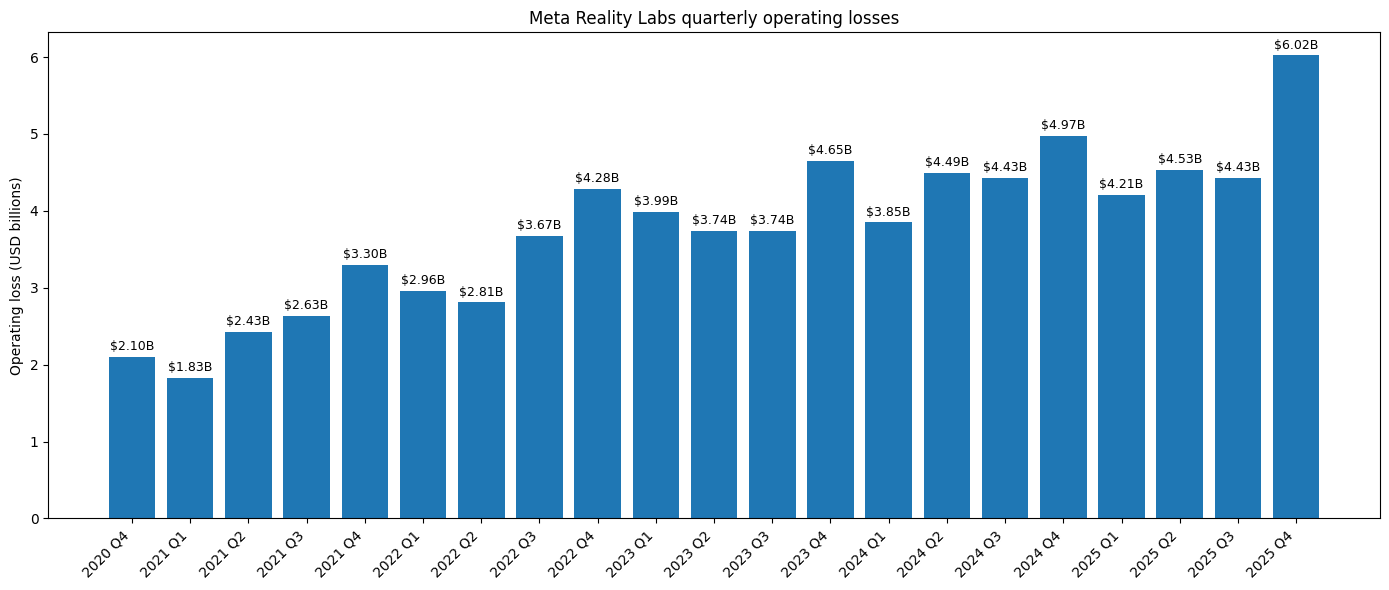
Facepalm: If there's one reassuringly familiar sight every time companies release their financial results, it's Meta's Reality Labs posting operating losses in the billions of dollars. The fourth quarter was no different, with losses growing 21% year over year to a massive $6.02 billion. It means Reality Labs has now burned through at least $80 billion since 2020.
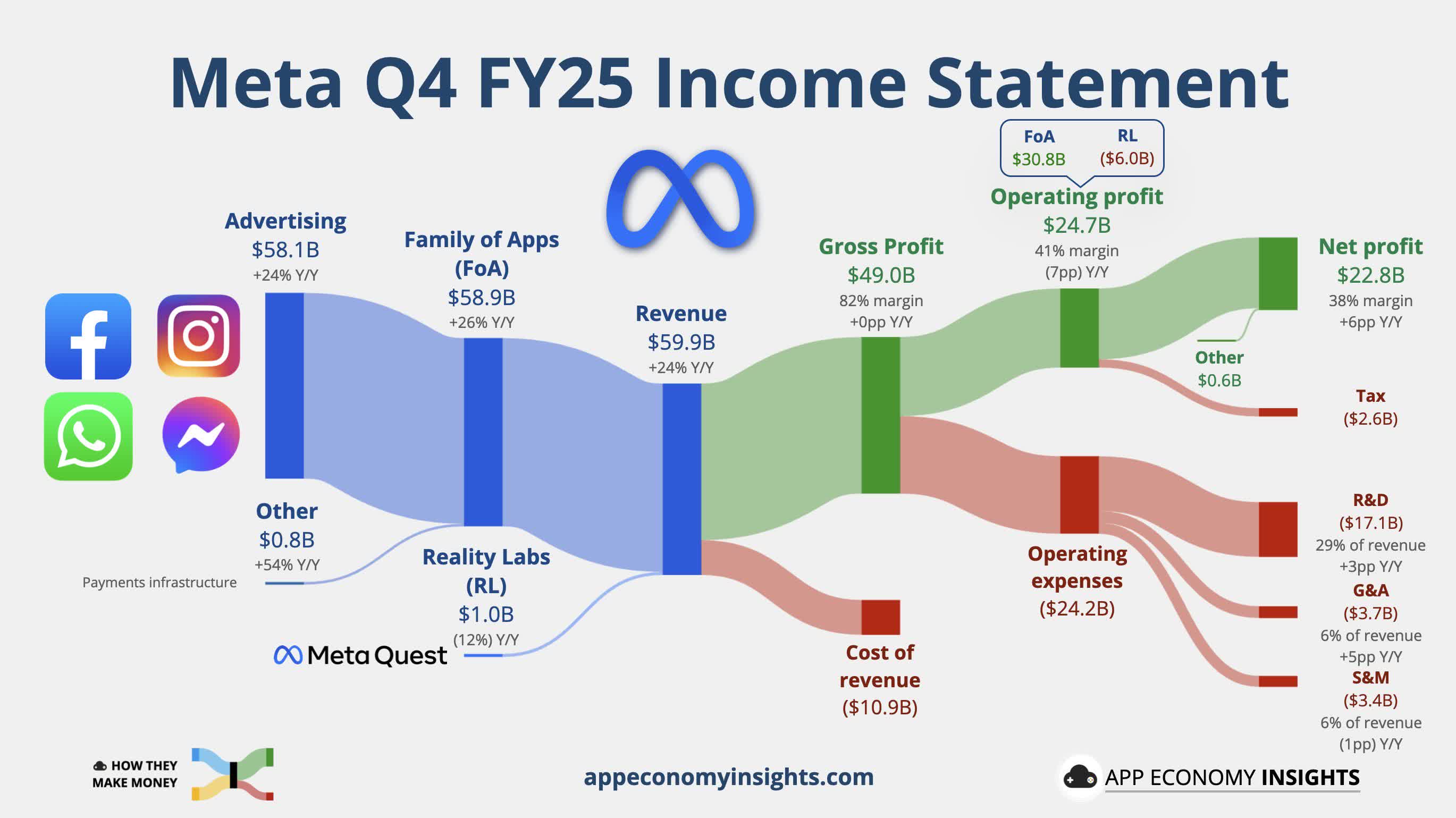
Reality Labs' $6.02 billion operating loss was even worse than the $5.67 billion analysts had been expecting. The segment managed to record $955 million in sales, which was at least better than the $940.8 million that had been predicted.
The recent quarter saw Reality Labs' largest loss since Meta started reporting the division's revenue in Q4 2020. It was 21% higher than the same quarter a year earlier, though sales were up 13% during the same period.
Most CEOs would have stepped in before a division racked up $80 billion in losses, but Mark Zuckerberg had an unwavering faith in his vision of a shared virtual metaverse – he even renamed his company after the concept.
The CEO repeatedly said that the industry would be worth billions or even trillions of dollars after 2030 – Meta even commissioned a report in 2023 that claimed the metaverse could contribute $760 billion to the US GDP by 2035.
But Zuckerberg's confidence started to wane when the generative AI revolution began. Most people were indifferent at best to the idea of a metaverse, and the rise of artificial intelligence pushed it even further into the background.
December brought reports that Zuckerberg had decided to cut his losses and slash Reality Labs' budget by 30% while making extensive staff reductions.
Credit: App Economy Insights
Those reports proved accurate when the Reality Labs cuts were confirmed earlier this month as the company laid off over 1,000 employees from the division.
A spokesperson said that the company was shifting some of its investment from the Metaverse group toward AI glasses and wearables as it looked to capitalize on the "momentum" in the segment.
Andrew Bosworth, Meta's chief technology officer, said last week that the company was still continuing to invest heavily in the VR space, but admitted that the area was not growing as quickly as executives hoped.