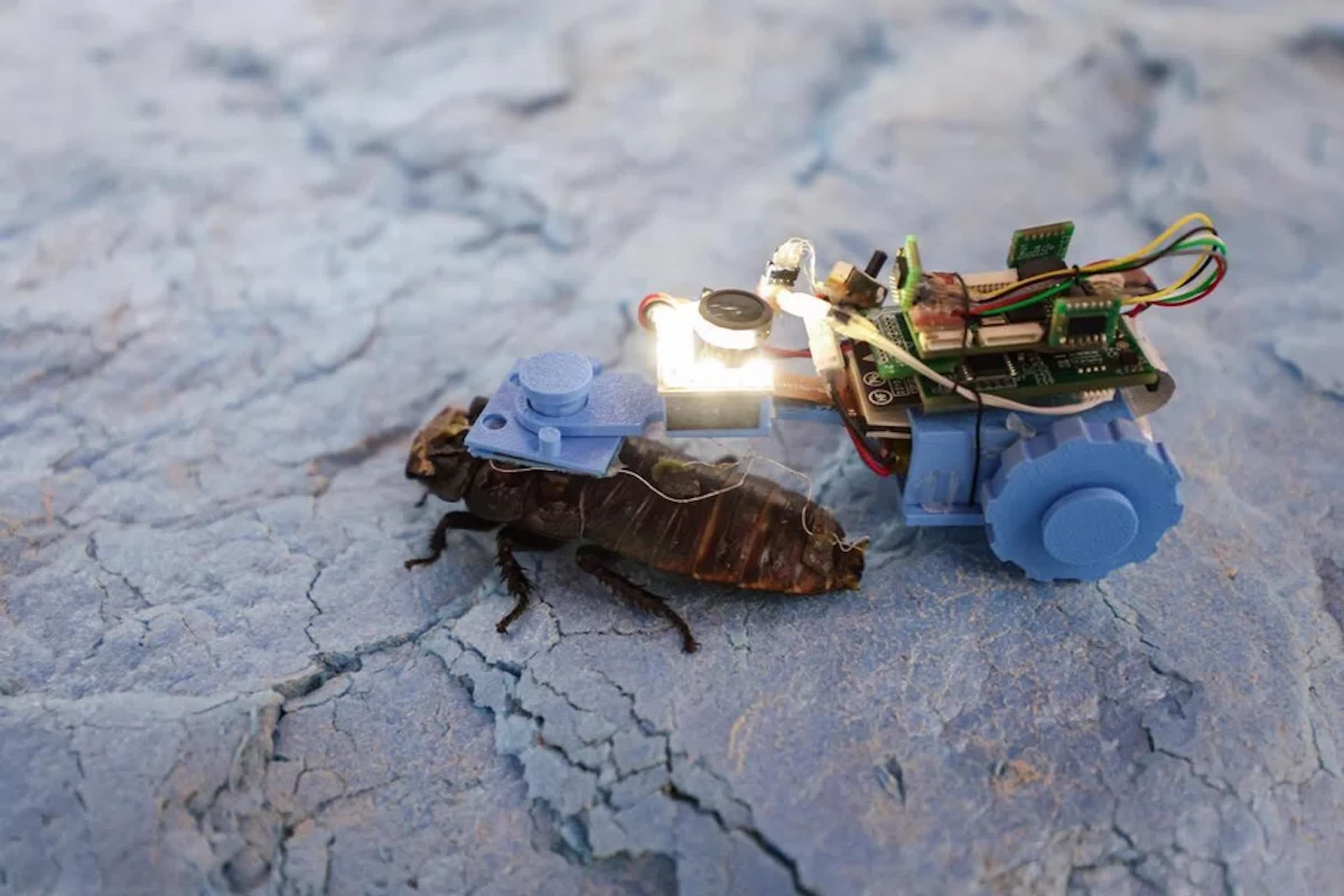
First look: In Singapore, the future of infrastructure inspection may scuttle rather than roll. At Nanyang Technological University, researchers are adapting cyborg cockroaches – hybrid insects equipped with robotic backpacks that allow their movements to be remotely controlled – for a role far removed from their original mission in disaster zones. The same technology that once sent modified Madagascan hissing cockroaches crawling through earthquake debris is now being retooled to monitor aging pipelines and underground systems.
The program is led by Hirotaka Sato, a professor at NTU's School of Mechanical and Aerospace Engineering and a recognized pioneer in the field of cyborg insects. His work first gained international attention years ago when he achieved the first remotely controlled flight of a cyborg beetle – a milestone later recorded by the Guinness Book of Records.
Today, Sato's team is advancing a new phase of research, placing these engineered insects in more routine – though still highly practical – roles. "We are testing more day-to-day uses, like checking old pipelines," he told The Financial Times.
The cockroaches' unique physiology makes them particularly suited for this work. Over millions of years, these insects have evolved to squeeze through narrow spaces that conventional robots struggle to navigate.
By combining that natural mobility with NTU's control mechanisms, engineers have created a tool ideal for inspecting confined environments, such as utility tunnels and sewage lines, where humans or standard robots cannot easily go.
Each cyborg cockroach carries a lightweight electronic module that delivers subtle electrical signals to guide its movements. These signals allow operators to steer the insect, and the latest model uses 25% less voltage, extending battery life. One of Sato's assistants emphasizes that the electric pulses do not cause the cockroach any pain.
The group first tested its system under extreme conditions a year ago, when a small contingent of 10 modified cockroaches was deployed to Myanmar after a 7.7-magnitude earthquake killed more than 3,300 people. Armed with infrared cameras, the insects searched through debris but found no survivors.
Even so, the deployment demonstrated that cyborg cockroaches could operate in real disaster settings. The team's next goal is scale. Using a newly automated attachment process, they can now fuse a control module to a cockroach in just over a minute – a dramatic reduction from the hour-long procedure previously required for each unit.
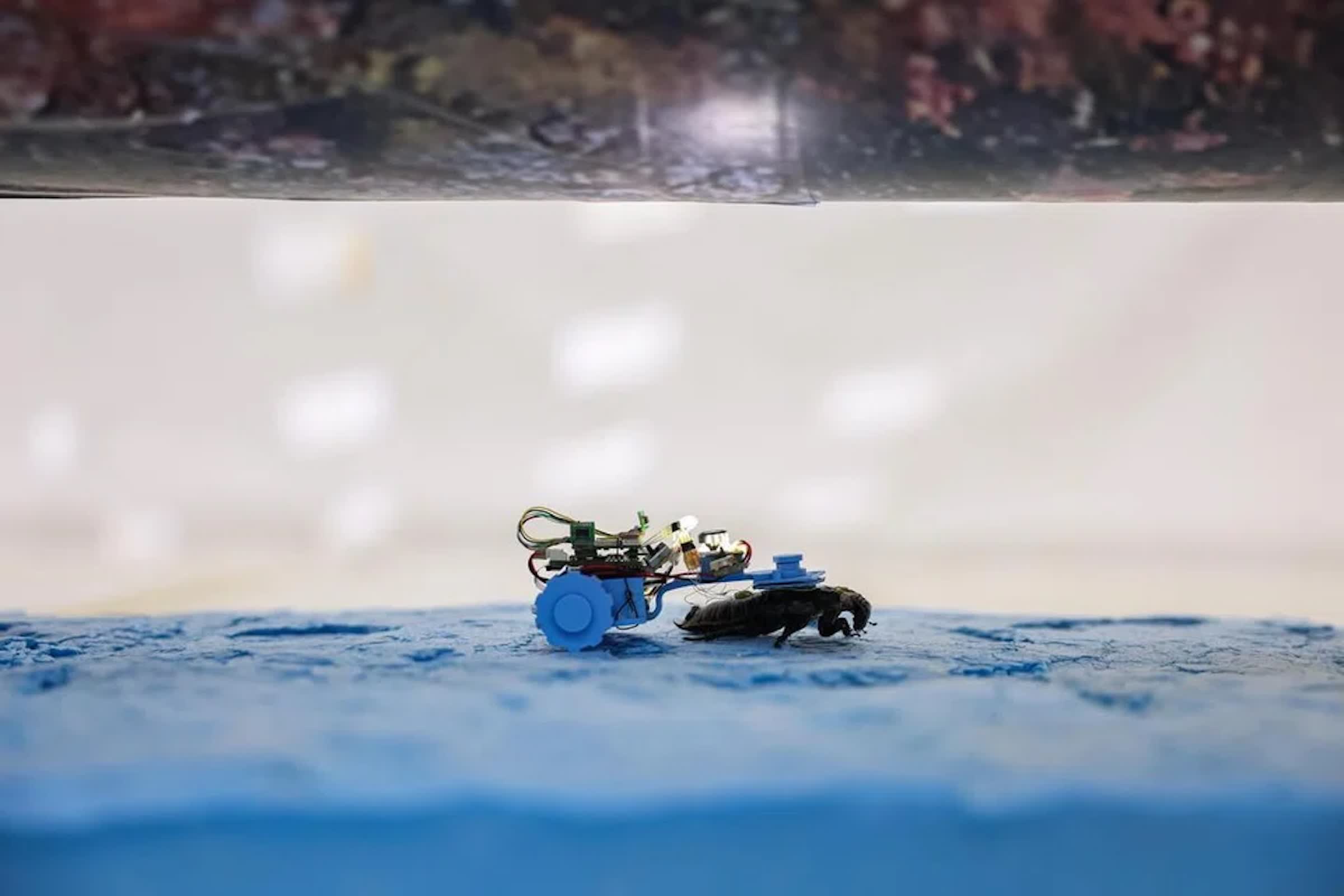
The latest prototypes reflect their new operational environment. Instead of compact backpacks built for rescue work, these cockroaches are now equipped with miniature chariots that include a torch, a camera, and a larger battery mounted on small wheels. The insects pull these rigs through pipelines, collecting images of damage and leaks. Local trials are scheduled to begin within Singapore's transportation network.
While the potential applications extend well beyond infrastructure inspection, Sato draws a clear boundary for his work, emphasizing that NTU's research remains civilian in nature. That distinction matters because elsewhere, similar biohybrid insect initiatives have taken a more militarized turn. A German start-up, Swarm Biotactics, recently unveiled its own prototype for cockroach-borne surveillance devices intended for reconnaissance.
At NTU's campus, however, the goals are decisively non-military. Once the cockroaches complete their assignments, they can retire, living out the rest of their lives in containers stocked daily with fresh lettuce.
Image credit: The Strait Times