
Rumor mill: OpenAI is preparing for one of the largest expansions in its short history, adding thousands of new roles as it refocuses its business model around enterprise clients and deeper product integration. The move illustrates how quickly competition in the AI enterprise market is intensifying, as OpenAI tries to slow Anthropic's momentum.
The company, valued privately at about $730 billion, is expected to nearly double its headcount to roughly 8,000 employees by year's end, up from about 4,500 currently, people familiar with the matter told The Financial Times. New hires will be concentrated in engineering, research, sales, and product development. A significant share will also be devoted to what OpenAI insiders call "technical ambassadorship," a role designed to embed specialists inside customer organizations to steer AI adoption and customization, an embedded-engineer approach first popularized by Palantir.
To accommodate that growth, OpenAI has signed a new San Francisco lease that will expand its office footprint to more than 1 million square feet, making room for an average of a dozen new hires per day, according to the report.
The company's expansion comes as it faces fresh pressure from Anthropic, which has rapidly gained traction with business customers since early 2024. Data from more than 50,000 customers of the payments startup Ramp indicate that first-time enterprise buyers are now choosing Anthropic's services three times as often as OpenAI's – a sharp reversal from a year earlier.
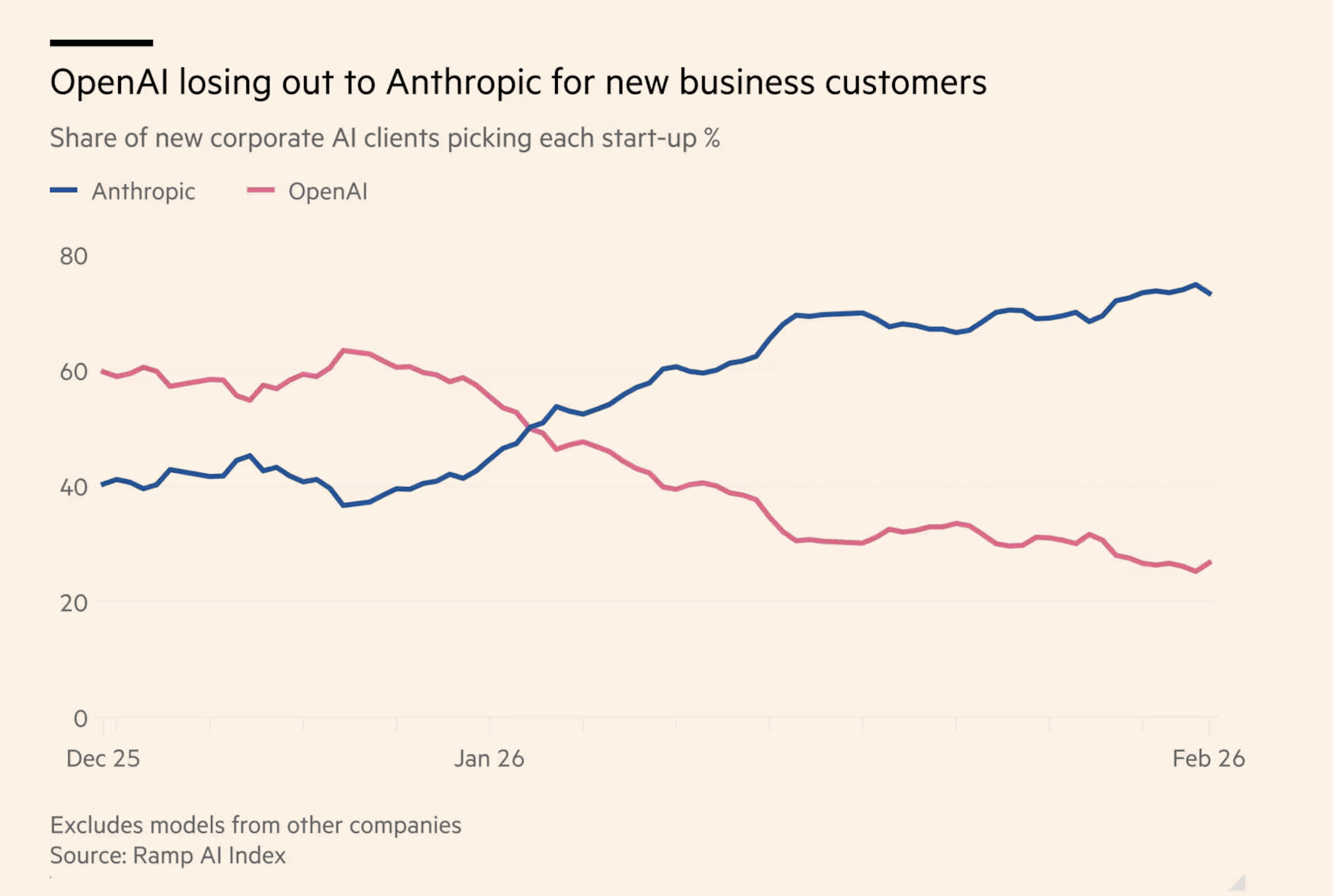
Image credit: Financial Times
An OpenAI spokesman disputed that assessment, calling the metric unreliable. "The notion that enterprise market share can be derived from Ramp credit card data is insane," the spokesman said, noting that large clients typically sign multimillion-dollar contracts without using payment platforms like Ramp.
Inside OpenAI, the shift toward the enterprise market follows months of strategy changes. Late last year, chief executive Sam Altman declared a "code red," urging employees to focus on the company's core offerings. Earlier this month, Fidji Simo, who leads OpenAI's applications business, encouraged staff to abandon "side quests" and concentrate on turning ChatGPT and Codex into more practical tools for productivity and code development.
The renewed enterprise focus also comes as OpenAI explores a joint venture with private equity firms to deploy its tools across those companies' portfolios, according to people briefed on the talks. OpenAI expects its corporate customers to generate about half of its total revenue by the end of the year, up from roughly 40 percent today.
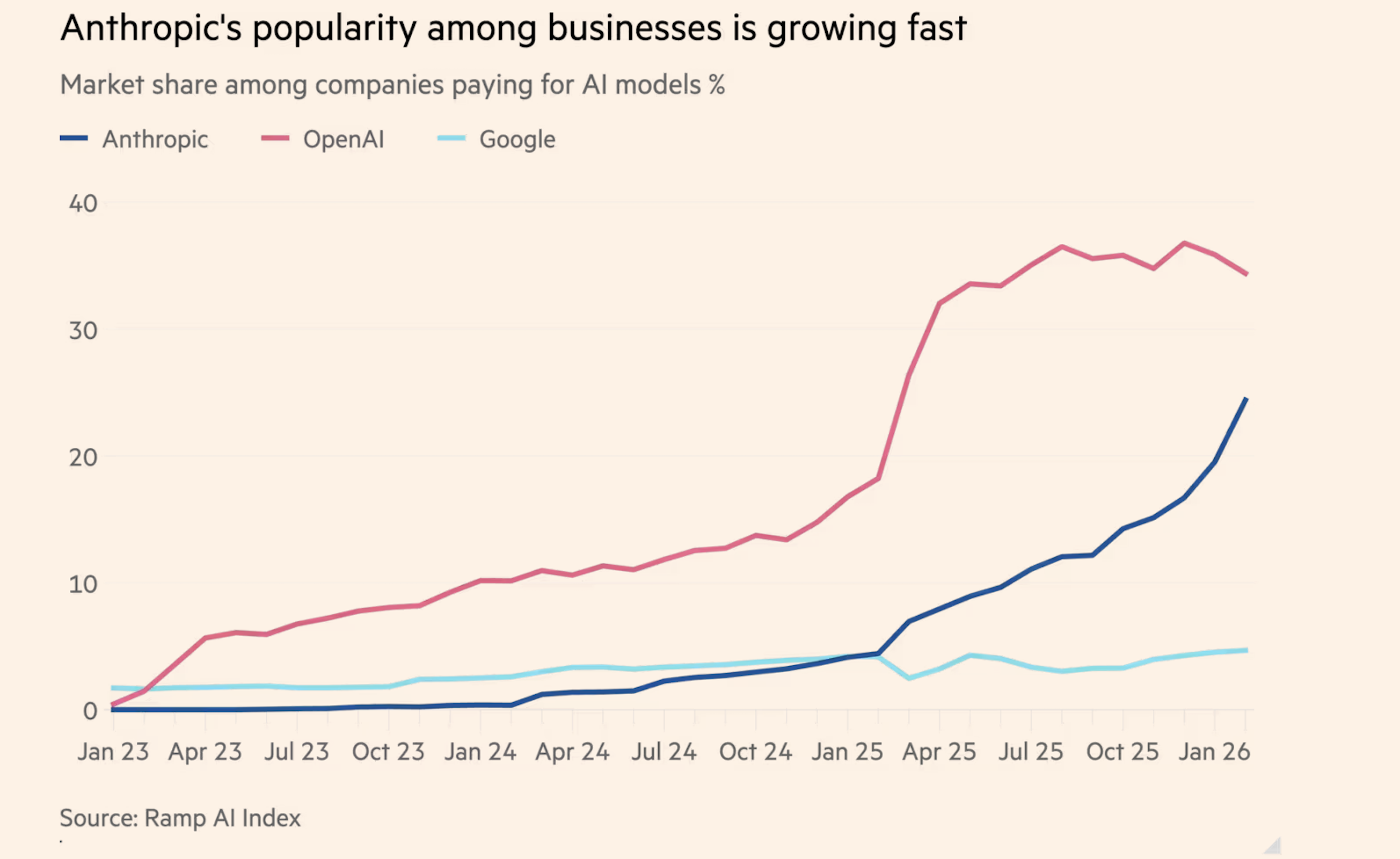
Image credit: Financial Times
Anthropic, founded by former OpenAI researchers in 2021, has taken a more deliberate approach since its founding – targeting enterprise clients directly through its coding assistant Claude Code and related productivity models. That focused strategy has propelled its growth, with the company reportedly adding around $1 billion to its annualized revenue run rate each week since January.
Both companies remain unprofitable, spending billions more than they generate as they train new models and chase market leadership. Investors expect each to pursue a public listing as early as this year. According to one OpenAI investor, the company's challenge lies in avoiding "no man's land" – squeezed between Google's massive consumer reach and Anthropic's enterprise lock-in.