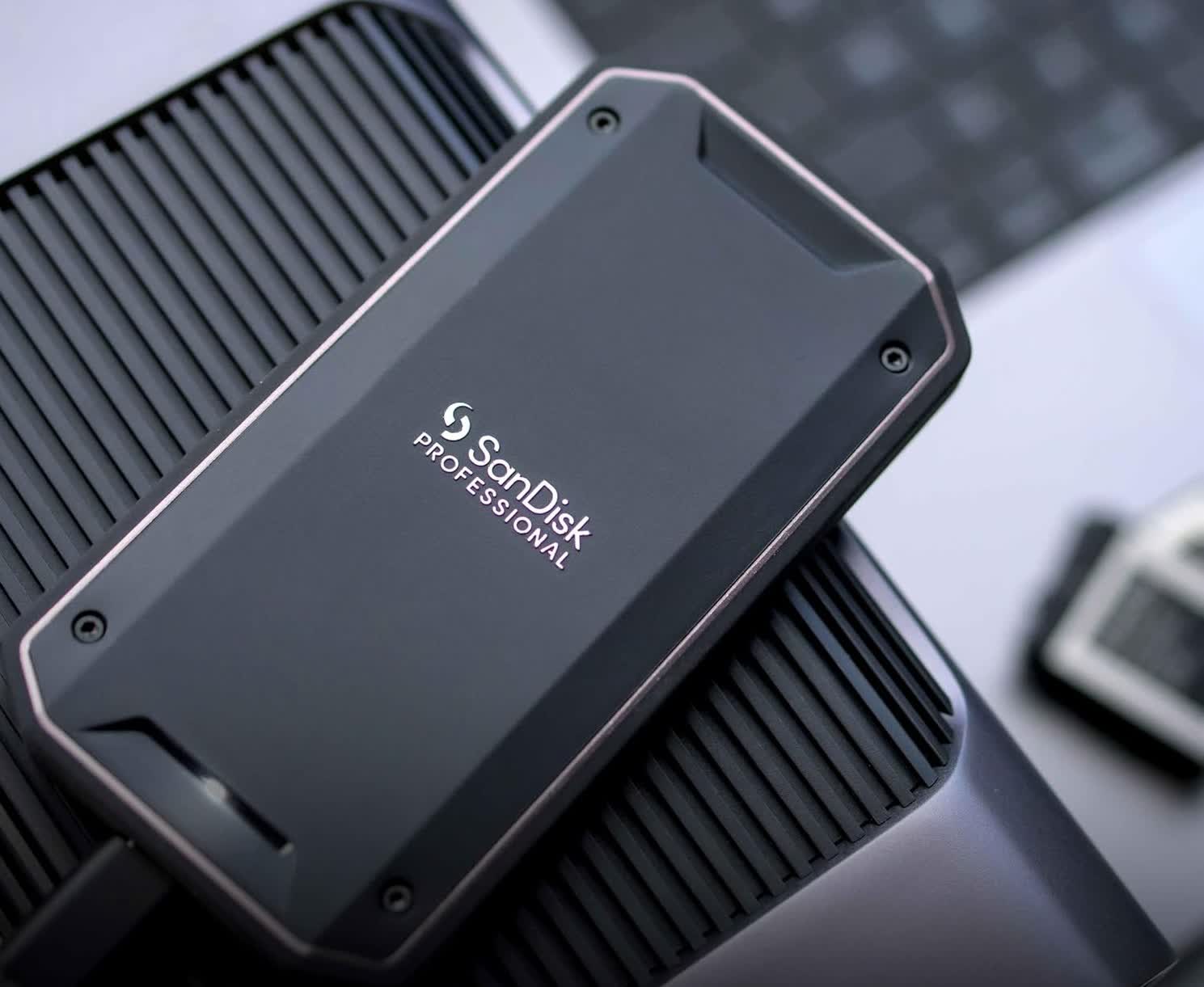
Facepalm: It's another day, and sign of the memory crisis impacting consumer products. This time, Apple customers are getting a painful reminder that external storage is no longer the bargain it used to be.
Apple has quietly raised prices on several third-party SSDs sold through its online store, and some of the increases are stunning.
One of the worst examples is the SanDisk Professional Pro-G40 4TB SSD, which has jumped from $499.95 to $1,199.95 on Apple's US storefront. That's a 140% increase, and an even steeper climb when you remember the drive launched at $399.95.
A 1TB version was reportedly priced at around $120 before climbing to $360, which works out to a 200% increase. That model no longer seems to be listed on Apple's site, suggesting it may have been removed entirely. At the moment, the store appears to be offering only 2TB and 4TB versions of the Pro-G40.
In addition to the awful pricing, availability has dried up. Every third-party storage accessory on Apple's US website currently appears to be sold out, including products from SanDisk, LaCie, and Promise.
The only storage options still available online are Apple's own Mac Pro SSD upgrade kits in 4TB and 8TB capacities. Some of the third-party products may still be available in physical Apple Stores, but that's hardly reassuring when online inventory has been wiped out.
In fairness to Apple, Cupertino typically doesn't set the pricing for third-party accessories sold through its storefront. But that won't matter much to buyers staring at a portable SSD that now costs more than some full PCs. Also, a disclosure on the Apple Store legal reads: "Apple reserves the right to change prices for products at the Apple Store at any time, and to correct inadvertent pricing errors."
The storage and memory market has been under pressure for months as AI infrastructure continues consuming huge amounts of NAND and DRAM. As demand from hyperscalers and enterprise buyers grows, manufacturers have stronger incentives to prioritize higher-margin data center products over the consumer hardware most people actually buy. SK Hynix's boss recently predicted that the memory chip shortage is going to last until 2030.
The crisis has already translated into rising prices for multiple products, and Apple's store is now one of the clearest examples yet of just how extreme things are getting.
The situation is starting to feel a lot like the GPU shortage during the height of the crypto boom and covid: low supply, comical pricing, and products that suddenly seem detached from reality.