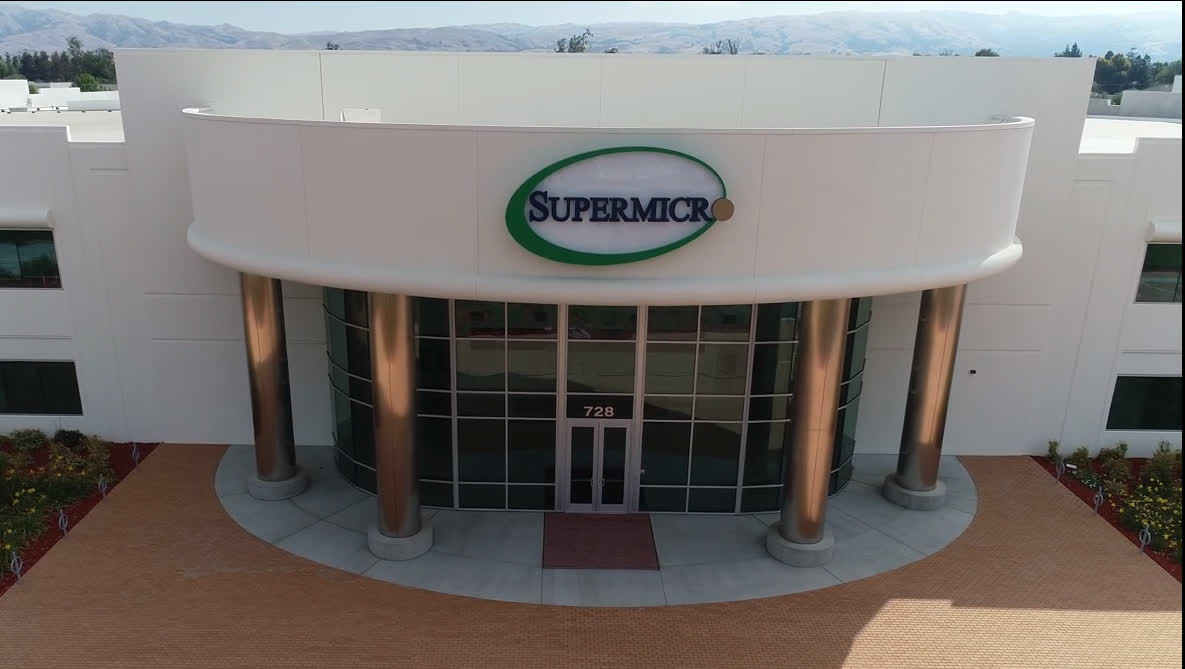
In a nutshell: Supermicro is making unwelcome headlines once again. According to new reports, four Chinese universities, including two with links to the People's Liberation Army, bought or sought the company's server systems containing restricted Nvidia AI chips over the past year.
The report is the latest reminder that Washington's export controls can still be circumvented by embedding advanced GPUs inside full server products. The US first moved against chips such as Nvidia's A100 in October 2022, then tightened the rules in October 2023 with additional measures and broader licensing requirements aimed at diversion through third countries.
The most notable buyers were Beihang University and the Harbin Institute of Technology. Reuters said a March 16 notice showed Beihang procured a machine-learning workstation built on a Supermicro system with four A100s, while a July tender showed HIT bought a Supermicro server with eight of the same chips.
Both schools are already on Washington's export blacklist. That is especially awkward in Beihang's case, as US officials have previously said the university was placed on the Entity List for its involvement in Chinese military rocket and unmanned air vehicle systems.
BIS has also said HIT and several subsidiaries were added to the Entity List for using US technology to support the PLA, including missile programs.
Back in April 2024, 10 Chinese entities reportedly acquired restricted Nvidia AI chips by purchasing servers from Supermicro, Dell, and Gigabyte through resellers.
The Bureau of Industry and Security's (BIS) 2023 update specifically targeted circumvention risk, expanded restrictions to additional countries, and added due-diligence measures meant to catch transshipment networks before the hardware reached China.
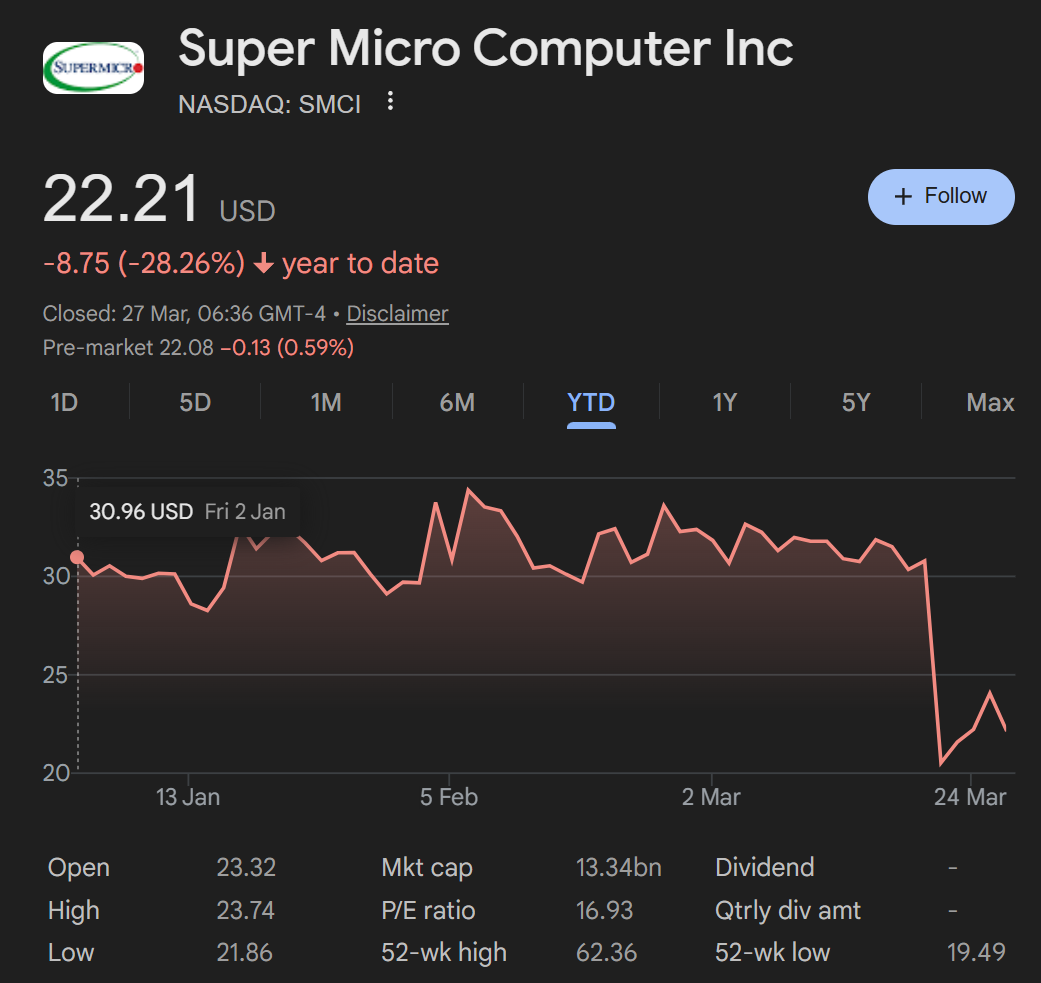
For Supermicro, the timing could not be worse. Last week, the Justice Department unsealed an indictment charging co-founder Yih-Shyan "Wally" Liaw and two others with conspiring to divert high-performance US AI servers to China.
Prosecutors say the group used false documents, staged dummy servers, and convoluted transshipment schemes to hide the real destination of the hardware. The alleged operation involved at least $2.5 billion worth of US AI technology. Supermicro was not named as a defendant and has said it was the victim of an elaborate scheme carried out by the individuals.
That case lands on top of the company's other recent problems. In October 2024, Ernst & Young resigned as Supermicro's auditor after raising concerns about governance, transparency, the completeness of communications, internal controls, and whether it could rely on management and audit committee representations.
Supermicro eventually got back into compliance with Nasdaq's filing requirements on February 25, 2025, after submitting delayed reports.