
In a nutshell: Brain-computer interfaces are often framed as tools for restoring lost function. In a Caltech lab, they are also becoming instruments. Research psychologist Galen Buckwalter, 69, is using six brain implants not only to operate a computer and regain sensation, but also to generate musical tones in real time – turning neural activity into sound that he has already incorporated into performances with his longtime Los Angeles punk band, Siggy.
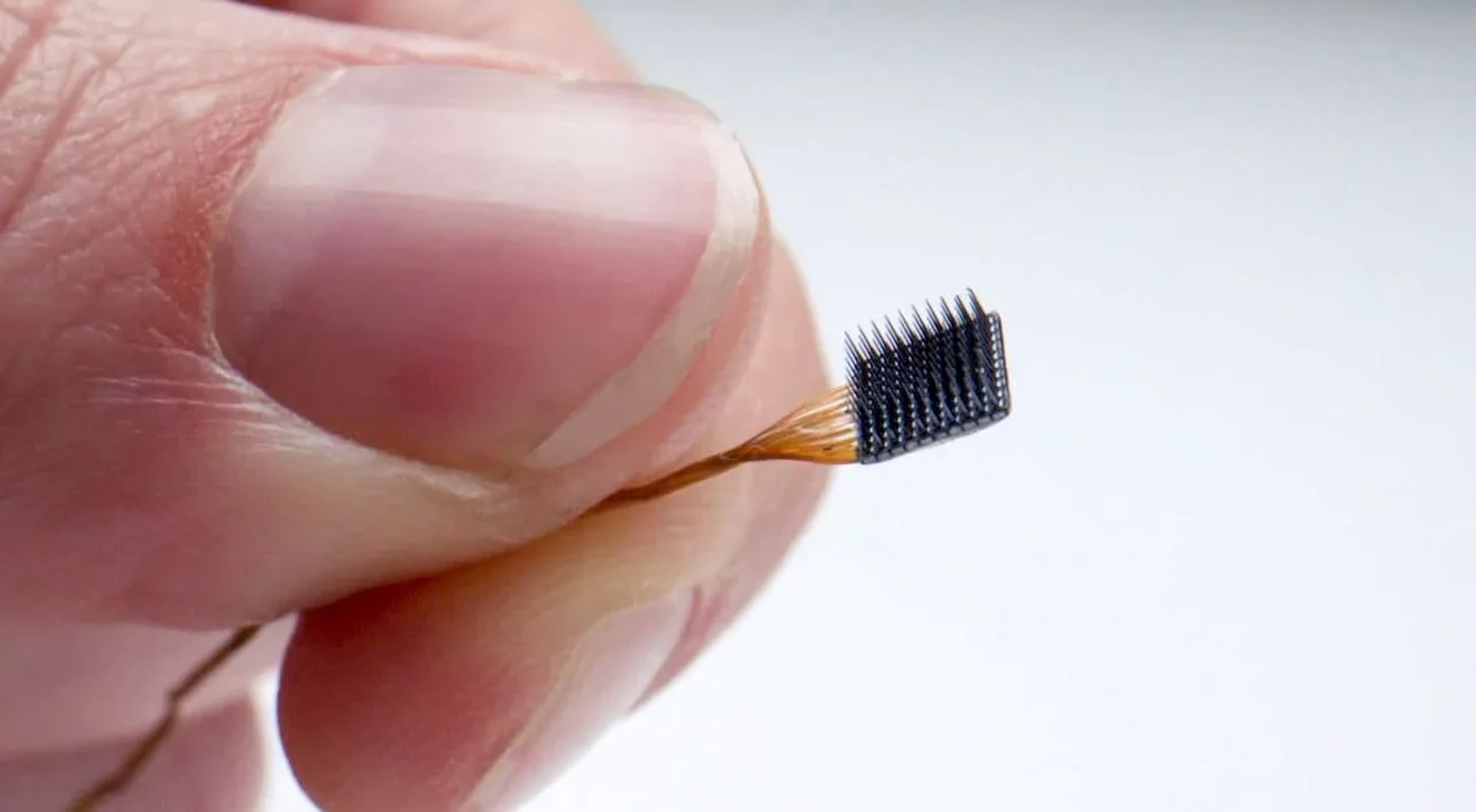
A diving accident at age 16 left Buckwalter paralyzed from the chest down. In 2024, he enrolled in a Caltech brain-computer interface study and underwent a craniotomy to have six Blackrock Neurotech chips implanted in his motor cortex.
Each chip contains 64 channels, giving researchers 384 separate streams of neural data to monitor as he attempts specific movements, such as flexing a toe or moving an index finger. These signals are decoded to infer movement intent, allowing him to control a cursor, feel touch in fingers that had been numb for decades, and now operate a custom audio interface.
The musical system grew out of a simple question: What does a brain sound like? Before his surgery, Buckwalter had seen a viral clip of "biosonified" mushrooms, whose electrical activity was converted into strange, chirping audio. "I saw that and thought, if a mushroom can chirp like that, I want to know what my brain sounds like," he told Wired in an interview. "That was something on my agenda that I wanted to do with the Caltech team."
From the start of the study, he raised the idea with researchers, and Caltech graduate student Sean Darcy took it on as a side project, writing software in his spare time to turn thought into controllable tones.
At the core of Darcy's system is a mapping from individual neurons' firing rates to pitch. Each neuron has a baseline rate; when Buckwalter thinks about a specific movement, some channels spike while others quiet down.
Darcy assigns a tone to that baseline. When Buckwalter increases activity in a neuron – by, for example, imagining his toe extending – the pitch rises; when he suppresses it, the pitch falls.
By pairing different imagined movements with different channels, he can drive multiple tones simultaneously, though he says anything beyond two currently feels like "rubbing your head and patting your stomach at the same time."
To make the interface more musical, Darcy has layered a virtual keyboard on top of the continuous control. Tones only sound when neural activity crosses a threshold, and they cut off when it drops back, giving Buckwalter something that behaves more like an instrument with discrete notes than a raw data stream.
The catch is that the brain-implant link is not perfectly stable. From one day to the next, the same numbered channel may no longer correspond to a usable neuron, forcing the team to recalibrate and locate responsive cells before each session.
For Buckwalter, the creative possibilities are not a novelty add-on to clinical work but central to how he believes BCI research should evolve. He criticizes what he sees as a narrow focus on investigators' experimental goals at the expense of participants' own interests.
In his view, the field will stagnate if the people living with implants are treated primarily as data sources rather than collaborators whose motivations – music, art, or other self-directed projects – shape the agenda. "I think we should absolutely be exploring how to use this to advance creativity," he said. "Restoration, yeah, that's first and foremost. But we're a lot more than just moving and sensing."
Siggy has become a testbed for this philosophy. The band, together for nearly three decades, incorporated one of Buckwalter's lab-generated tracks into "Wirehead," the title song of their latest album, released March 15. The piece uses tones produced directly from his neural signals, with Darcy effectively acting as a live engineer, modulating parameters while Buckwalter performs with his brain.
They are now experimenting with building entire tracks from "neural music" alone, edging toward what Buckwalter describes as a DJ setup emerging entirely from the activity of his motor cortex. For a technology still largely defined by clinical endpoints, it offers an early glimpse of BCIs as tools for culture as much as for care.
Image credit: Wired