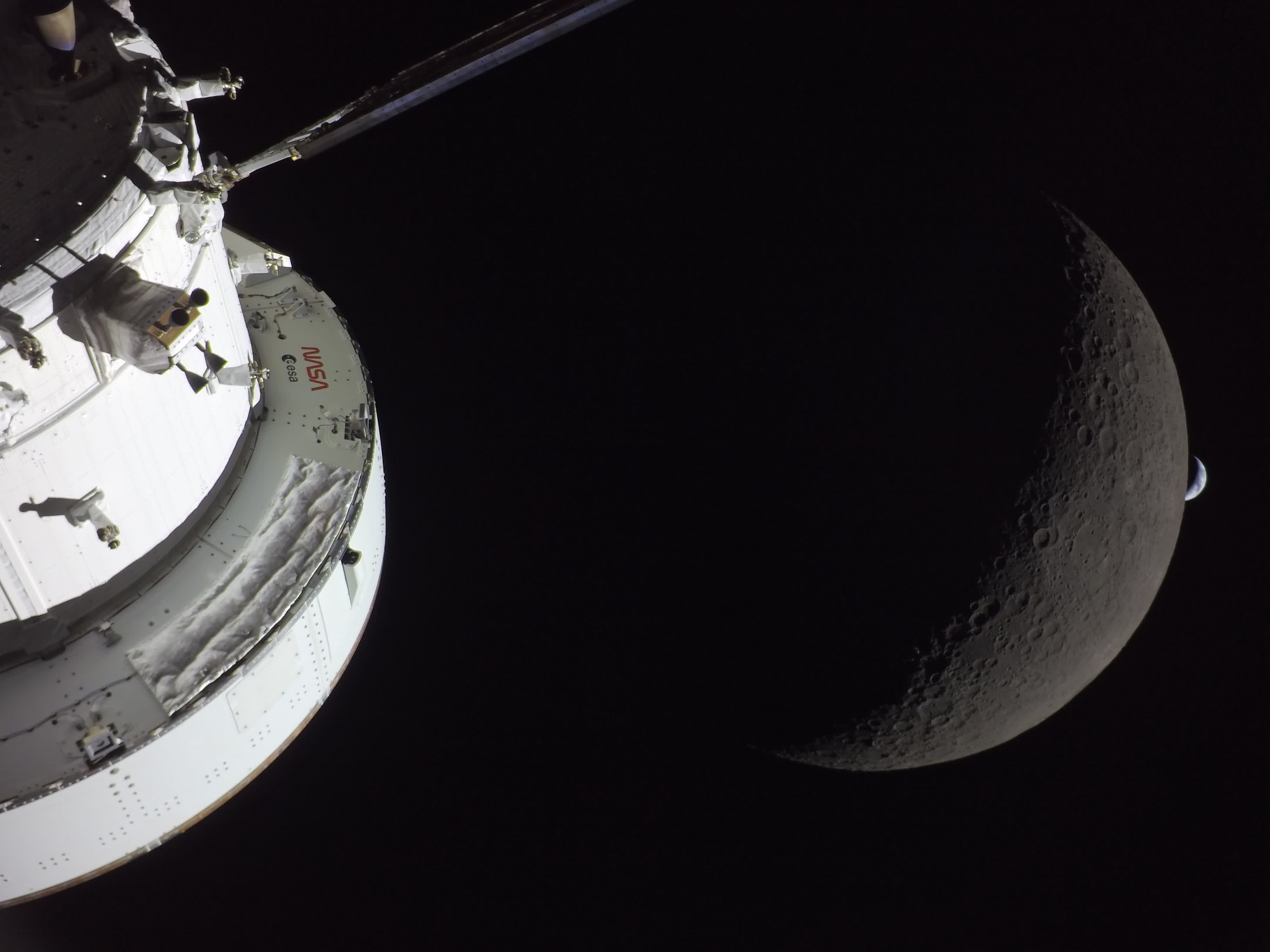
The big picture: When the Artemis crew set off for the Moon last week, many observers likely anticipated the eventual transmission of new, high-resolution images of the natural satellite's far side. With the lunar flyby now complete and the crew headed home, NASA has published several photos of the Moon from a new perspective, with more on the way.
Around two dozen high-resolution photos of the Moon, taken by the Artemis II mission crew, are now available to download on NASA's website and the agency's Flickr page. During the mission, four astronauts observed portions of the Moon's far side that humans have never seen directly.
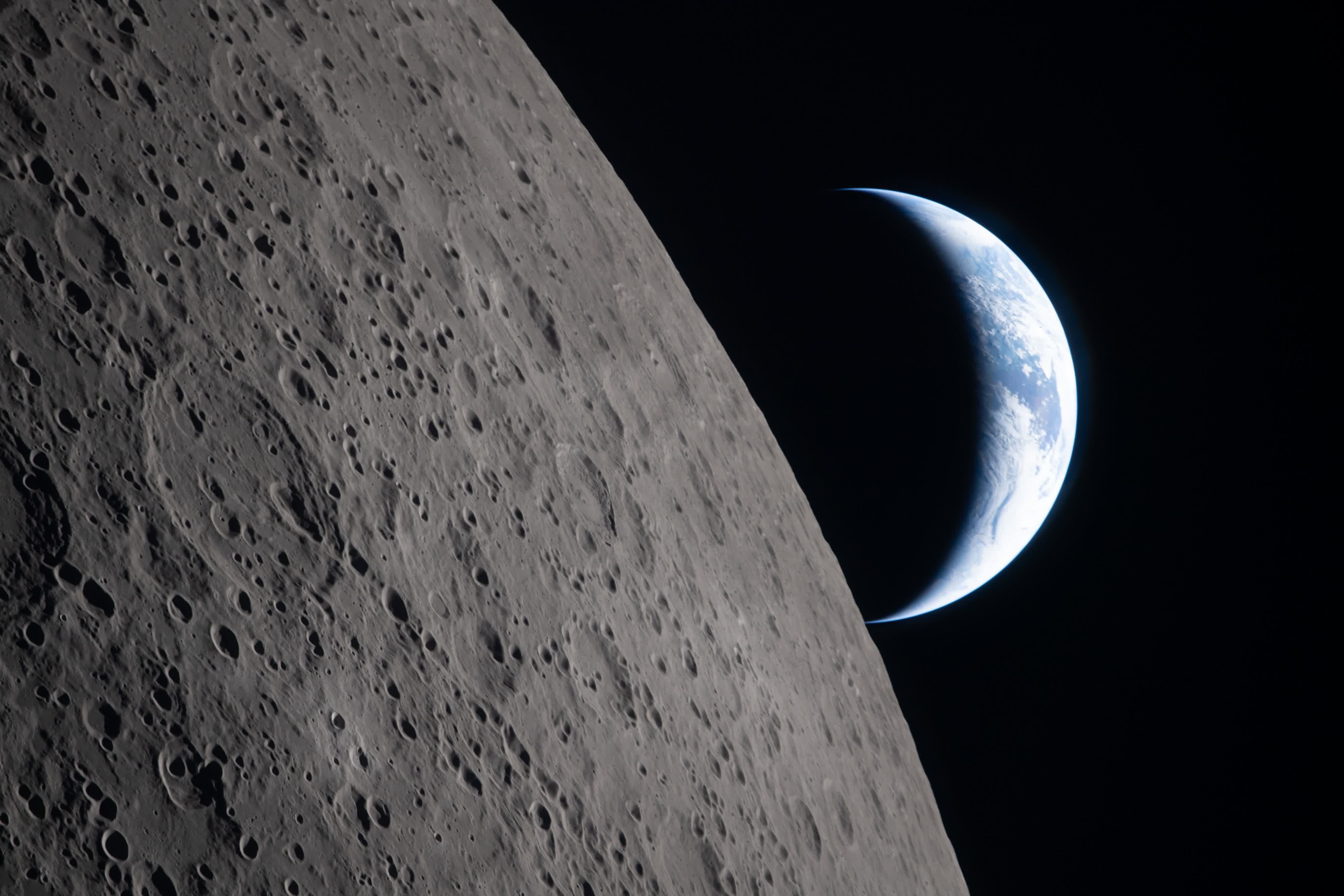
The photos depict regions of the Moon familiar to Earth observers, as well as areas rarely photographed. During the flyby, the astronauts provided fresh descriptions of craters, lava flows, and other geographical features, along with details of the Moon's color and texture. The astronauts flew at about 4,067 miles above the lunar surface, much farther away than Apollo 13, which flew only about 70 miles above the surface in 1970.
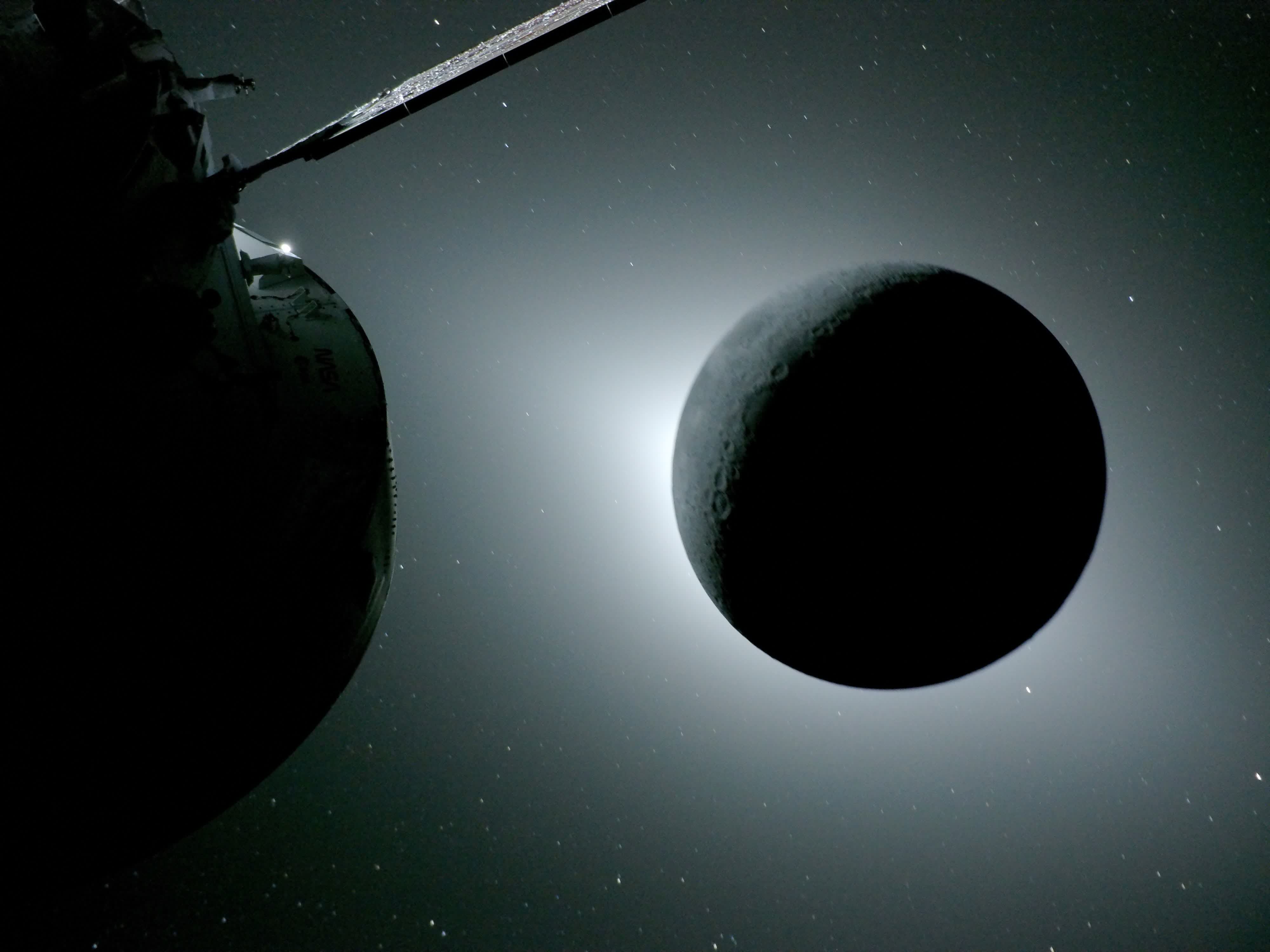
As the Moon, Sun, and Artemis II spacecraft aligned, the crew witnessed a nearly hour-long total solar eclipse. During this period, the astronauts studied the solar corona, normally outshone by the disk, to learn more about the solar atmosphere. The crew also reported six flashes from meteoroid impacts on the far side of the lunar surface, which would only have been visible in the darkness of the eclipse.
In NASA's photos of the eclipse, part of the Moon is dimly lit by light reflected from Earth. However, since the Moon obscures the sun, stars and planets become visible in the background. In one image, Venus appears as a bright flash on the far left side. In another, Saturn appears as a bright spot just below the Moon's bottom right edge, while Mars is visible on the right edge of the photo.
Other images show Earth rising and setting behind the Moon as the Artemis II craft passed behind the natural satellite. This caused a planned 40-minute communications blackout during which the Moon blocked all communications between the crew and Earth.
Artemis II, which launched on April 2, brought humans beyond Earth's orbit for the first time since Apollo 17 in 1972. The planned 10-day mission also broke the record for the farthest distance humans have traveled away from Earth – 252,756 miles, compared to Apollo 13, which traveled 248,655 miles.
The crew is expected to splash down off the coast of San Diego on the evening of Friday, April 10. The mission will provide crucial data for Artemis III, which aims to conduct the first crewed lunar landing in more than 50 years in early 2028.