First look: Qualcomm's latest Snapdragon-powered Windows on Arm laptops are arriving in premium configurations, focusing on performance and power efficiency rather than serving merely as showcase devices. By prioritizing higher-spec machines over experimental prototypes, this generation of hardware is meant to compete directly with mainstream x86 laptops. Snapdragon X2 laptops arrive with premium specs, pushing Windows on Arm into the mainstream
Snapdragon X2 is Qualcomm's second-generation Windows PC platform, introduced in September 2025, with devices expected in the first half of 2026. The family includes the Snapdragon X2 Elite and the higher-tier X2 Elite Extreme, which targets more demanding workloads.
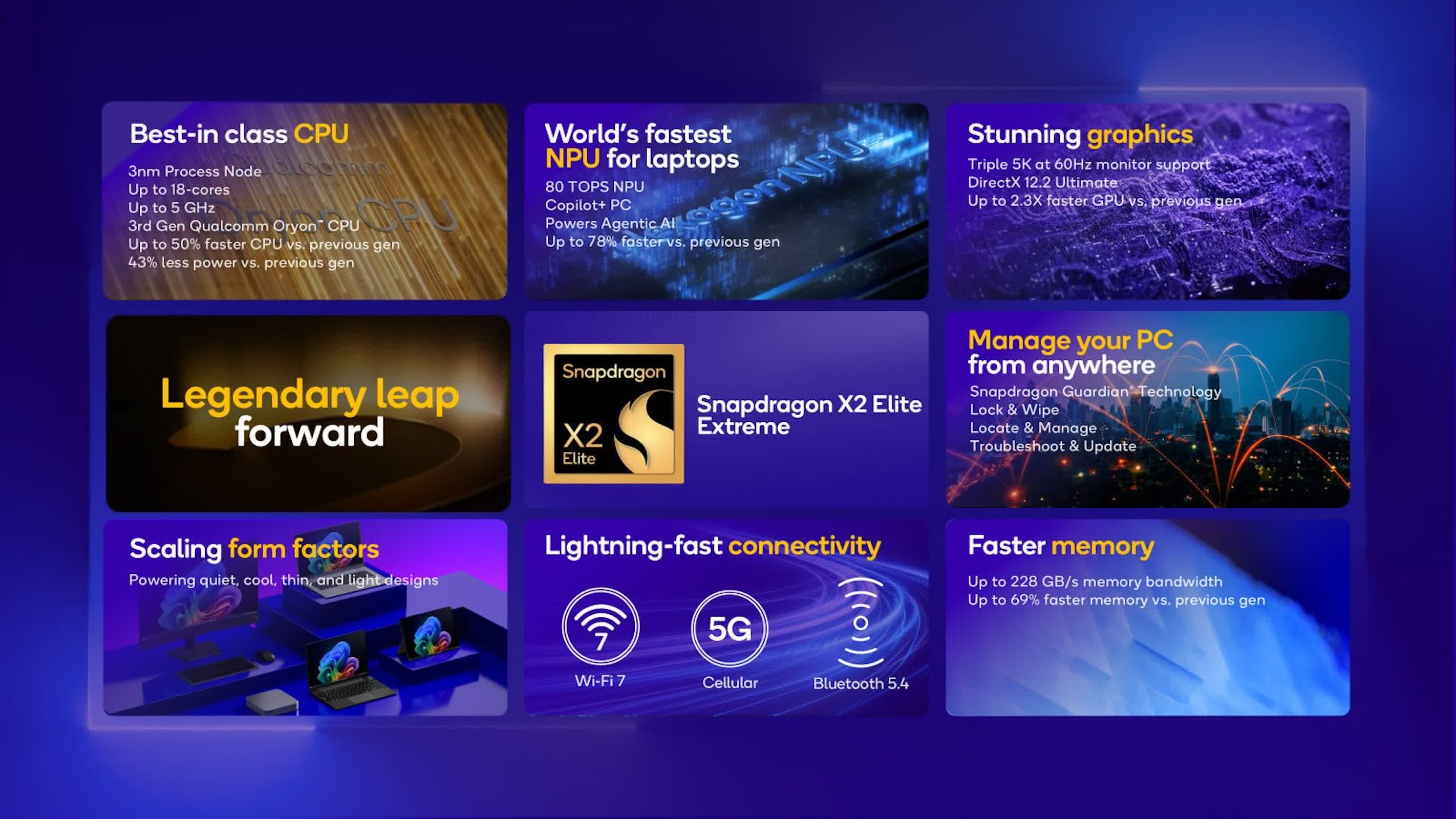
Qualcomm is positioning these chips for thin-and-light Copilot+ laptops featuring an 80 TOPS NPU. The company claims the Snapdragon X2 Elite can deliver up to 31% higher ISO-power performance while reducing power consumption by as much as 43% compared with the previous generation.
The branding encompasses multiple configurations. Qualcomm's current product page lists the Snapdragon X2 Elite Extreme with an 18-core CPU reaching up to 5.0GHz, alongside X2 Elite variants that scale down to 18 or 12 cores with clocks up to 4.7GHz.
Asus offers the 16-inch Zenbook A16 with the X2 Elite Extreme, while the 14-inch Zenbook A14 uses the standard 18-core X2 Elite but retains the 80 TOPS NPU.
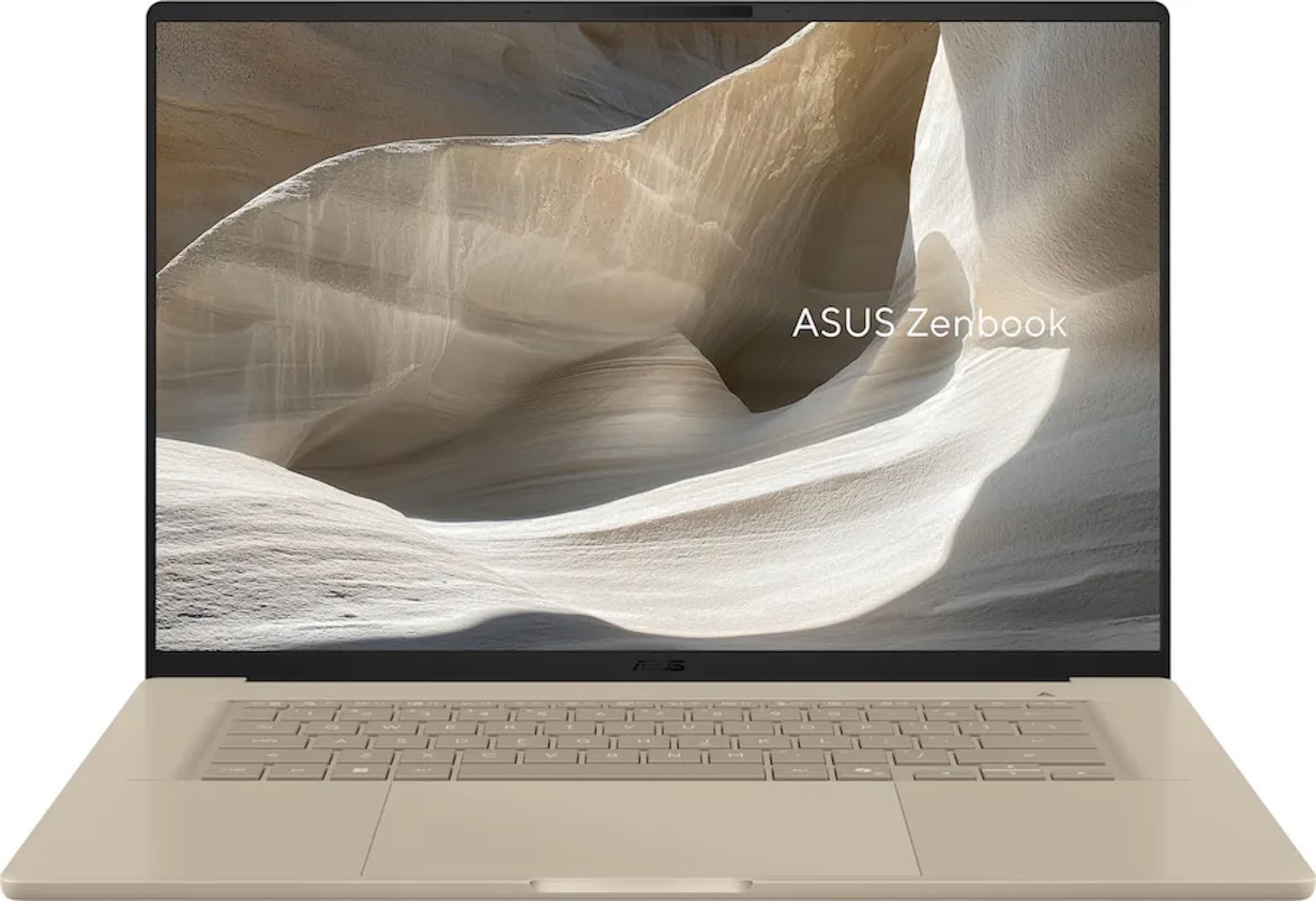
These chips are no longer just slide-deck concepts. Qualcomm's Snapdragon X2 laptop rollout has now reached retail, with Best Buy listing the Asus Zenbook A16 configured with the Snapdragon X2 Elite Extreme starting at $1,699.99.
HP's OmniBook Ultra 14 joins the launch lineup with a Snapdragon X2 Elite, 32GB of RAM, 1TB of storage, and a price of $2,049.99.
For early adopters comparing specs and pricing, the Zenbook A16 currently looks like the more aggressive option. At $1,699.99, it matches Qualcomm's top X2 tier with a 16-inch 2,880 × 1,800 OLED 12 Hz touch display and 48GB of RAM. That memory capacity is notable in this first Copilot+ wave, where higher-memory configurations have typically carried significantly higher price tags.
These stronger baseline specs give this first retail wave a different profile compared with the earliest Copilot+ PCs, which often paired new NPUs with conservative memory and storage choices.
Instead, Qualcomm and its partners appear to be betting that high-memory, high-refresh OLED designs in thin-and-light systems will better showcase what a second-generation Arm PC platform can achieve under sustained load, particularly with demanding AI and content-creation workflows.
If that bet pays off, the X2 family's combination of 80 TOPS NPUs, up to 18 CPU cores at 5.0GHz, and more generous RAM configurations could redefine expectations for Copilot+-class Windows laptops in 2026, rather than repeating the cautious spec sheets that characterized many of last year's launches.