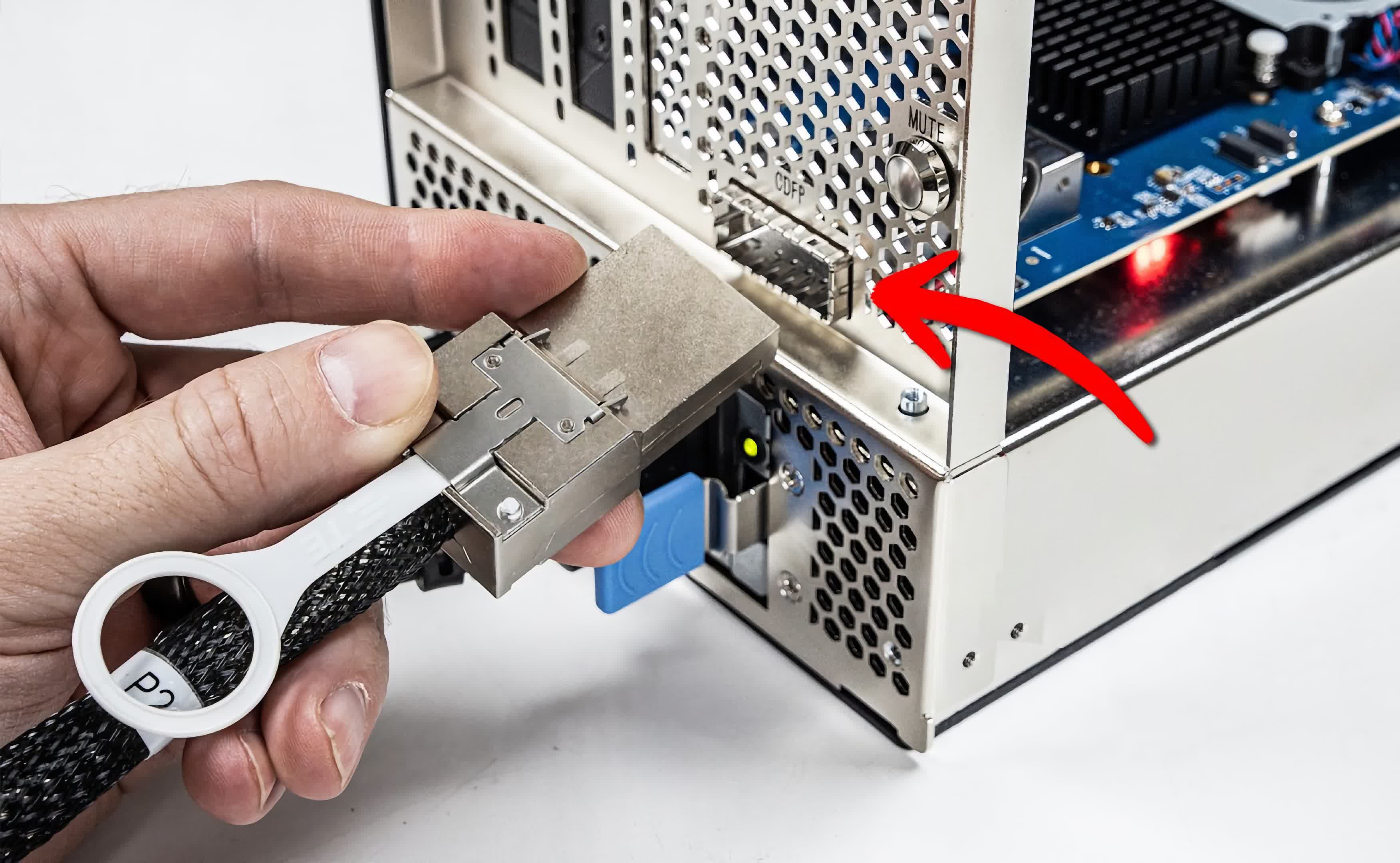
First look: External GPUs have always existed as the lesser alternative to regular GPUs installed as internal cards, trading raw performance for portability or flexibility. That tradeoff may finally be starting to break down. New benchmarks suggest PCI-SIG's CopprLink standard is approaching what once seemed out of reach: external GPU performance that comes remarkably close to a direct motherboard connection.
Developed by PCI-SIG for high-bandwidth enterprise use, CopprLink provides a full PCIe 5.0 x16 interface with throughput of 32 GT/s per lane, or 64 GB/s of total bandwidth. That is four times the throughput of an OCuLink connection using PCIe 4.0 x8, one of the fastest eGPU options currently available alongside Thunderbolt.
The implications could be significant, especially for high-end workstations and AI servers that need a more flexible way to connect external graphics hardware.
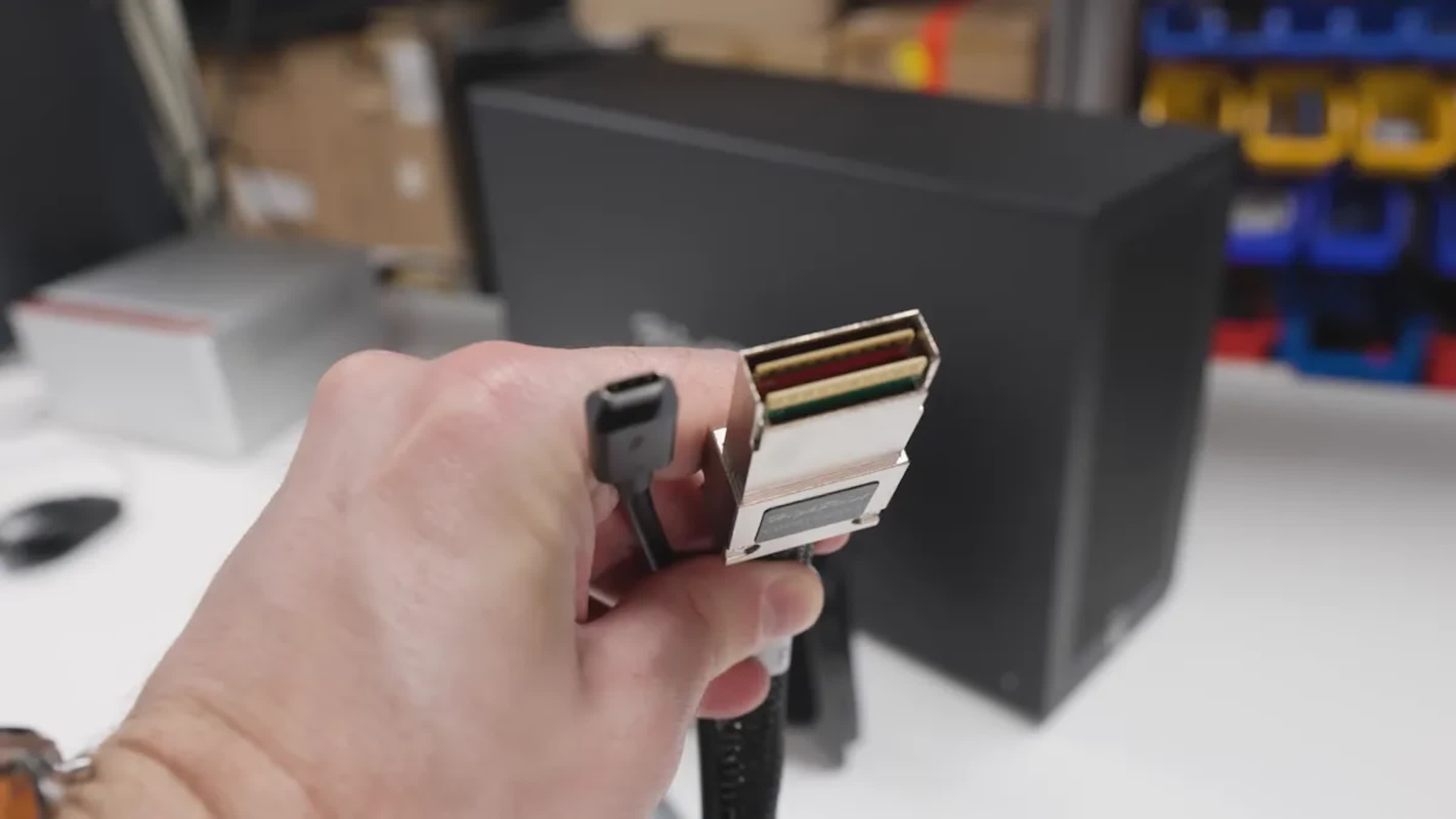
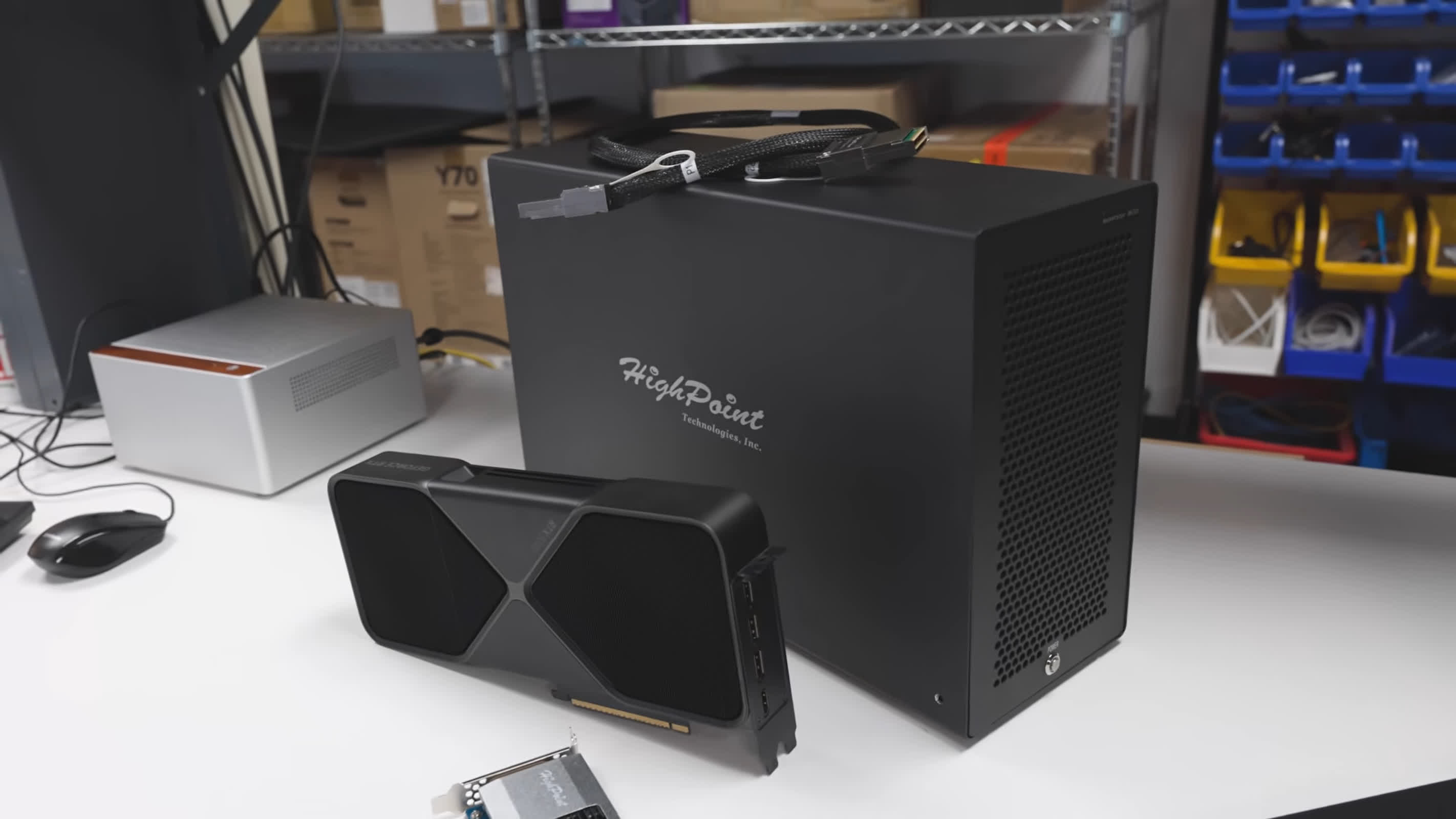
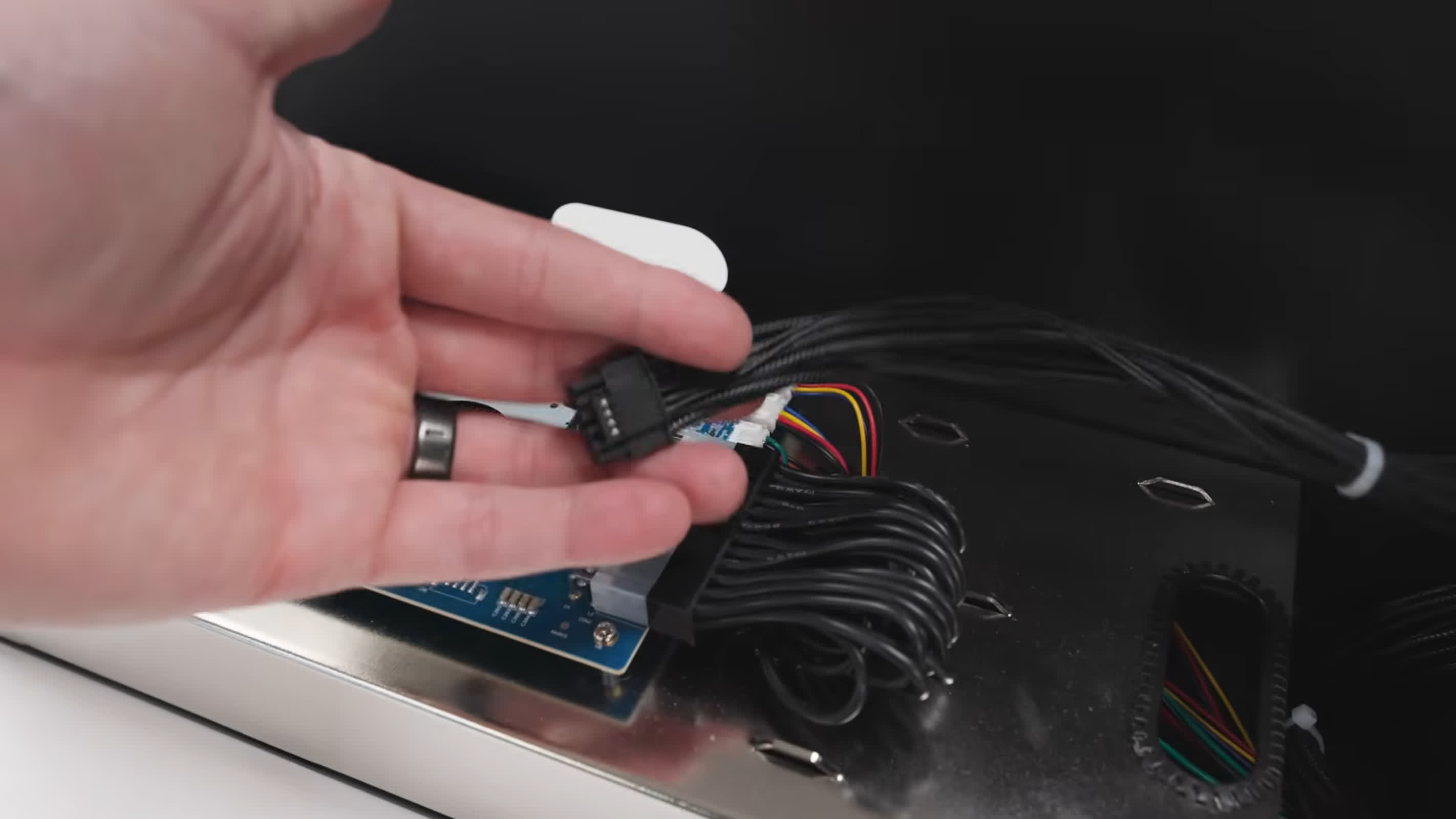
PCWorld's test platform paired Nvidia's Founders Edition RTX 5090 with HighPoint's RocketStor 8631D enclosure, an industrial-grade chassis aimed at rack-scale AI workloads rather than gamers. The enclosure alone costs $1,300 and includes a 1,300-watt power supply with high-current connectors built for the latest GPUs. On the host side, the system used HighPoint's Rocket 7634D switch adapter, a $999 PCIe Gen 5 card that introduces CopprLink's new CDFP connector.
CDFP serves as the physical backbone of CopprLink, built for stability in server environments where accidental disconnects are not an option. Once installed, it is not easy to remove by mistake, requiring a release tab to be pulled first.
Together, the enclosure and adapter come to roughly $2,300 before the GPU even enters the equation, pushing the total cost of the setup past $5,000. At least for now, that places CopprLink firmly in the realm of enterprise hardware rather than enthusiast gaming.
Still, the benchmark results may reshape how companies think about scaling external compute. The operating system detected the RTX 5090 over CopprLink immediately, with no extra drivers or manual setup required. As far as the system was concerned, the GPU behaved like a card plugged directly into a conventional motherboard slot.
In testing, the CopprLink connection delivered performance that was nearly indistinguishable from a native PCIe link, trailing by just 2.3%. That is a striking result, and one that effectively blows past the long-standing bandwidth limitations that have defined external GPU designs for years.
That kind of efficiency could matter for data centers and developers looking for more modular ways to deploy GPU power. Consumers are still largely stuck with slower Thunderbolt-based enclosures that run into bandwidth bottlenecks well before PCIe is fully utilized, but enterprise users may soon have a path to scaling GPU-heavy workloads externally without giving up internal-grade performance.
CopprLink looks less like a routine spec bump and more like a break from older eGPU approaches. For now, it remains expensive, narrow in focus, and confined to professional environments, but by matching an RTX 5090's native motherboard performance, CopprLink may have just set the new standard for what external GPU technology can deliver.