
Bottom line: Money and playtime are no longer flowing only to the usual blockbuster tier on PC and consoles. A growing share is now landing outside the top ranks. The 2026 PC & Console Gaming Report from Newzoo shows the PC long tail expanding alongside total playtime, rather than simply pulling hours away from the biggest games.
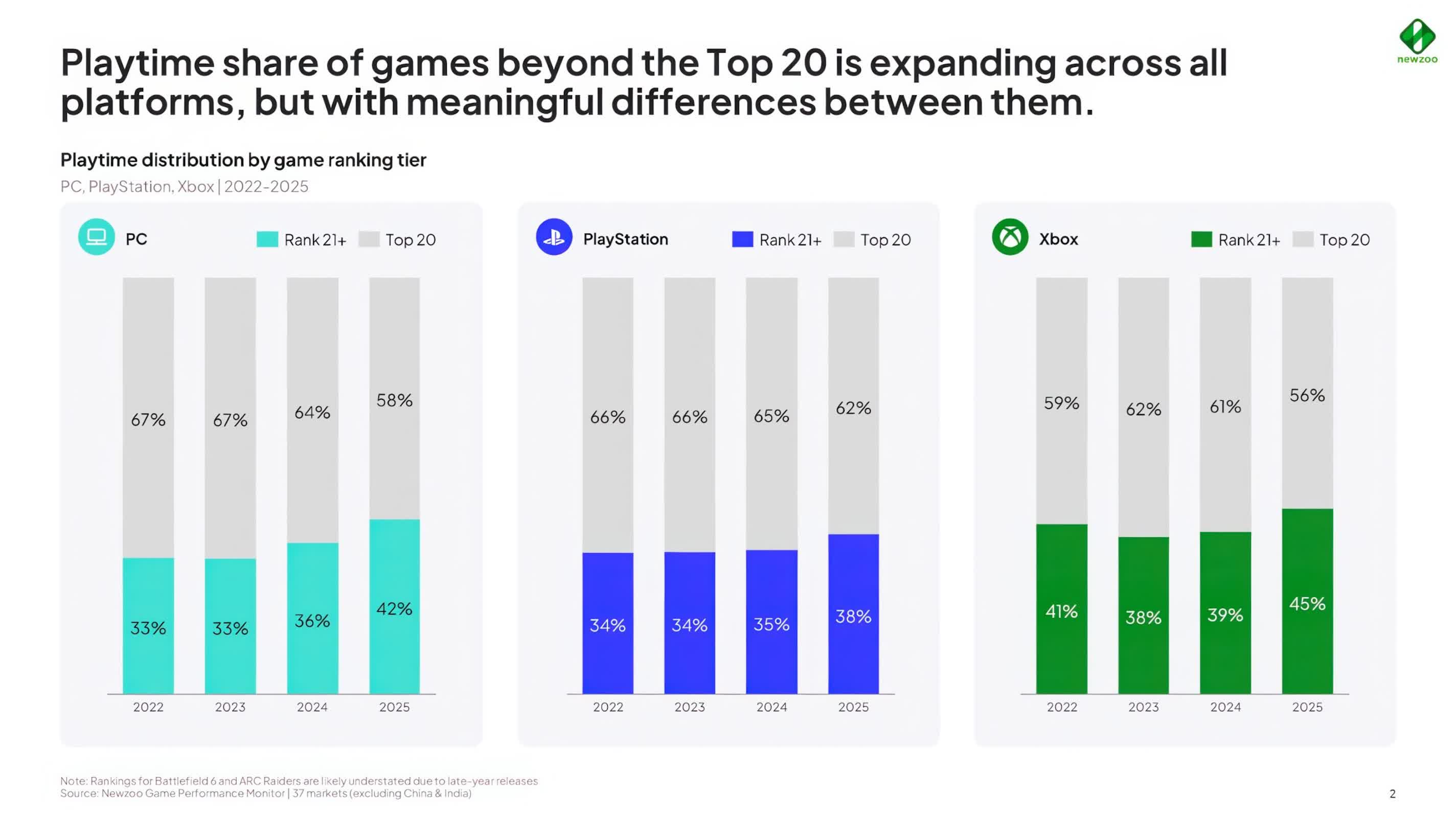
In Western PC markets, titles ranked 21 and below accounted for 56% of spending in 2025, up from 48% in 2022. Most PC revenue now comes from games outside the Top 20. Over the same period, total PC playtime rose 14%. Games below the Top 20 increased their share of playtime from 33% to 42%, with hours played there climbing 44%, while Top 20 playtime remained flat.
In 2025, 80% of PC playtime was spread across 79 games, up from 52 in 2022, meaning more titles now hold significant player time instead of a handful hits taking almost everything.
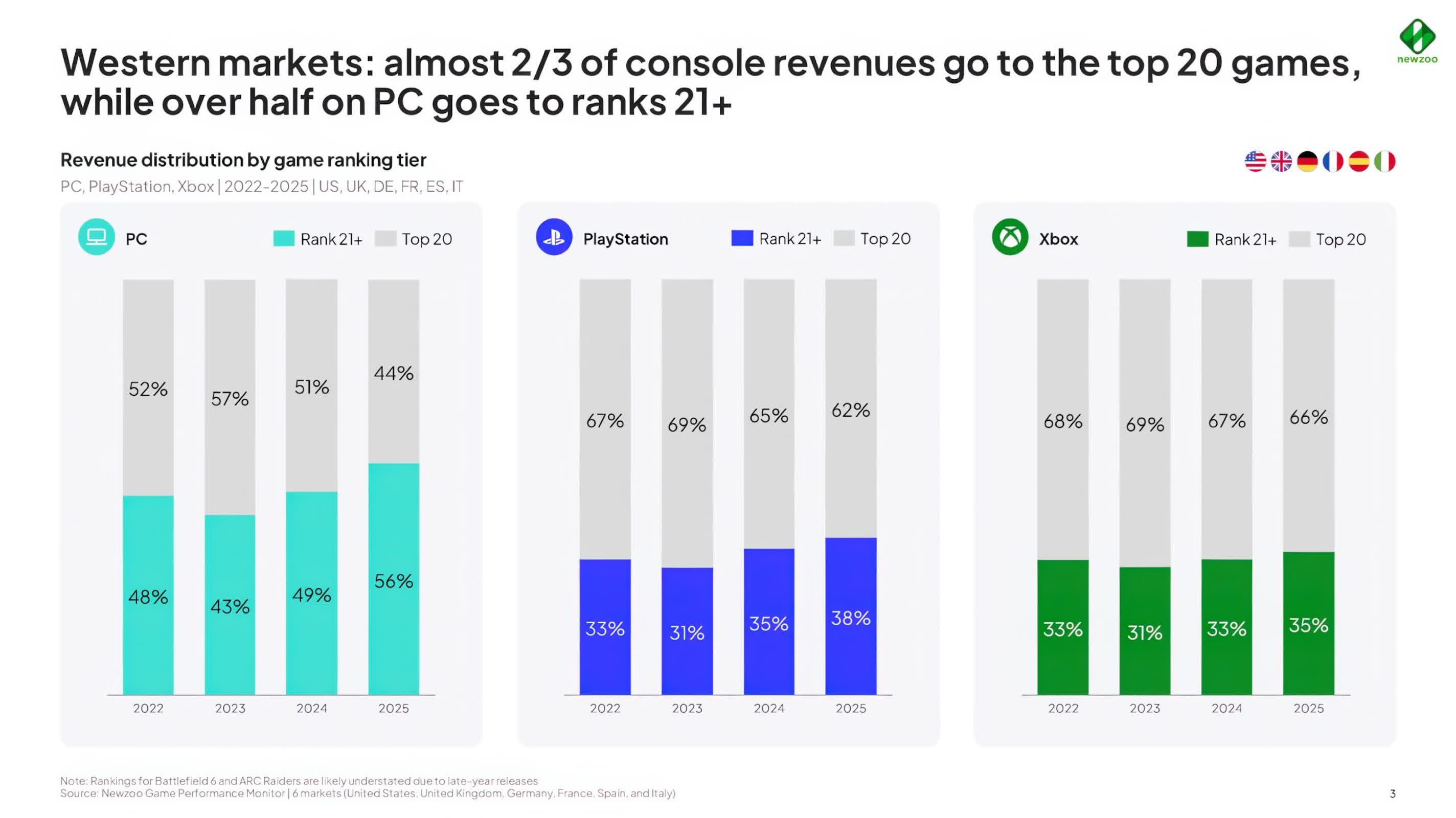
Much of that additional playtime is concentrated in genres built around depth and long-term progression rather than cinematic spectacle. Role-playing and adventure games are overrepresented outside the Top 20 across platforms, especially on PC, where these titles can keep players engaged for extended stretches without ever reaching the very top of the charts.
Games such as Path of Exile 2, Monster Hunter Wilds, and Kingdom Come: Deliverance II fit this pattern, drawing substantial playtime without breaking into the top five.
Older releases continue to matter as well. Cyberpunk 2077, Elden Ring, and The Elder Scrolls V: Skyrim still generate significant engagement, with Skyrim in particular sustained by a long-running modding community that continues to add content years after launch.
The underlying business models reflect a similar divide. Below the Top 20 on PC, 73% of playtime comes from premium titles, while the Top 20 remains dominated by large free-to-play games.
New free-to-play releases account for only about 2% of long-tail PC playtime, underscoring how difficult it is for new live-service titles to gain traction outside the biggest franchises.
For developers, the takeaway is clear: premium games with long lifespans can coexist with, rather than directly compete against, the largest free-to-play hits.
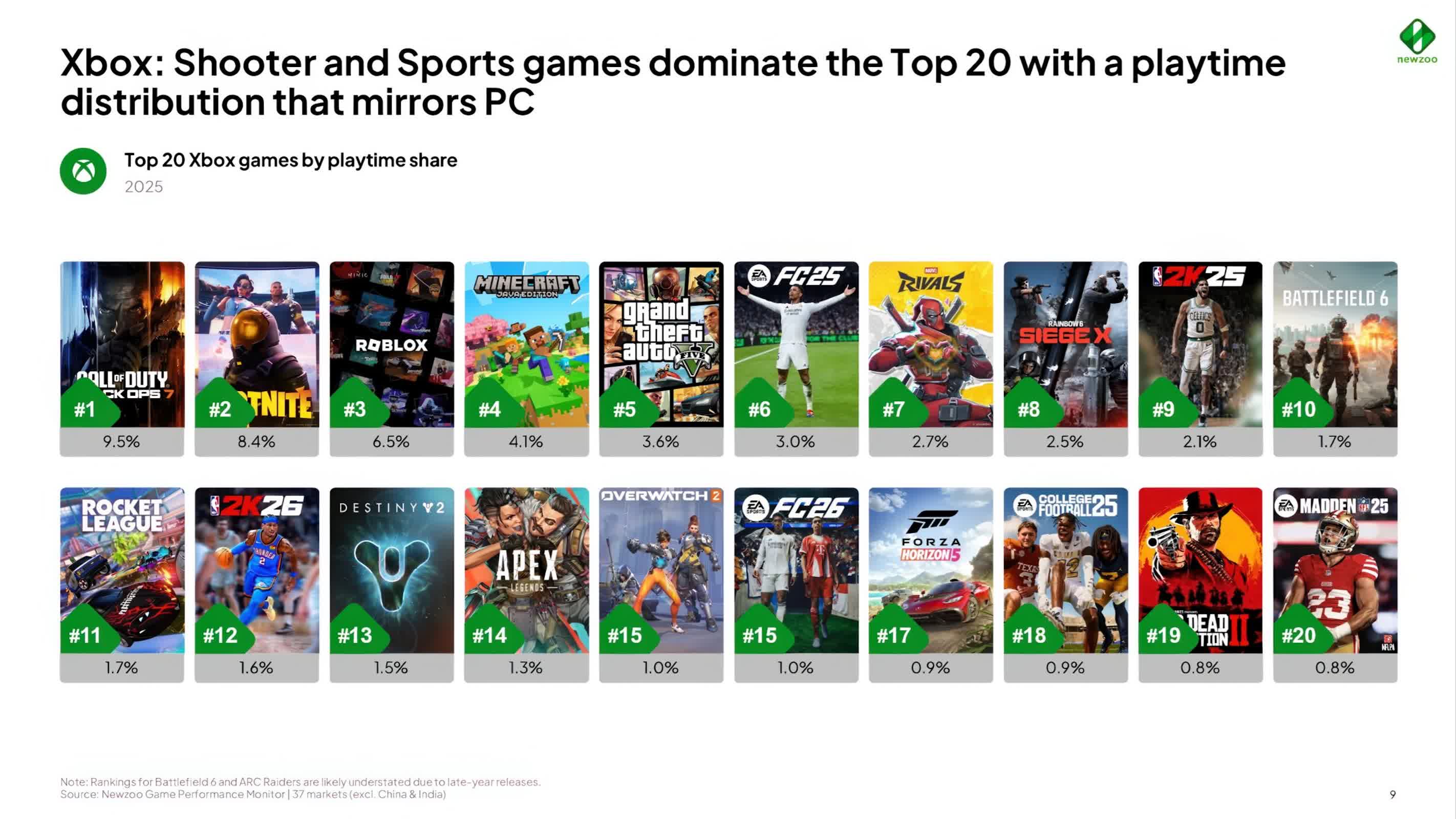
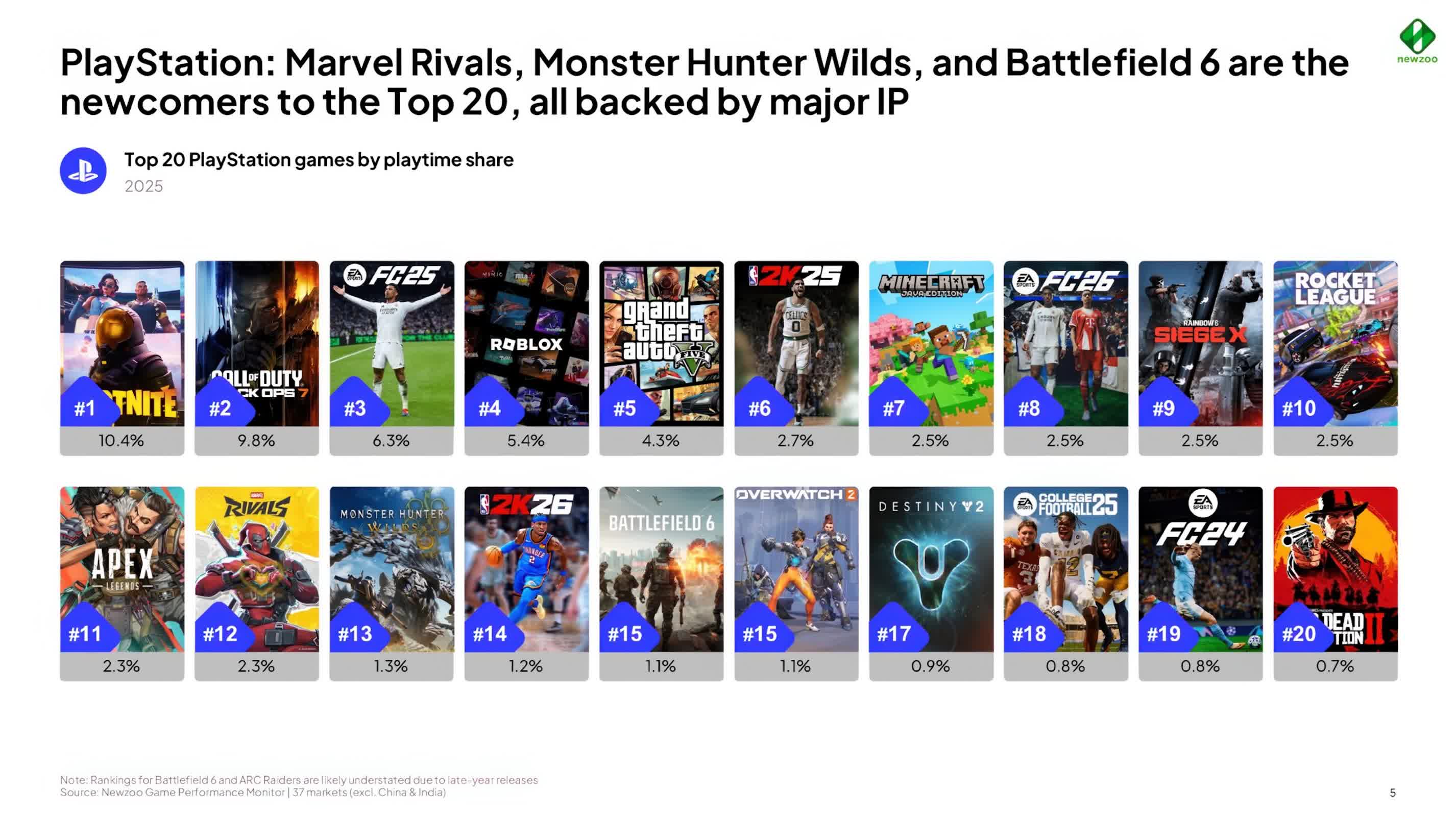
Consoles show similar trends, but the details differ by platform. On PlayStation, long-tail playtime and spending are rising, but the 2025 newcomers to the Top 20 – Marvel Rivals, Monster Hunter Wilds, and Battlefield 6 – are all built on major IP, showing that big brands still frame which games break through.
On Xbox, playtime outside the Top 20 has grown, but revenue has not kept pace. Newzoo attributes that gap to Game Pass, where players are sampling more games through the subscription without translating that engagement into equivalent spending on individual titles.
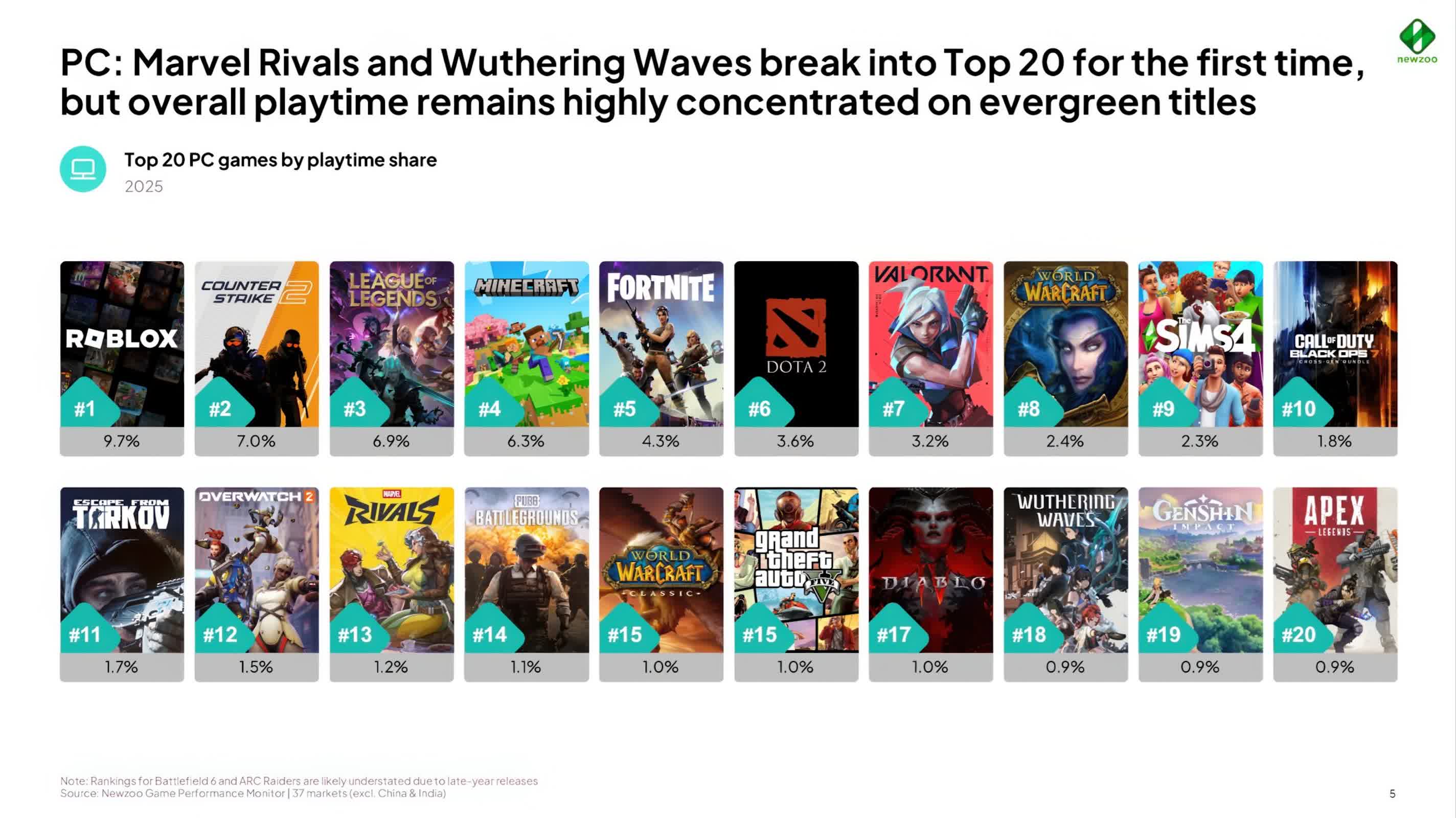
At the top of the PC charts, meanwhile, very little is moving. The PC Top 5 has not changed since 2023, dominated by entrenched live-service giants like Roblox, Counter-Strike 2, and League of Legends, and in 2025 only two new titles – Marvel Rivals and Wuthering Waves – joined the rest of the Top 20.
Newzoo argues that the layer below the biggest AAA hits is now more strategically important than a few years ago, especially on PC, where many games with long support cycles can build a solid business without ever leading the charts.