Update: NZXT has reached out via email regarding the story. It says there are several important omissions from the customer's account of what happened. According to the company, these are:
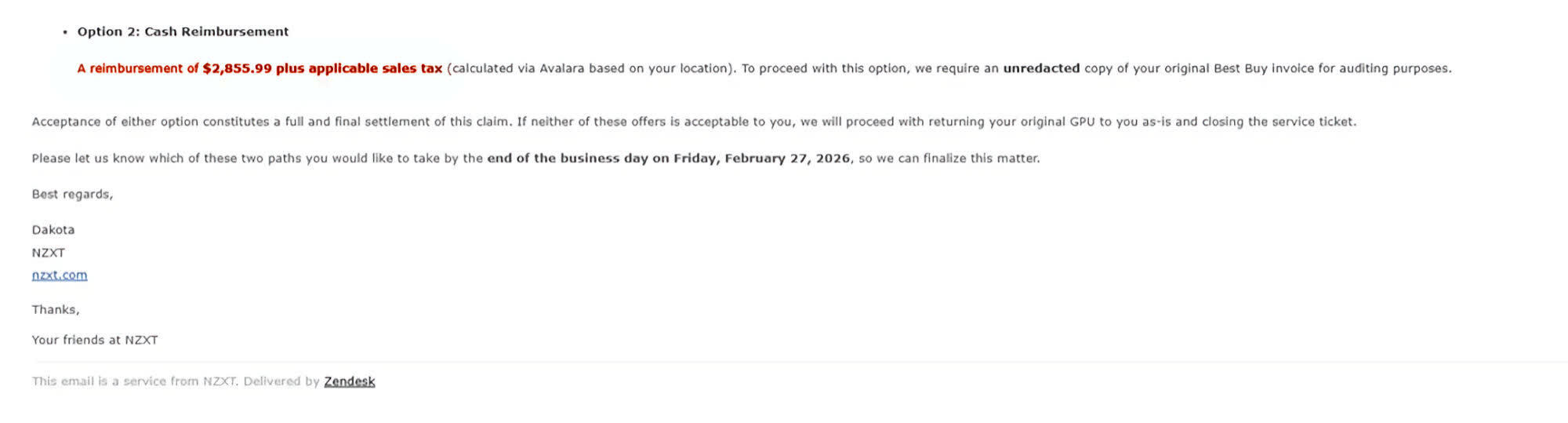
- The $2,855.99 figure is not what NZXT offered. That was the original invoiced purchase price, and that number appeared in an early email that was corrected the same day to $4,161.90, reflecting current market value. The customer's posts do not include this correction.
- NZXT made five separate compensation offers, including a brand-new ASUS ROG Astral RTX 5090 sourced at retail and a cash settlement at current market value. On February 27, NZXT accepted the customer's own counteroffer of $4,378. He then added new conditions and did not sign.
- The customer received his GPU back on March 6 after formally rejecting all settlement options. On March 10, four days later, he attempted to reopen the claim at $4,807.90.
- On the salvage requirement: When NZXT pays a full-loss settlement, it retains the damaged hardware. Liquid-damaged components are an electrical risk, and this prevents them from re-entering service or the secondary market. This is standard practice.
- On the delays: The six-month timeline was substantially extended by the customer's failure to provide valid proof of purchase, which took approximately two months to obtain, and by an additional month-long delay in submitting photos of the damaged components after being asked to do so.
- On the motherboard: NZXT issued an RMA for the customer's motherboard on December 23, 2025. He declined to send it in.
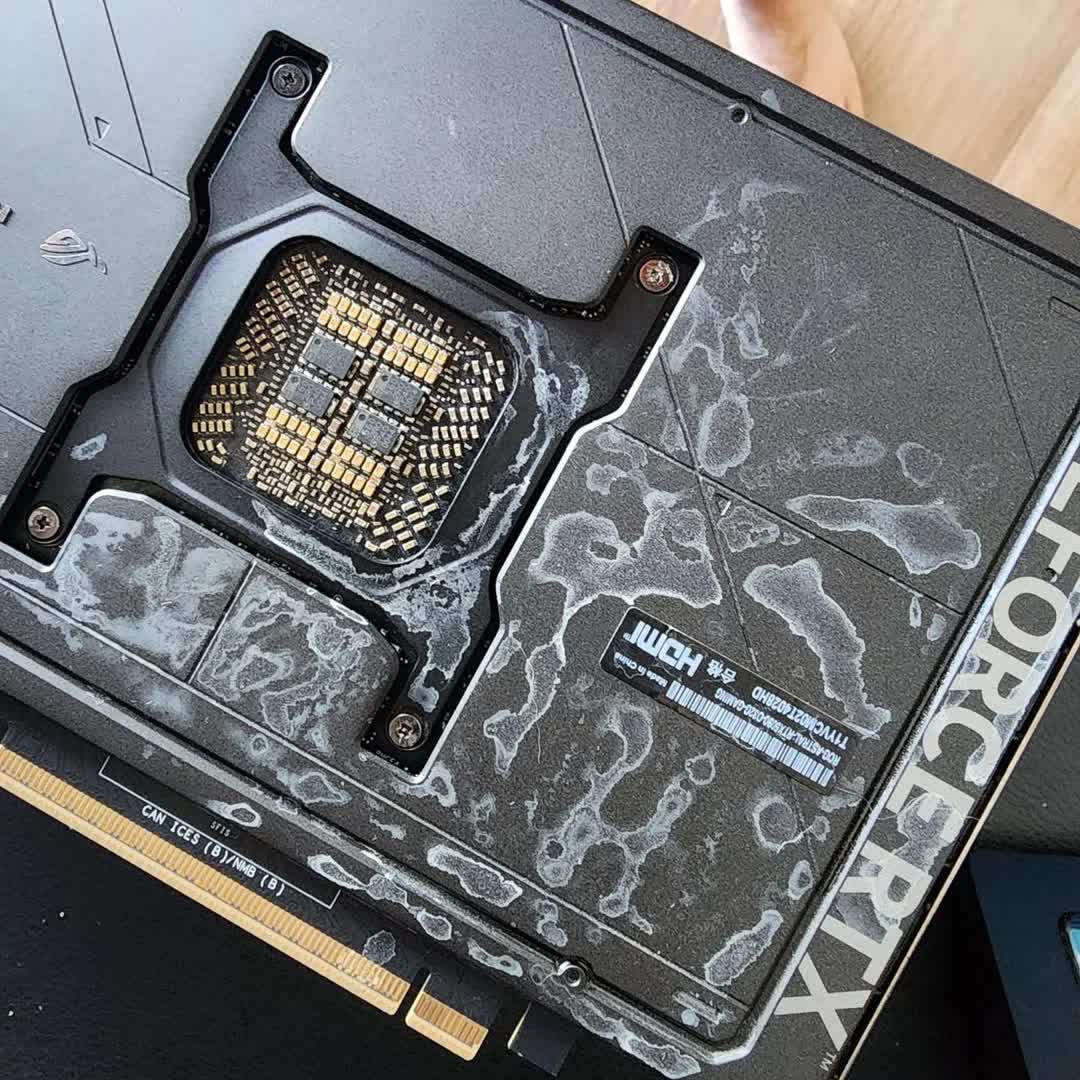
Imagine an AIO cooler leaking due to a manufacturing fault and destroying your RTX 5090. The only good news is that the company responsible is willing to refund you for the broken GPU. The bad news is that they're not going to pay you anything near what the graphics card now costs.
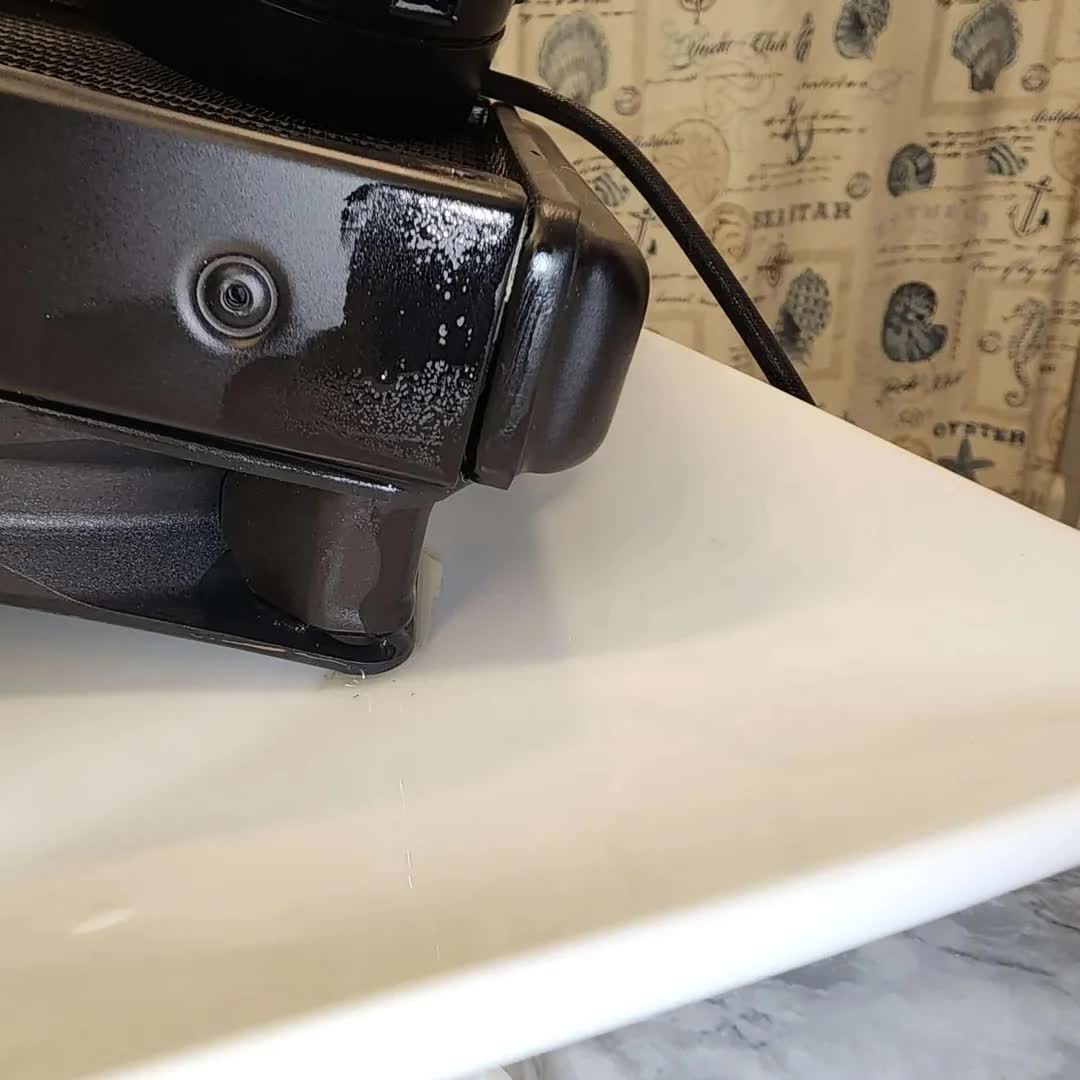
A Reddit user writes that they experienced this unwelcome scenario: an NZXT Kraken AIO allegedly leaked onto an Asus ROG Astral RTX 5090, damaging the flagship card and motherboard. It led to a months-long warranty dispute that, according to the post, may now end up in court, with the owner saying they are preparing to file a lawsuit against NZXT.
According to the post, the leak happened in August 2025. NZXT acknowledged a manufacturing defect and replaced the cooler, which is good. It then spent months disputing what the damaged card was worth and whether the owner could keep it, which isn't so good.
NZXT's defective AIO leaked on my RTX 5090. Seven months later I'm filing a lawsuit. Here's everything that happened.
by u/Sufficient-Carry6256 in pcmasterrace
It feels like a long time since Nvidia launched the RTX 5090 with its $1,999 MSRP. Asus' Astral RTX 5090 OC debuted at $2,799.99. That was already a lot of money for a gaming GPU, but it was before the memory crisis.
According to the post, NZXT offered the owner $2,855.99 to settle the claim while retaining the damaged card. But that figure no longer reflects anything close to real-world replacement cost. The ROG Astral RTX 5090 currently retails for $4,299.99, with one Amazon listing shown at just under $4,000.
Our own Q1 2026 GPU pricing analysis found the RTX 5090 averaged $3,500 in the US in February, up from $2,500 in November 2025, a 40% jump in just three months. Globally, pricing sat roughly 65% above MSRP.
The reasons are familiar by now: extremely limited supply due to demand from AI companies, a situation that is affecting the price of hundreds of consumer goods.
NZXT's policy says that if a Kraken cooler leaks due to a manufacturing defect, the company will either replace or refund the cost of the cooler as well as any damaged components.
The user also alleges contradictory diagnostic results, refusal of independent third-party analysis, and pressure to accept time-limited settlement terms. According to the post, the owner sent NZXT a formal legal demand letter in March and is now preparing to sue after seven months of failed attempts to resolve the dispute.
In addition to warnings about not discussing lawsuits online, many comments point out that the inflated prices aren't NZXT's fault, and the company is honoring its promise to replace damaged hardware at MSRP.