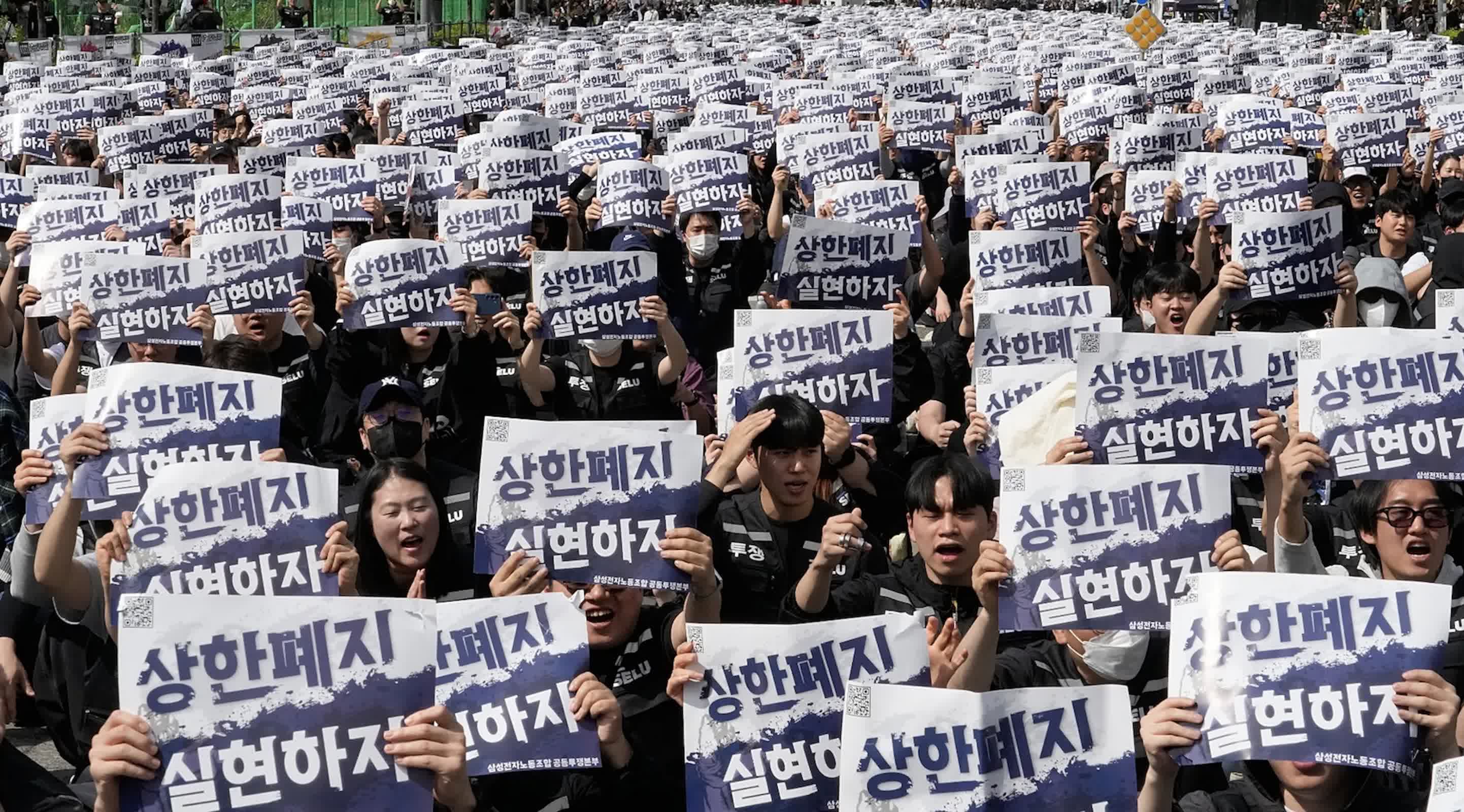
In a nutshell: Samsung Electronics is facing a labor dispute that comes at a time when the global memory market is already tight, adding new uncertainty for AI systems and consumer hardware. Tens of thousands of Samsung Electronics employees gathered at the company's Pyeongtaek campus in South Korea this week, warning they will launch an 18-day strike starting May 21 if talks fail. The confrontation centers on how the profits from a historic surge in memory demand – driven largely by AI workloads – should be distributed.
Samsung's memory business is central to the current upswing in the chip market. Alongside SK Hynix and Micron, the company is one of the three major producers of DRAM and high-bandwidth memory (HBM). These chips are now critical for AI training and inference systems, where memory bandwidth has become as much of a bottleneck as raw compute.
That shift has produced a sharp jump in profits. Analysts estimate Samsung generated roughly $38 billion in operating profit in the first quarter of 2026, driven by higher memory prices and heavy orders from large data center customers. Like other major chipmakers, the Korean giant has been ramping up production of higher-margin HBM for AI accelerators, while placing less emphasis on conventional memory for consumer devices.
Workers now want a direct share of that upside. The union is demanding that Samsung remove its performance bonus cap and allocate 15% of operating profits to employees. Based on current profit forecasts, that could run to roughly $25-30 billion a year in bonus payouts. The company has not accepted those terms, and the gap between the two sides remains wide.
Pressure on Samsung has grown as rival SK Hynix is reportedly preparing to pay average bonuses of around $400,000 to roughly 35,000 employees. The gap with SK Hynix is fueling resentment inside Samsung, a company that has long been seen as a top destination for South Korean engineers.
The timing of a strike is awkward for the tech industry. Data centers are expected to consume around 70% of high-end memory chips this year, leaving a limited supply for other sectors. As a result, prices for conventional DRAM have climbed sharply since early 2025, and availability has tightened across consumer electronics, including PCs and mobile devices.
Any disruption at Samsung would be felt quickly across the market. With only three major suppliers operating at scale, even a temporary slowdown in production lines could constrain already limited inventories of both HBM and conventional DRAM. That could delay GPU server deployments for major cloud providers and push up hardware prices across the industry.
Samsung has been taking steps to brace for a possible walkout. The company has sought court intervention to prevent illegal actions during a potential strike, including attempts to block production facilities. Meanwhile, the show of force at Pyeongtaek – where attendance estimates ranged from 30,000 to 39,000 – suggests strong internal support for escalation.
This is not uncharted territory for Samsung. Employees staged the company's first strike in 2024, a 25-day walkout that ended partly because many workers could no longer afford to stay off the job. The current dispute, however, is unfolding under very different market conditions. Memory, once treated as a cyclical side story, has become one of the main constraints on how fast AI systems can scale.
Masthead credit: The AP