
First look: Mercedes-Benz is bringing its next-generation EV platform to the C-Class, using the sedan to introduce new in-car systems, materials, and thermal technologies. Positioned as a direct competitor to BMW's newly revealed i3, it is among the first vehicles built on the company's MB.EA electric platform. The model also reflects a broader shift toward making EVs more closely resemble the brand's combustion-engine lineup.
Inside, the C-Class EV centers on large digital displays and interface design. A full-width digital layout dominates the cabin, anchored by what Mercedes-Benz calls the Superscreen as standard equipment. A more advanced Hyperscreen setup is available as an option, integrating multiple displays into a single continuous glass surface. The system pairs with ambient lighting, synchronizing 10 color schemes across the displays and the cabin.
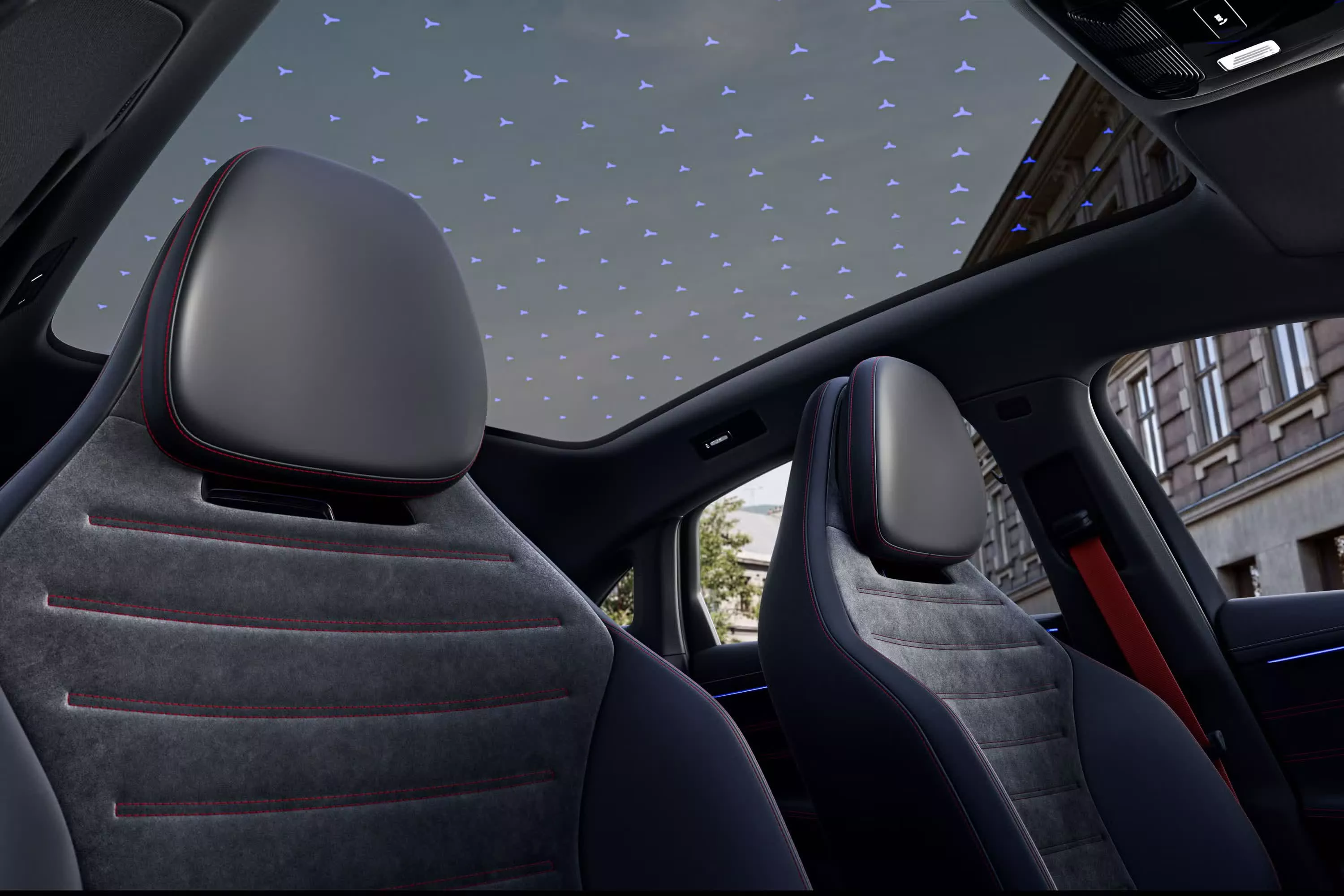
Additional visual technology extends to the optional Sky Control roof, where 162 embedded light points simulate a star-like pattern across the glass panel. Mercedes describes the interior as a "crafted sanctuary."
The EV layout also allows for a more spacious cabin. Without traditional engine packaging constraints, Mercedes has increased interior space compared to previous C-Class models. A panoramic glass roof comes standard.
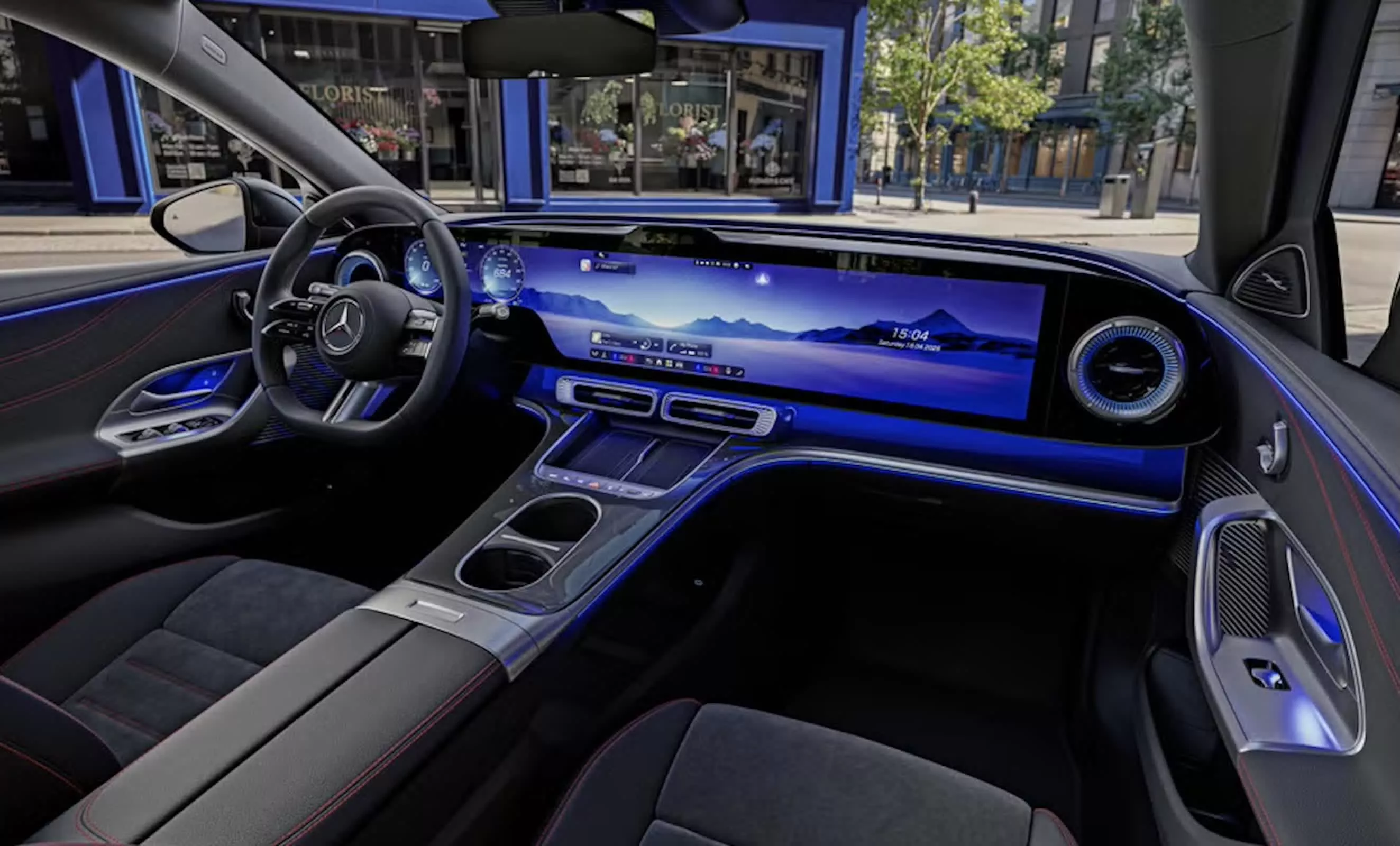
The interior blends traditional materials with newer, sustainable options. Alongside Nappa leather with optional "Twisted Diamond" stitching, buyers can select vegan upholstery certified by the the Vegan Society.
Trim options include open-pore wood finishes and a white natural-fiber alternative, while metallic accents are used on controls and speaker grilles. Upgraded Burmester audio systems add stainless-steel speaker grilles and, in the 4D configuration, seat-integrated exciters that convert sound into vibrations.
The front seats offer several comfort features, including electropneumatic four-way lumbar support, ventilation, and a massage function designed to reduce fatigue on long drives.
Mercedes-Benz is also focusing on improving climate system efficiency. The automaker says the new automatic climate control system can heat the cabin twice as fast as comparable systems in its combustion-engine models while using roughly half the energy. This is enabled by a multi-source heat pump, which captures and redistributes thermal energy more efficiently throughout the vehicle.
Noise is reduced through aerodynamic refinements, insulating glass, and updates to the HVAC system. Mercedes says the result is an exceptionally quiet cabin.
The C-Class EV will coexist with the combustion-engine version for the foreseeable future. Still, the company is positioning the electric variant as a technological flagship within the segment, describing it as "the best and sportiest C-Class ever."