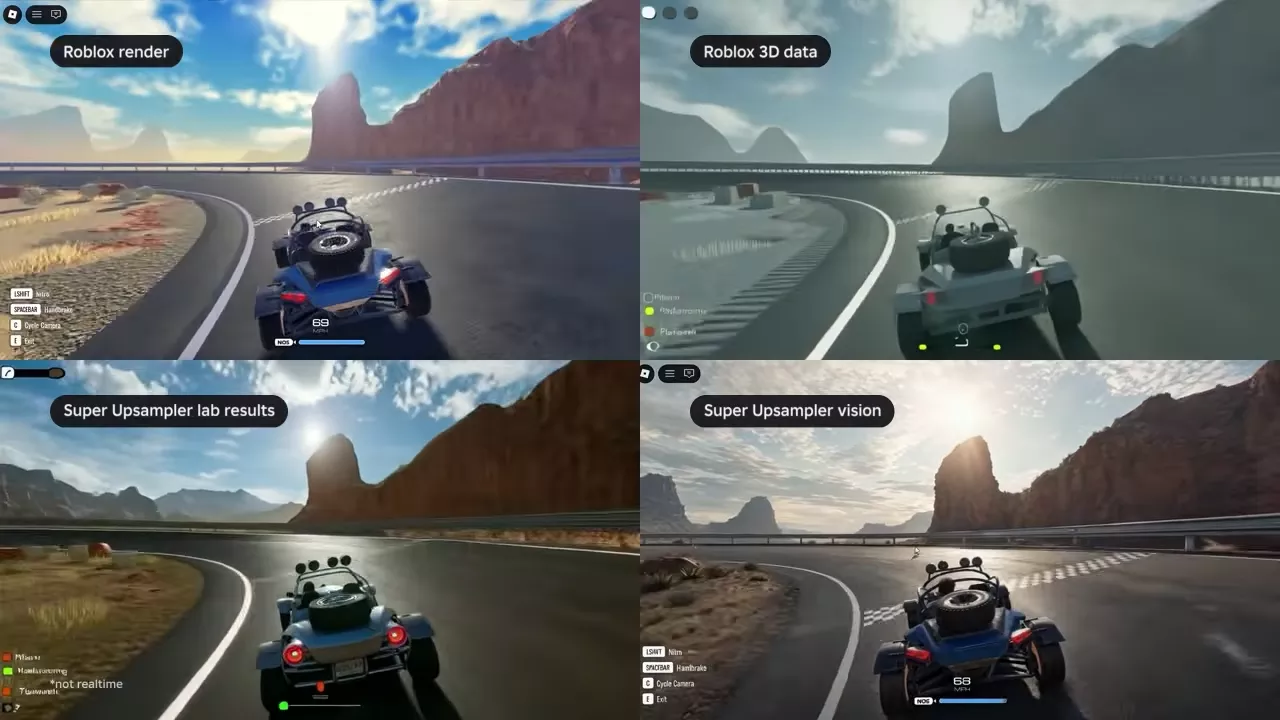
Through the looking glass: Game developers reacted sharply when Nvidia unveiled DLSS 5 earlier this year, worried that its AI lighting could open the door to fully AI-generated video game graphics. Roblox seems ready to walk straight through that door with an in-development system that aims to layer "photorealistic" AI video onto real-time multiplayer games.
Roblox Reality combines the popular game creation platform's real-time graphics engine with an AI-powered video generator to dramatically increase the visual quality of user creations. The hybrid architecture does not yet run in real time, but Roblox aims to launch the first iteration in late 2026 or early 2027.
Like Nvidia DLSS 5, Roblox Reality combines underlying 3D data with an AI-based upscaler to make scenes appear more detailed and realistic, but the similarities end there. While DLSS 5 altered lighting, shadows, and subsurface scattering beyond each game's original artistic vision, drawing widespread resistance, Roblox Reality goes much further, intentionally inventing new details from scratch.
Furthermore, DLSS 5 is at least designed to run entirely on local hardware. While it currently requires two RTX 5090s in Nvidia's labs, the final version will support single-GPU configurations. Meanwhile, Roblox Reality will only support multiplayer games because it runs almost entirely on the company's servers.
World simulation and foreground avatar rendering are handled client-side to minimize input latency, but cloud servers render the basic level of detail and enhance it via AI-generated video. Roblox even acknowledges that users playing together will not see the same details. "Ephemeral" elements, such as birds, clouds, and grass, will not persist between players.
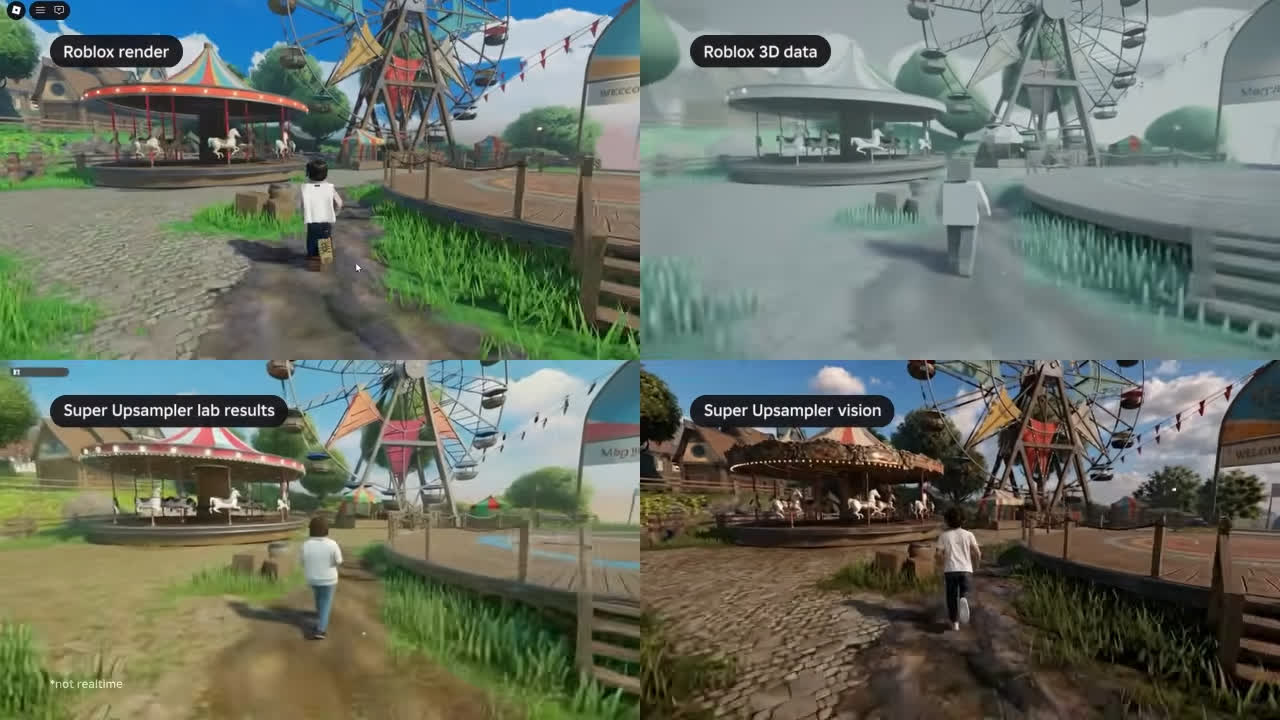
The company's mockup clip (above) compares the basic 3D data that the AI can access (top right), the current Roblox game engine (top left), recent upscaling results from Roblox Labs (bottom left), and a target render for the final result (bottom right). The company notes that the lab render does not yet run in real time, so it's too early to predict how Roblox Reality will turn out in the months to come.
Roblox also published its earnings for the first quarter of 2026 this week, revealing that user engagement has continued to slow since it introduced child safety features last year. Following mounting accusations that the platform is a haven for child predators, Roblox began enforcing selfie-based age verification and limiting interactions between teenagers and adults last summer.
Year-over-year user engagement growth has steadily declined in the two quarters since, sending shares tumbling. Following this week's earnings release, Roblox's share price plummeted by more than 20%.