
In brief: Nvidia's RTX 3070 was a great graphics card that we loved at the time, but its 8GB of VRAM is becoming an issue as games demand more video memory. Now, a hardware modder has shown what the Ampere card might have looked like had Nvidia been a little more generous, creating a fully working RTX 3070 16GB using parts harvested from dead GPUs.
The project comes from ComputerBase forum member AssassinWarlord, who started with a Gigabyte RTX 3070 Gaming OC and an AMD Radeon RX 6900 XT with a dead GPU.
The RTX 3070 originally used eight 1GB Samsung GDDR6 chips for its standard 8GB configuration, while the Radeon card provided eight 2GB Samsung chips, enough to double the Nvidia card's memory capacity.
This was not a case of simply swapping chips and calling it a day, of course. AssassinWarlord removed the memory from both cards and reballed the chips, a delicate process that involves replacing the tiny solder balls on the underside of each memory package so it can be mounted to a new PCB.
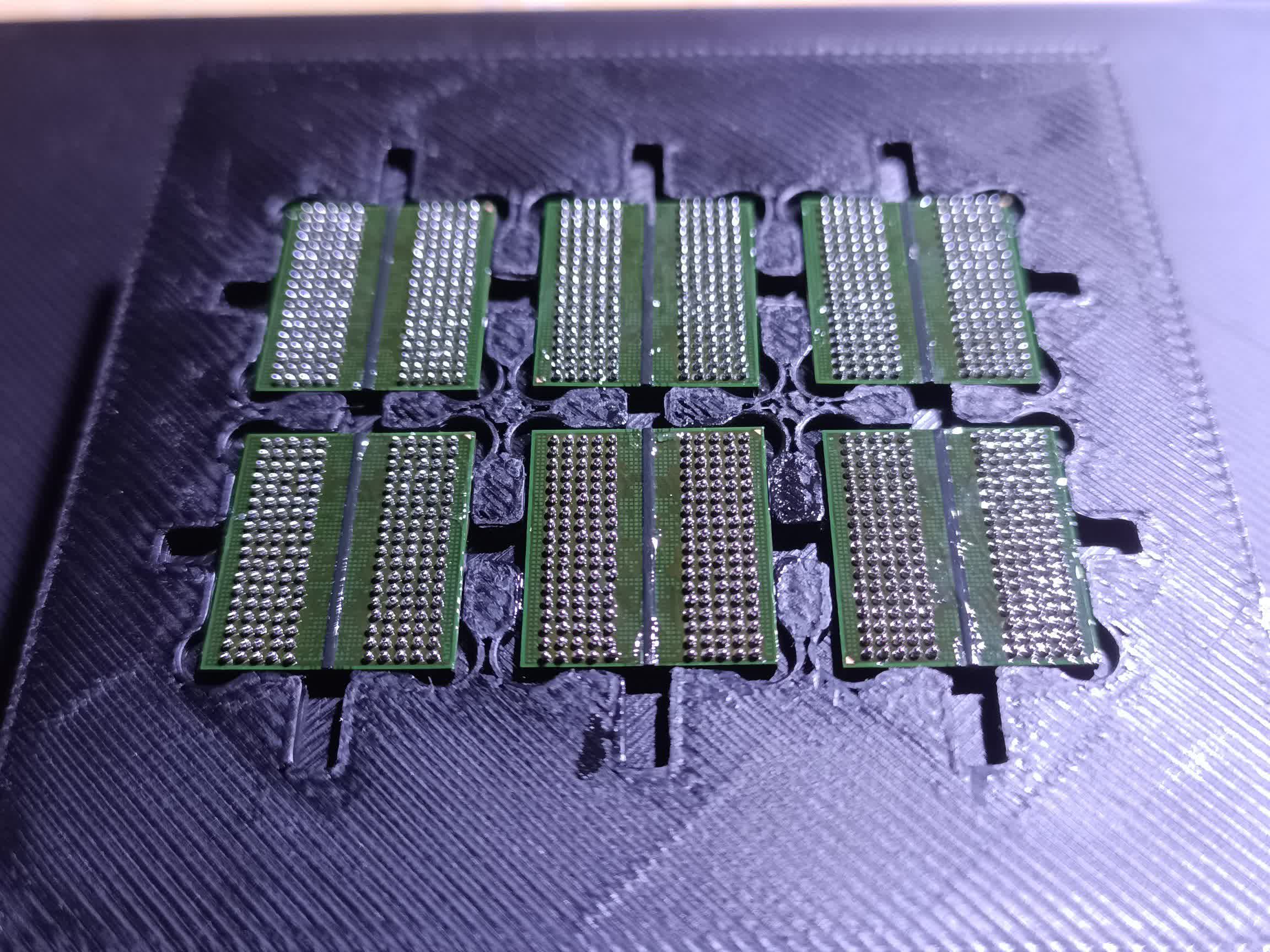
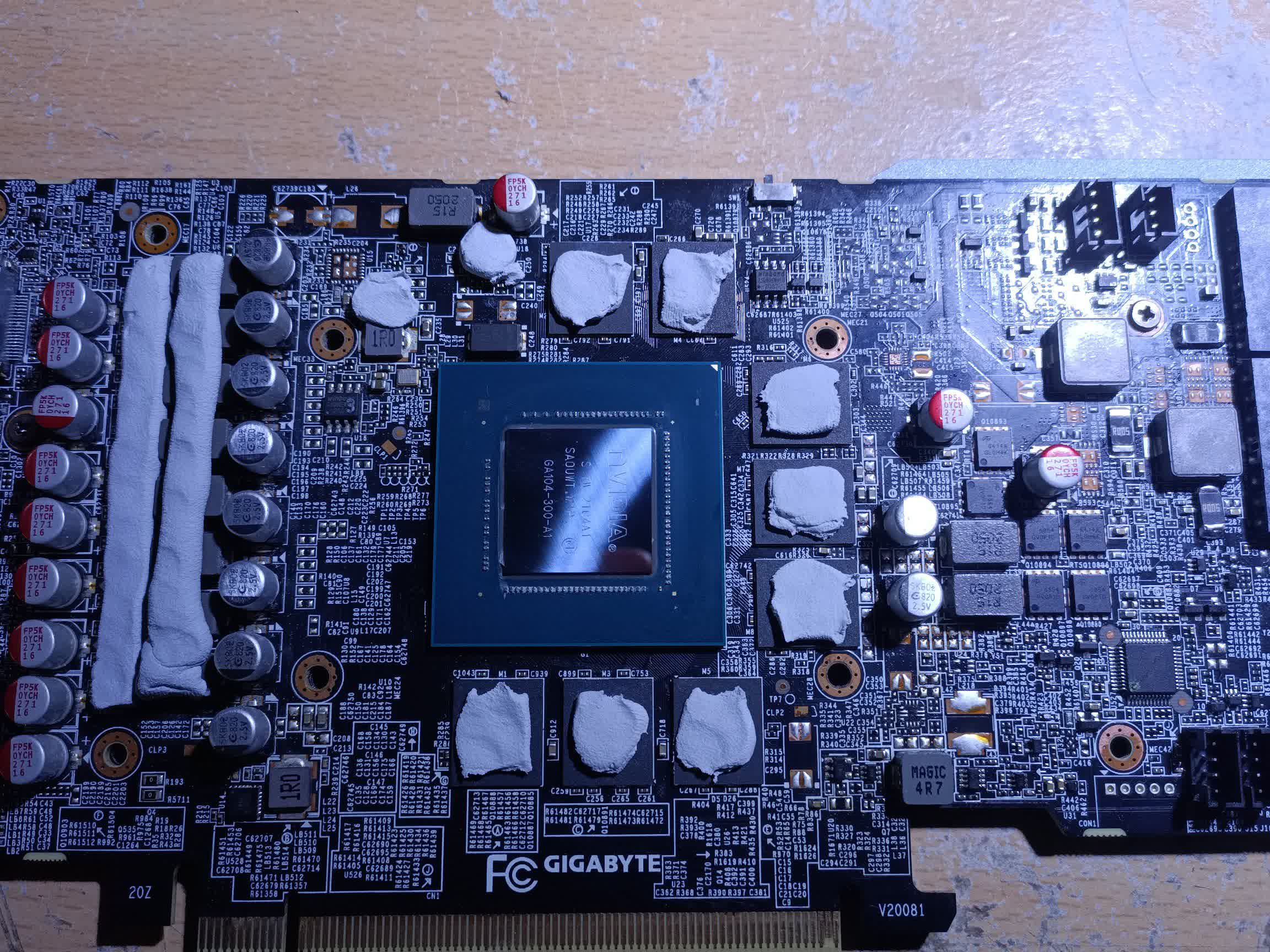
He then used a 3D-printed holder for a GDDR6 stencil and soldered the 16GB worth of modules onto the RTX 3070 PCB. The card initially still appeared as an 8GB model because the memory straps also needed changing so the GPU would select the correct BIOS timing table.
After changing the strap resistors, the RTX 3070 booted and displayed 16GB, but it was not immediately stable. The card suffered black screens and solid-color crashes when switching power states, especially after exiting a benchmark or moving between desktop and load states.
AssassinWarlord eventually traced the issue to the 16GB timing configuration in the BIOS, which appears to exist because Nvidia experimented with 16GB RTX 3070 designs internally but never finished the implementation.
Because modern Nvidia BIOS files cannot be freely modified without breaking security checks, the solution was a workaround rather than a clean BIOS fix.
A registry tweak called DisableDynamicPstate forces the card to remain in its high-performance P0 state, preventing the downclocking behavior. The downside is idle power consumption of around 70W, which is not exactly great, but it does make the 16GB mode stable.
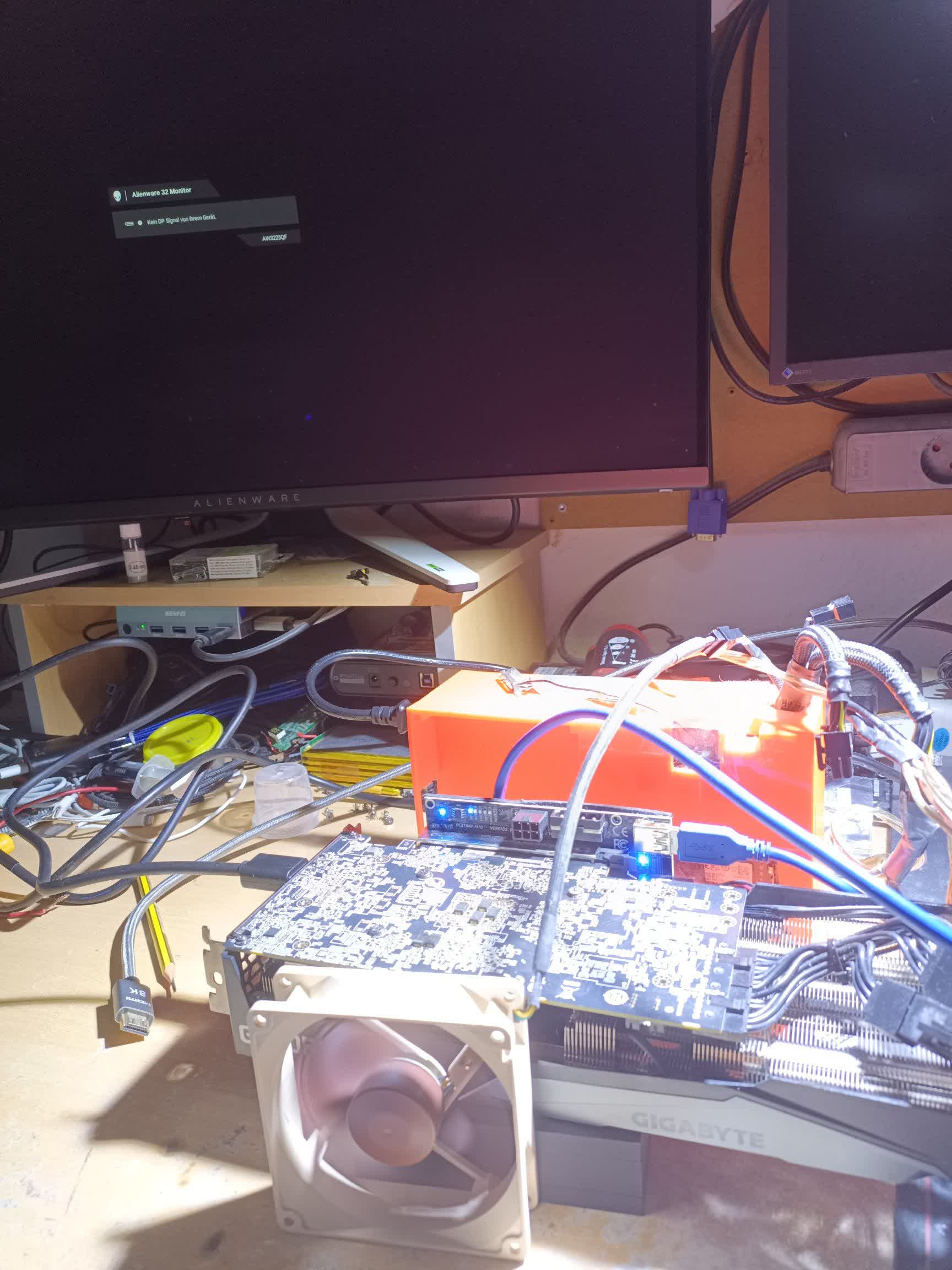
The modder also added a physical switch that lets the card boot in either 8GB or 16GB mode after a full power cycle. This allowed AssassinWarlord to compare both memory configurations on the same card, making the effects of the extra VRAM much easier to see.
The gains were not dramatic in synthetic benchmarks. In some cases, the 8GB mode was slightly faster at stock clocks, likely because the 16GB timing table was never properly finalized.
The bigger improvement was seen in games. In Marvel's Spider-Man 2 running at 4K using the Very High preset, the 8GB mode was stuck in the roughly 20fps range. In 16GB mode, with 13.3GB of VRAM in use, performance jumped to more than 40fps, effectively doubling the frame rate.
This isn't the first time someone has created a 16GB RTX 3070. Modder VIK-On produced a working version years ago, also running into stability issues before finding a clock-locking workaround. But AssassinWarlord's version stands out for turning two broken cards into one far more useful GPU, while also adding a cool 8GB/16GB switch.