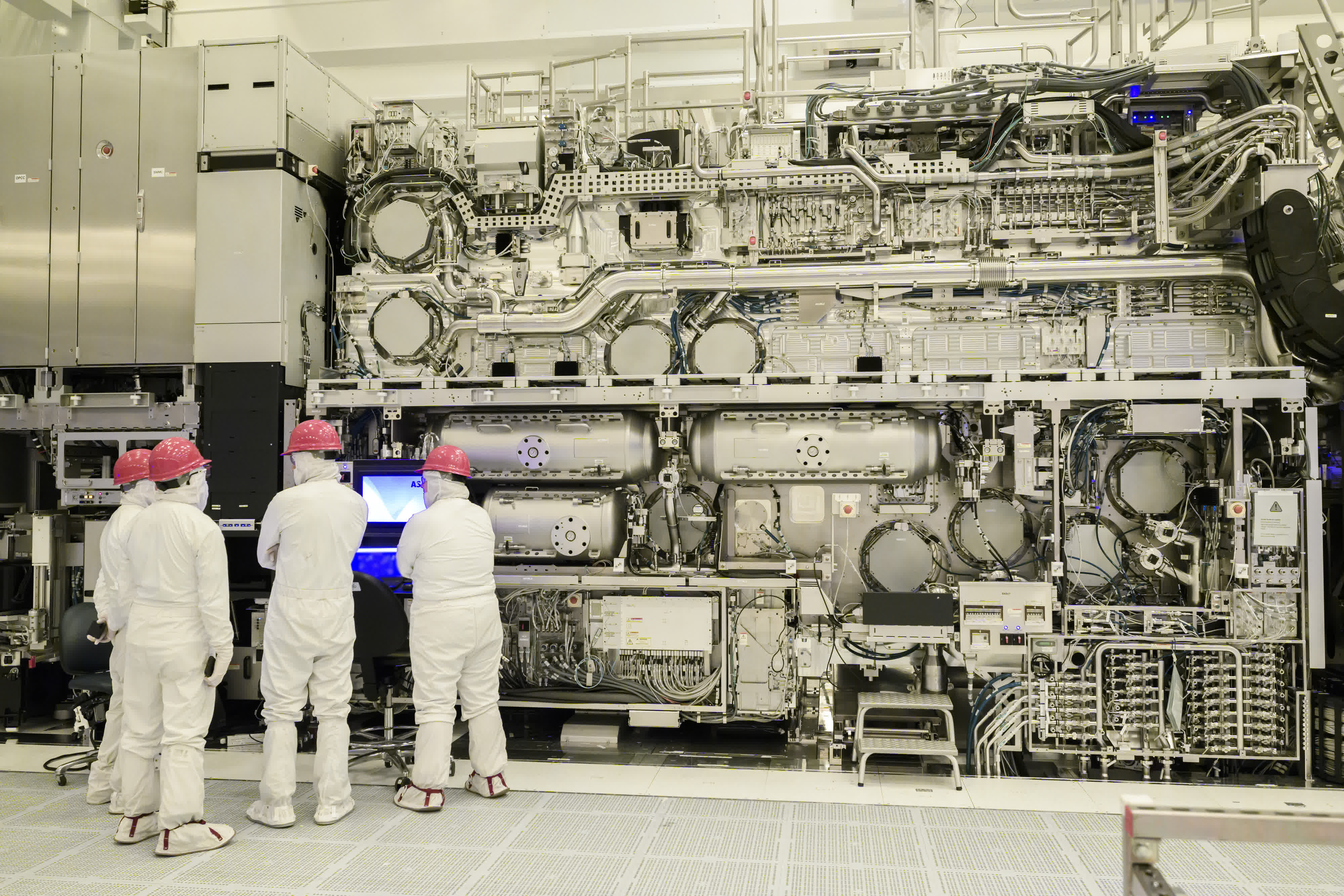
Looking ahead: ASML builds the most complex and advanced chipmaking machines available today, and is Europe's largest technology company in terms of market cap. The Dutch corporation still needs to sell its uber-expensive machines to foundry ventures, which is why is it is now praising the unprecedented capabilities of its latest photolithography machines.
ASML CEO Christophe Fouquet recently confirmed that the first silicon products manufactured with the company's latest chipmaking machines will be delivered to customers over the next few months. Fouquet added that these massive devices are very expensive but pay off on long-term manufacturing efforts. The executive attended a conference held by research company Interuniversity Microelectronics Centre in Antwerp, Belgium.
Fouquet stated that "in the next few months, we will be looking at the first few products, in memory, in logic, being exposed on the High-NA system."
High-NA EUV tools are photolithography machines based on extreme ultraviolet lithography. They are equipped with High Numerical Aperture scanners that can produce next-generation chips with smaller features, enabling more densely packed transistor designs.
"World-class foundries should simply buy more ASML scanners" says Christophe Fouquet, ASML CEO.
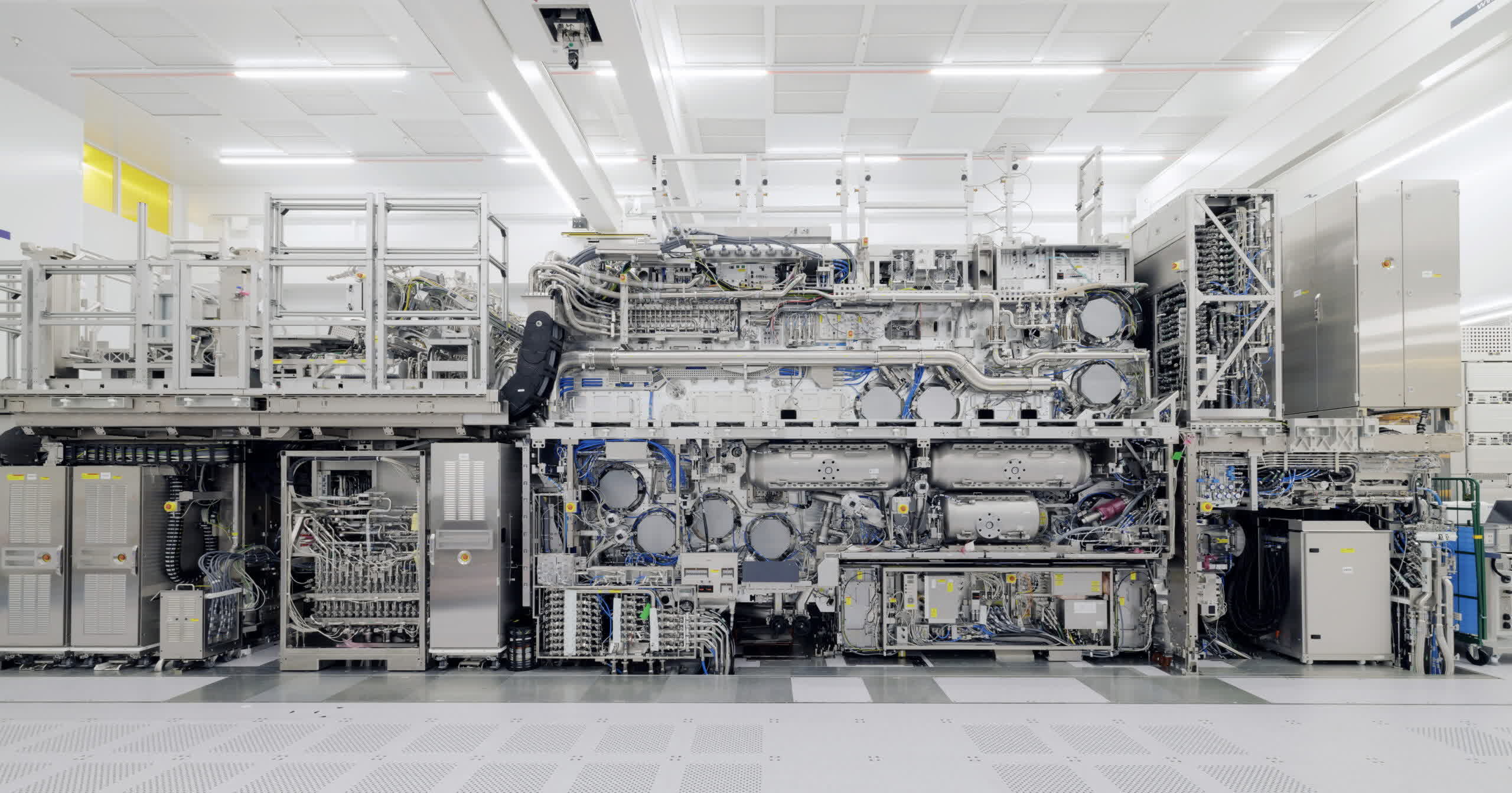
Every High-NA EUV machine can cost up to $400 million, but Fouquet is confident about their its adoption. This technology is expensive and requires very skilled personnel, Fouquet said, but is designed to lower the cost of "patterning" and increase the margins for next-generation silicon products.
So far, chipmakers have welcomed High-NA EUV scanners with what might be described as lukewarm enthusiasm. Intel is one of the most enthusiastic proponents of the new EUV technology, and has been experimenting with ASML's TWINSCAN EXE:5000 scanners for a few years already. The company now hopes to leverage High-NA EUV to better compete with other major chip manufacturers.
According to TSMC, High-NA EUV technology will not be a strict requirement for at least the next few generations of chip manufacturing nodes. The Taiwanese foundry, one of the world's most important technology corporations, plans to keep using its current EUV technology – which was made by ASML anyway – to develop novel chip designs that don't necessarily require ever-shrinking silicon features.
Fouquet acknowledged the concerns expressed by TSMC, Samsung, and other high-profile executives attending IMEC's Antwerp conference. The industry is worried that ASML will be unable to keep up with growing demand for more chipmaking machinery coming from the AI industry, with chip sales expected to grow by 20% over the next few years.
World-class foundries should just buy more ASML scanners, Fouquet said, so that they can significantly expand their production capacity. Many chipmakers are not keen on the idea, and are mostly focused on reserving a growing portion of their existing facilities for high-margin products such as Nvidia's AI accelerators or high-bandwidth memory chips.