A Bot Potato: The Zig programming language was created a decade ago to improve on traditional C conventions. In the age of "vibe coding" and AI agents, the organization overseeing its development has now drawn a clear line against non-programmers using AI to tinker with its codebase.
Andrew Kelley designed the Zig programming language in 2016 and still presides over the non-profit organization responsible for managing the project. In a recent interview on the developer-focused JetBrains podcast, Kelley said AI-based contributions have no value and will be discarded.
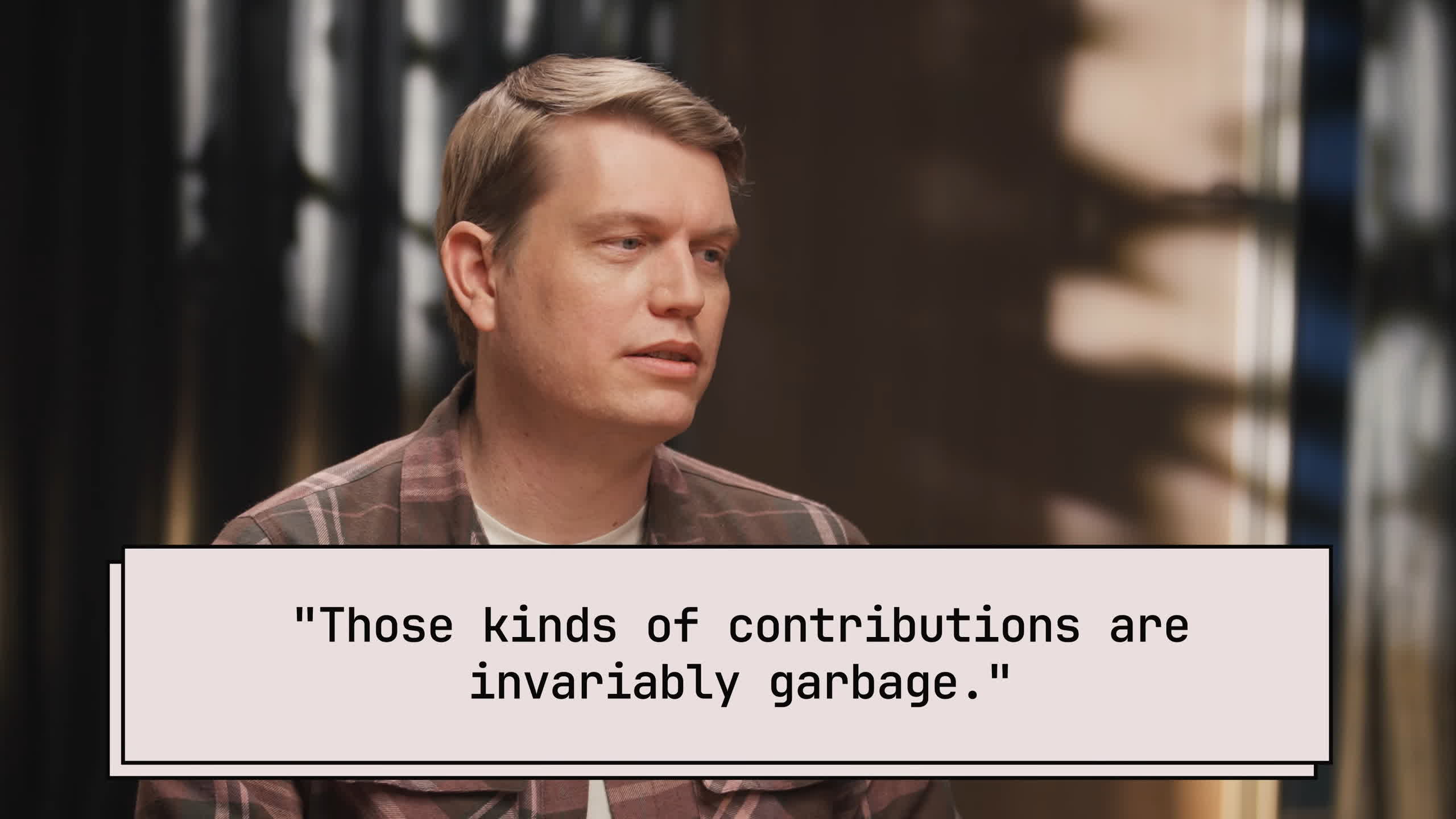
Code contributions generated through chatbots are "invariably garbage," he said, arguing they have "no value whatsoever." Even worse, he added, they can have "negative value," because they consume limited review time from the team.
At present, the Zig codebase has hundreds of commits awaiting proper review. The small team of Zig developers is working through these requests as quickly as possible, but there will always be a bottleneck. AI-generated contributions, he argued, further strain that process by introducing changes that often show little understanding of the project or its codebase.
Kelley describes the resulting situation as "contributor poker." The Zig team uses code review as a way to identify valuable contributors to the project. In some cases, reviewers may even discover developers worth inviting into the core team. But this assumption – that contributors can improve their skills and grow into long-term collaborators – is undermined, he argues, by the influx of AI-generated submissions, which distort that signal and add noise rather than value.

People who rely on AI to generate code, critics argue, are not worth the effort because they are not trying to learn anything new. That view underpins Zig's stricter stance against "vibe-coded" contributions, including LLM-assisted editing, brainstorming, and debugging requests.
Zig was created as a free, open-source systems programming language, building on ideas introduced by Dennis Ritchie's classic C. The language aims to be a zero-dependency, drop-in replacement for C and C++ projects, allowing programmers to focus more on debugging their applications than on managing language complexity.
Kelley's stance against AI-assisted contributions is adding fuel to the growing debate over the impact of chatbots and large language models on software development. Some studies suggest that experienced programmers can be slowed down by "vibe coding," while tech executives continue to embrace it enthusiastically.
Agentic AI tools have also shown a tendency toward making high-impact mistakes at an alarming rate, sometimes consuming significant corporate resources in the process. In response, some programmers have begun "fighting fire with fire," embedding hidden instructions in projects designed to disrupt or mislead AI-assisted coding workflows.