
TL;DR: A growing backlash against the forced adoption of AI is building across the industry, but enterprise executives remain as bullish as ever on the LLM-driven future. According to at least one prominent tech leader, that enthusiasm may signal how out of touch those at the top have become.
Box co-founder and CEO Aaron Levie has coined a name for what he sees afflicting the C-suite: "AI psychosis."
While industry leaders extol the technology as a once-in-a-generation revolution, many of their employees – and the masses are not cheering. They're booing. In a weekend post on X, Levie argued that CEOs are "uniquely prone" to the condition "because they're sufficiently distant from the last mile of work" required to turn AI outputs into reliable business tools.

When executives experiment with AI, Levie wrote, "they see the happy path results, often not considering the next 10 or 20 things that have to happen to get sustainable results from agents." An executive might vibe-code what looks like a disruptive product prototype, he argued, but never has to review the underlying code before it ships – or verify the legal terms in a contract an AI just generated.
The gap between a compelling demo and a production-grade, enterprise-reliable workflow is precisely where most AI projects go to die, and where the people closest to the actual work live every day.
– Aaron Levie (@levie) May 24, 2026
That disconnect is already carrying real consequences. An overwhelming majority of tech executives expect AI to trigger layoffs within their organizations, while tens of thousands of workers have already lost their jobs to fund new AI infrastructure projects.
Critics are accusing tech corporations of engaging in AI washing, blaming LLMs and chatbots for staff reductions that would have happened regardless. Meanwhile, AI agents have been caught wiping entire corporate databases – backups included, while some Big Tech employees are gaming the system by inflating and faking their AI tool usage to score better on internal productivity leaderboards.
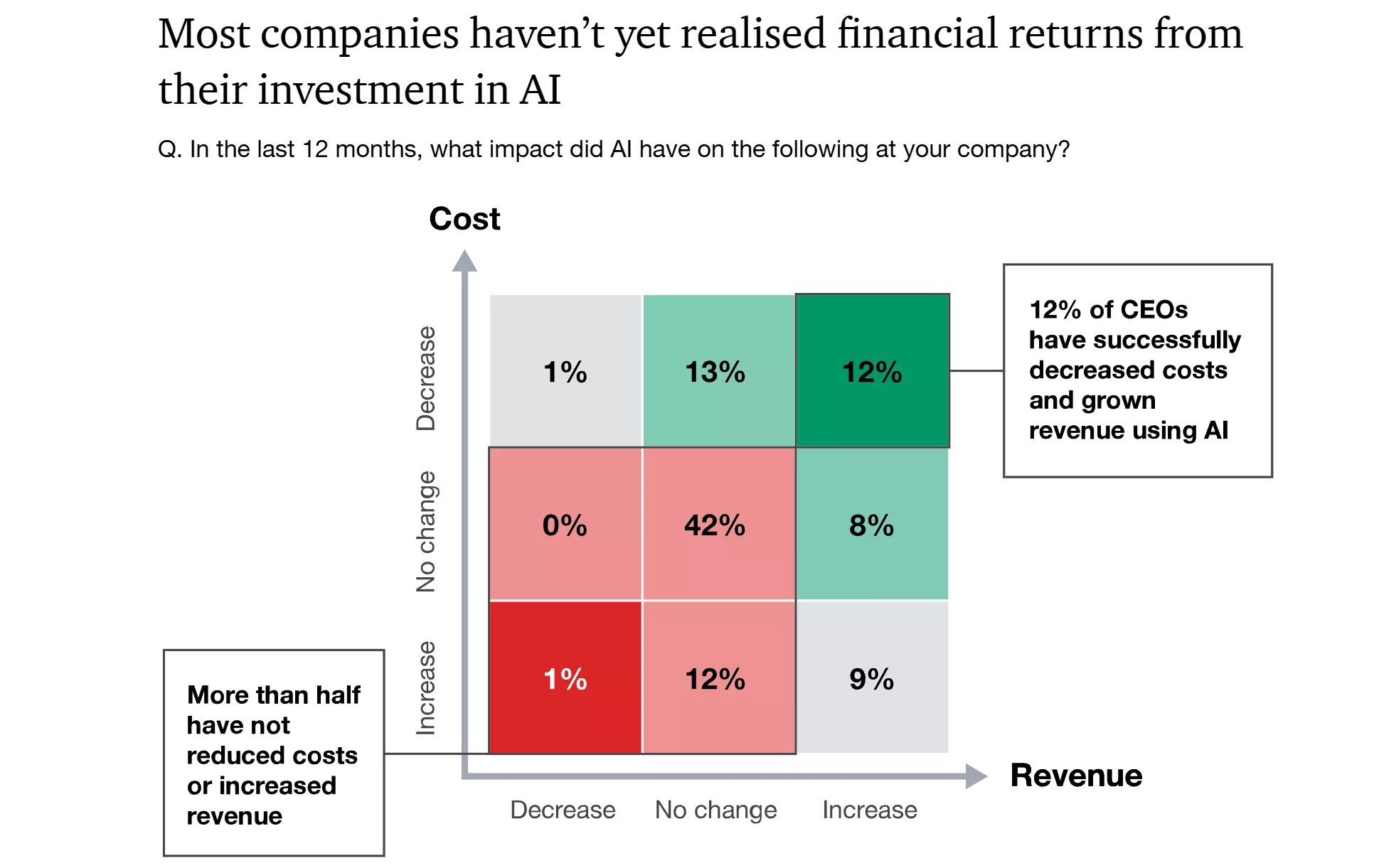
Meanwhile, Microsoft is already eyeing AI agents as the next major licensing frontier. Levie's prescription for CEOs is straightforward: use AI extensively enough so that they can experience both the good and the ugly coming from the tech without betting their company's future on a single technology innovation right away.
It's worth noting that Levie is not an AI naysayer. The Box CEO is a regular AI evangelist on X, advocating for a future in which agents become the default mode of software development. He is also an active angel investor, with a portfolio concentrated in enterprise software, SaaS, cloud computing, AI, and cybersecurity. His concern, in other words, isn't with AI itself – it's with executives who stop short of understanding what it actually takes to make it work.