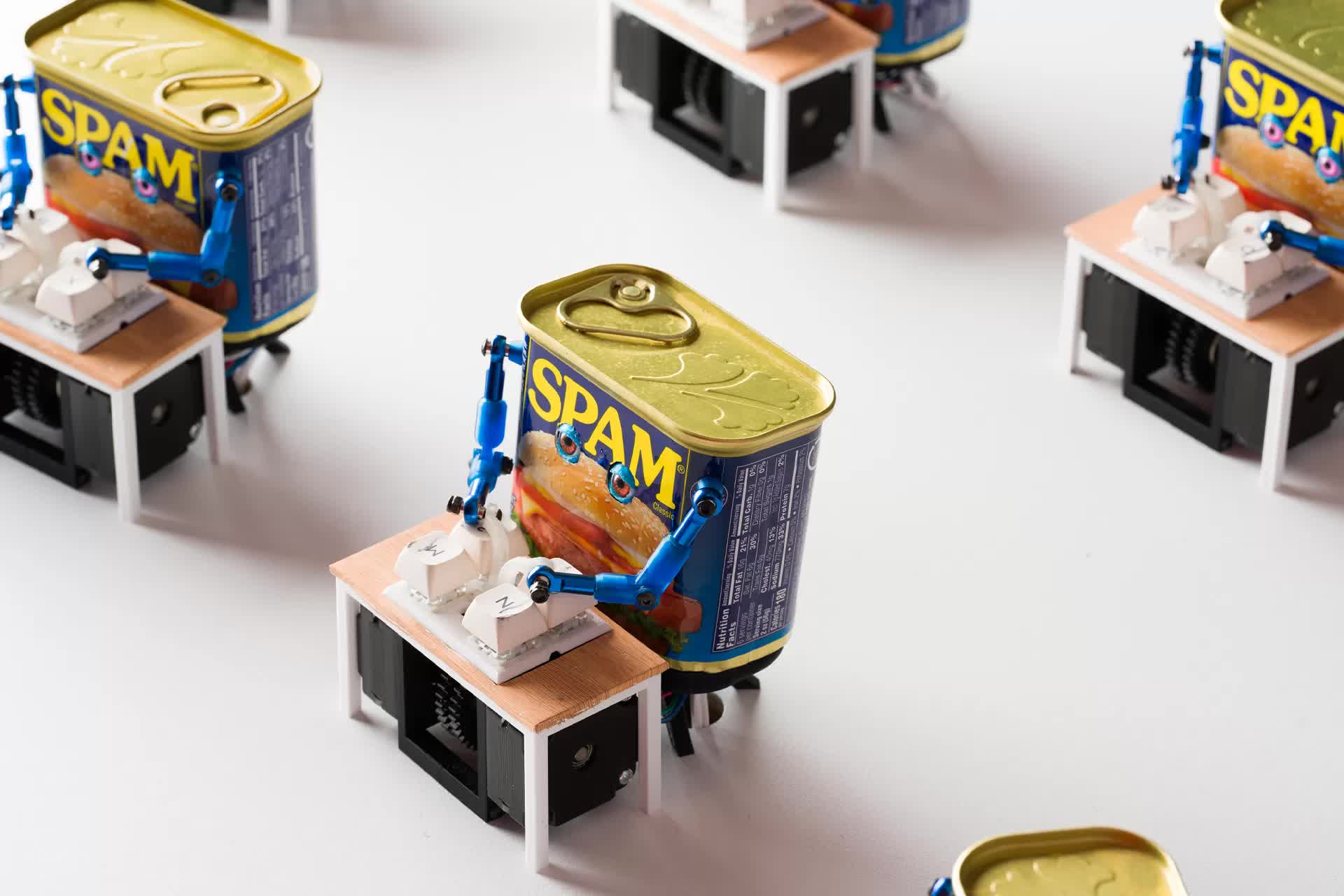
A hot potato: Moderators of the /biohackers subreddit say they are dealing with spam that isn't just about pushing sales, but about shaping how AI systems answer questions. They say companies are seeding discussions with posts intended to appear in AI-generated answers, effectively turning the subreddit into a battleground over which information large language models surface.
According to the moderators, companies that sell peptides and hormone replacement therapy (HRT) have been posting strategically in the forum to shape content that AI models later incorporate into their answers. The tactic hinges on Reddit's growing role as a source for AI tools.
"As AI search engines increasingly pull answers from Reddit, companies are using us for AEO (answer engine optimization)," the moderators wrote. "On top of that, there's been an explosion of peptide interest and AI usage flooding the sub. Together, this has put serious pressure on content quality."
In a policy update posted last week, the moderators said they would ban new standalone posts about peptides and HRT, limiting discussion to weekly megathreads. The decision follows what they describe as a sustained effort by vendors to use the subreddit as part of "answer engine optimization," or AEO.
The approach reflects a broader shift in how online visibility is engineered. Rather than focusing solely on search rankings, AEO aims to insert specific narratives and brand mentions into the kinds of discussions AI systems are most likely to surface. Because platforms like ChatGPT and Google's AI search frequently cite Reddit, highly engaged threads can end up functioning as de facto source material.
Also read: Bots have officially overtaken humans on the internet

Reddit moderators say the activity they're seeing is more subtle than traditional spam. Rather than overt promotion, posts are designed to generate engagement first, with brand mentions worked into the discussion in ways that appear organic.
"But what I'm seeing that is way scarier to me is that there are companies that will reverse-engineer the actual prompt patterns that are prioritized by LLMs," one moderator said. "And so you'll see someone post a super clickbait, high-traction, vague question like 'Is all the hype around Vitamin D actually worth it?'" they added.
Those posts perform well because people have strong opinions, which drives engagement and makes it more likely LLMs will pick them up. Brands then work in references that look natural, but are deliberately placed as part of coordinated campaigns to push certain products or narratives into AI-generated responses.
The accounts behind these posts are often difficult to flag. Moderators describe "warmed up" profiles with posting histories that make them look like typical users. In some cases, real people are paid or otherwise incentivized to participate, further blurring the line between genuine discussion and coordinated promotion.
"A lot of it has become pattern recognition," the moderator said. "You literally just sort of know what to look for. But the problem is you don't want to become punitive to the people who aren't doing this maliciously, and so I think the over-moderation risk is very real."
The issue is especially sensitive in a community centered on self-experimentation and emerging therapies. Peptides cover a wide range of injectable compounds, from GLP-1 drugs to less-regulated substances marketed for muscle growth, recovery, and anti-aging. HRT, meanwhile, has both established clinical uses and a growing presence in longevity-focused circles.

Moderators say that mix already carries risk, even before factoring in coordinated promotion. One moderator said peptides are moving into the mainstream despite thin regulation and real potential for clinical validation – but that growth is happening alongside risky sourcing, posts from teens seeking questionable outcomes, and coordinated vendor efforts using AI-driven tactics to steer users toward their products.
That overlap between marketing and health decisions is what ultimately pushed the team to act. "There's an element of brands using Reddit to manipulate consumers and get people to buy their products and sort of the ethics of marketing and how the attention economy is evolving under AI," the moderator said. "But then for us specifically, it's like how do we prevent actual physical harm?"
"I just feel like, the dead internet, there's this sadness I feel of this one place on the internet that was so human is sort of eroding and becoming bogged up with artificial AI-driven content," the moderator said. "I think that's super depressing."
Reddit said it continues to expand its moderation capabilities. A spokesperson told 404 Media that the company relies on a combination of human review and automated systems to detect and remove manipulative content, and that moderators have access to tools designed to flag likely spam accounts.
But for the moderators of r/Biohackers and potentially hundreds of other subreddits, the challenge is not just scale. It's that the activity increasingly blends in with normal conversation, making it harder to separate manipulation from genuine participation.
"I just feel like, the dead internet, there's this sadness I feel of this one place on the internet that was so human is sort of eroding and becoming bogged up with artificial AI-driven content," the moderator said. "I think that's super depressing."
Masthead: Spambots by Neil Mendoza