
In brief: Flock's AI-powered license plate readers, which have drawn public scrutiny over surveillance and privacy concerns, are traditionally stationary. However, public records indicate that the company is exploring ways to make its cameras more mobile, including through partnerships with delivery and rideshare companies.
A presentation from Flock, obtained by 404 Media, describes abandoned plans to install the company's automatic license plate readers on 350,000 vehicles operated by Uber, Lyft, and other delivery companies in Georgia. The plan could have significantly expanded the surveillance capabilities of the already controversial AI-powered cameras.
ALPRs from companies such as Flock and Axon are ostensibly designed to record the license plates of passing vehicles and store the data in a searchable cloud database. Authorities have used the cameras, which currently operate in about 6,000 communities across the US, to track the movements of vehicles suspected of being involved in serious crimes.
However, incidents involving misread plates and police officers using ALPRs to stalk people have contributed to a nationwide backlash. Many communities, including Los Angeles, have since deactivated the cameras. ALPRs are usually installed on traffic lights or roadside poles, but a recently uncovered document outlines a proposed partnership between Flock and dashcam provider Nexar.
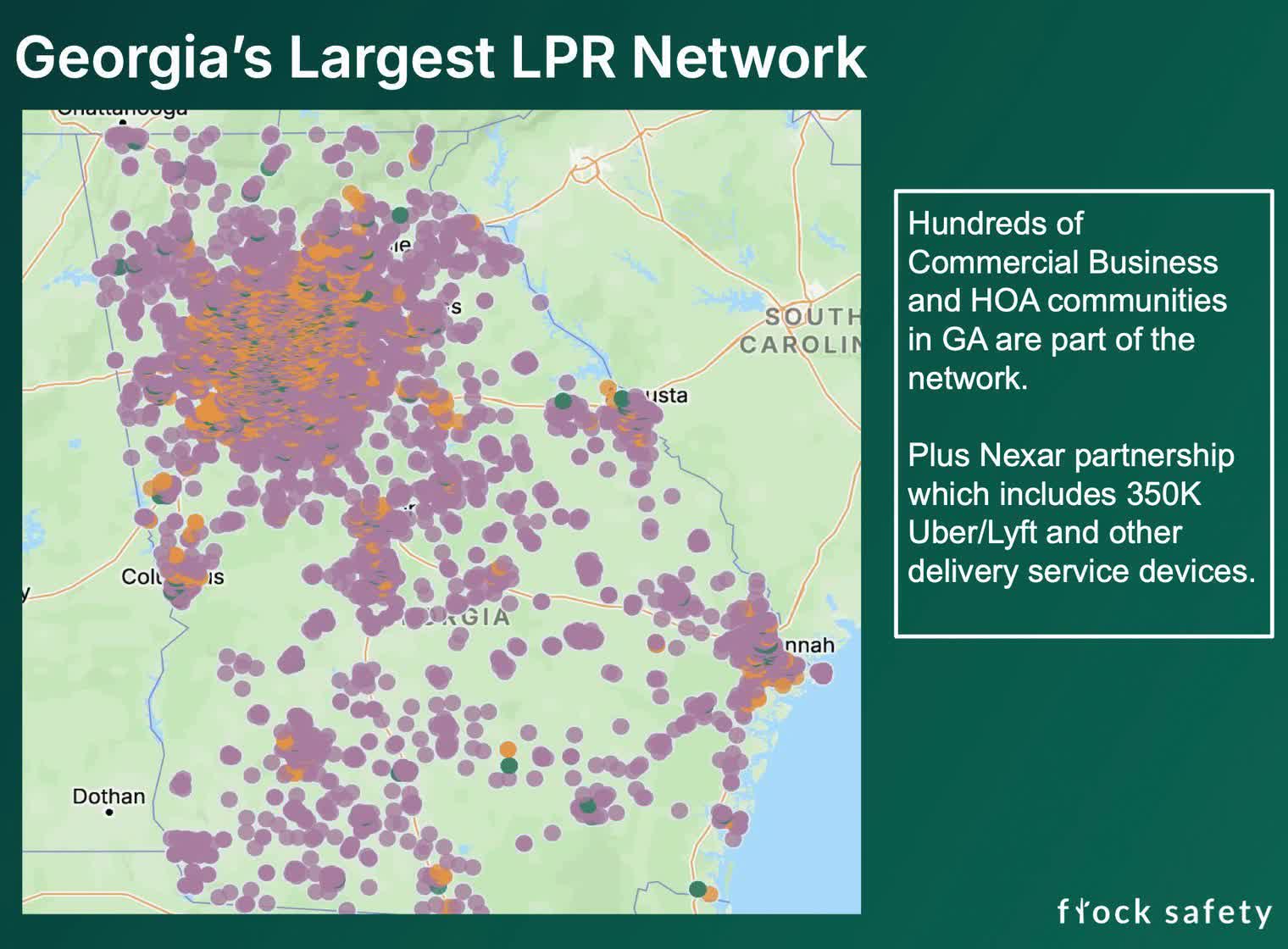
The presentation highlights the hundreds of thousands of dashcams in Uber and Lyft rideshare vehicles in Georgia, as well as cameras operated by local businesses and homeowners associations, as potential ALPR platforms. While Flock and Nexar ultimately did not ink the deal, it would have allowed Flock to catalog every vehicle that passed those equipped with cameras. Whether the drivers would have been aware of the surveillance remains unclear.
Authorities have utilized mobile camera networks before. Last year, robotaxi company Waymo admitted that it complies with police warrants for footage from its 360-degree cameras, but only after carefully reviewing the requests. Axon and Motorola also provide ALPRs designed for installation on moving vehicles.
The Flock-Nexar presentation was originally obtained through a public records request by Jason Hunyar, a Georgia-based blogger who reports on Flock's activities in the state. Previous requests have uncovered records indicating that the company erased its supposedly immutable usage records after an officer observed a girl's gymnastics room and sold data collected by its cameras.
In one post, Hunyar outlines Flock's plans to install its cameras on robot dogs that could send data back to their Hangzhou-based manufacturer through pre-installed backdoors. Previous reports also revealed that a major Flock investor supports a company capable of intercepting and altering surveillance footage.