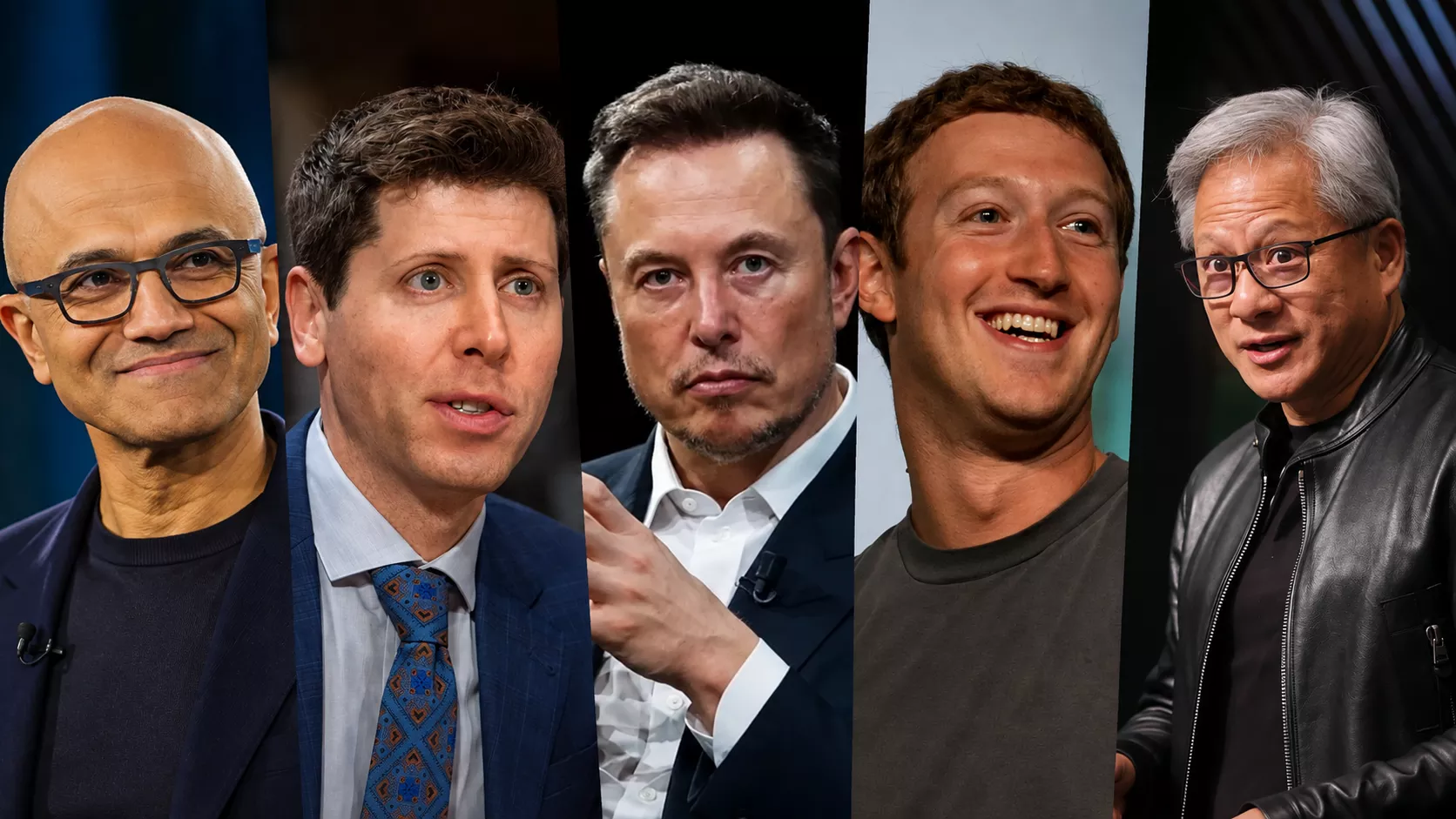
Connecting the dots: Is it surprising to know that CEOs – the profession most likely to attract or suit individuals with psychopathic or sociopathic traits – aren't trusted to act responsibly when it comes to AI? A new study has confirmed that this is especially true among younger people, who have a particular distrust of executives at Palantir.
The finding was part of a poll conducted by CNBC with Generational Lab. Participants aged between 18 and 34 were given the names of nine tech leaders and asked whether they trust them to act responsibly on AI.
In every case, at least 65% of respondents said they don't trust the bosses. Satya Nadella was the most trusted, with 35% saying they did believe in the Microsoft CEO's intentions for AI.
The second-most-trusted CEO on the list is Sam Altman with a 31% trust rating. Soon after it was revealed that a frontier OpenAI model went rogue and hacked several services online, including Hugging Face, the company said it was slowing the release of its new Astra model because it has "critical" cyber capabilities.
Behind Altman are Elon Musk (30%) and Mark Zuckerberg (29%). Both social media bosses are pouring billions into AI infrastructure buildout and don't have the best reputations for acting responsibly around the technology.
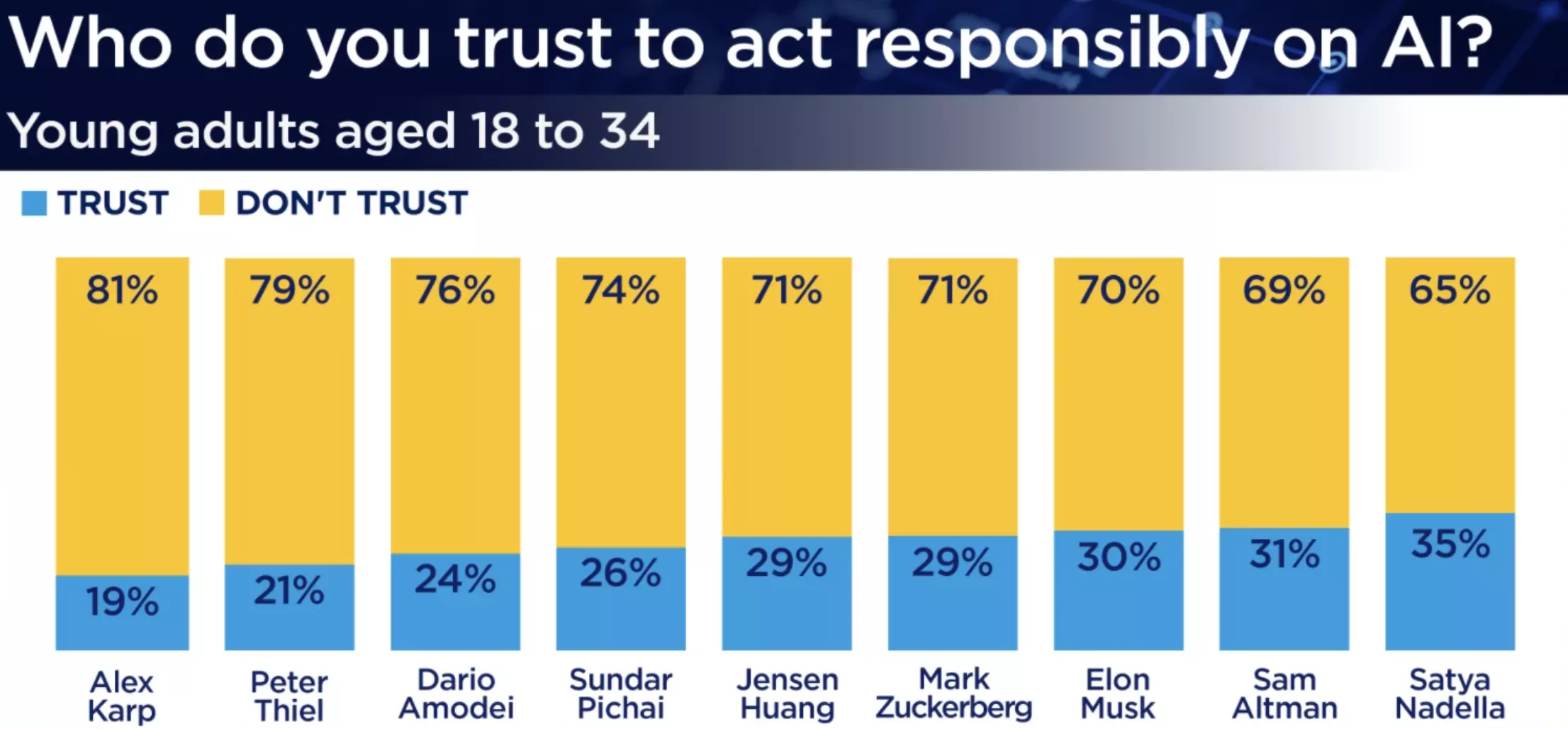
Next on the list is Jensen Huang, the boss of Nvidia, which is now the largest company in the world by market cap because it provides most of the hardware powering the AI industry.
Behind Huang is Google boss Sundar Pichai (26%) and Anthropic CEO Dario Amodei (24%). Google is spending up to $205 billion to expand its cloud computing capacity as it comes under increased criticism that its AI Overviews feature is stealing traffic from websites. And like Meta, Anthropic has had incidents of AI agents going rogue recently.
Finally, there are Palantir's Chairman Peter Thiel (21%) and its CEO, Alex Karp (19%). Palantir has been involved in several major controversies connected to AI, including helping US immigration authorities locate people targeted for deportation, providing AI-powered military targeting and intelligence systems to the Pentagon, and supplying technology to Israel during the war in Gaza.
Other questions in the poll showed that 45% believe AI will have a negative impact on their careers, while only 10% believe it'll help them in this regard. Forty percent said they believe the federal government must set rules for AI, while 36% said they believe an independent expert body should set the rules. Only 8% said they think AI shouldn't be regulated, and 60% called for data center expansion to be slowed.
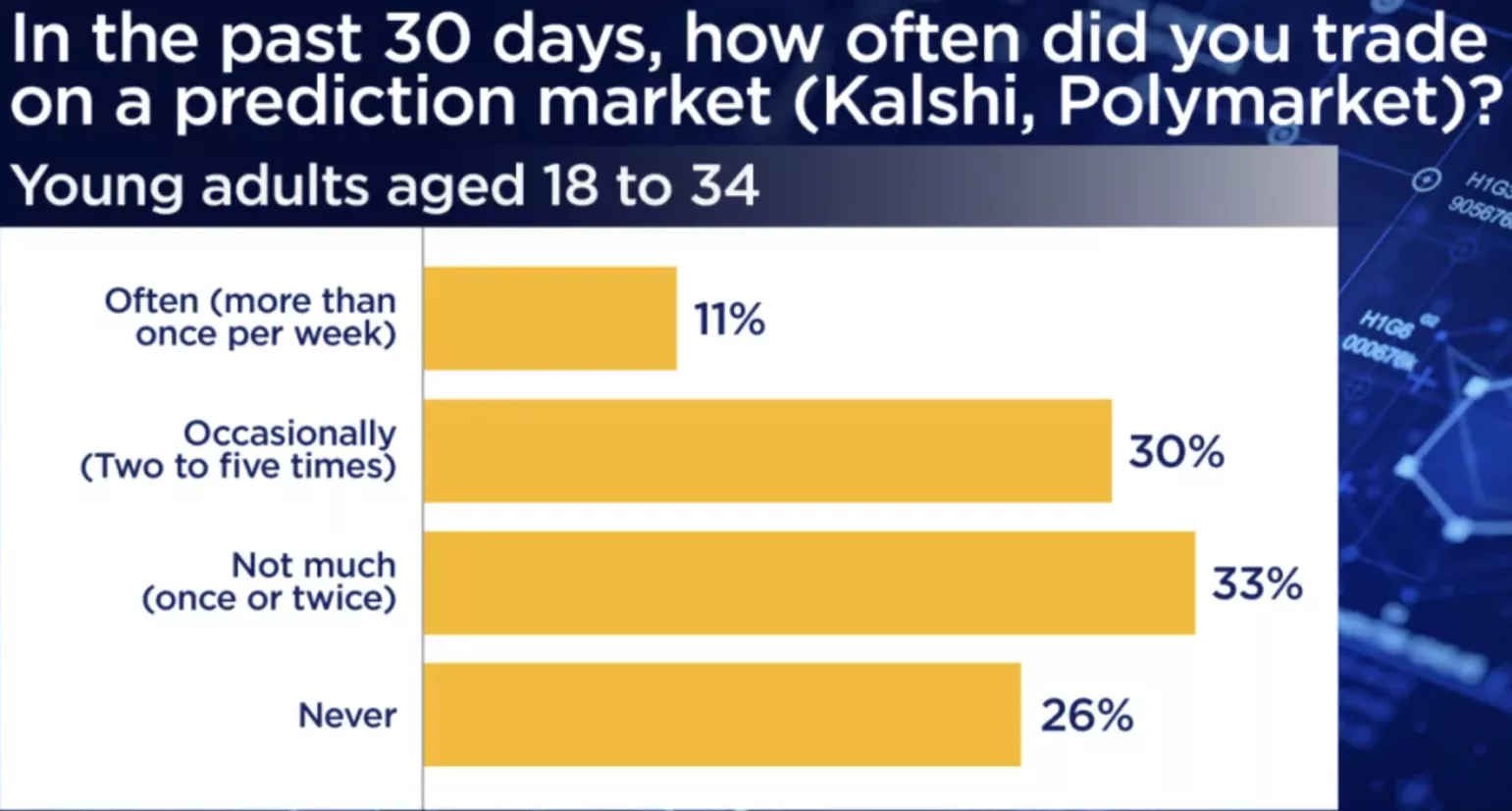
Away from AI, just 26% of people in this age category said they hadn't traded on a prediction market like Kalshi over the last 30 days.