
Connecting the dots: PCs without a dedicated GPU already have to share a single memory pool between graphics, AI, and system tasks, and Windows currently makes that split on its own. That arrangement is becoming a much bigger deal as Apple, Qualcomm, Nvidia, and others build AI PCs around unified memory pools that could potentially stretch into the hundreds of gigabytes.
A recent experimental Windows 11 build hides evidence that Microsoft is preparing to let users control the split between system and video memory in unified pools. The feature could give users more flexibility when juggling gaming and AI workloads, especially on upcoming unified-memory devices like Nvidia's RTX Spark platform.
Windows 11 build 29648.1000, released August 17, carries a new feature called "IntelligentCarveout" that isn't mentioned anywhere in Microsoft's patch notes. Windows watcher @phantomofearth confirmed to Windows Latest that the build's code strings reference reserving memory for accelerators, graphics, and AI.
That would let users manually set aside unified memory for games and AI-heavy applications, with that reserved portion off-limits to everything else.
Similar references previously turned up in Nvidia documentation. If the feature ships publicly, it could fundamentally change how users configure performance on unified-memory chips.
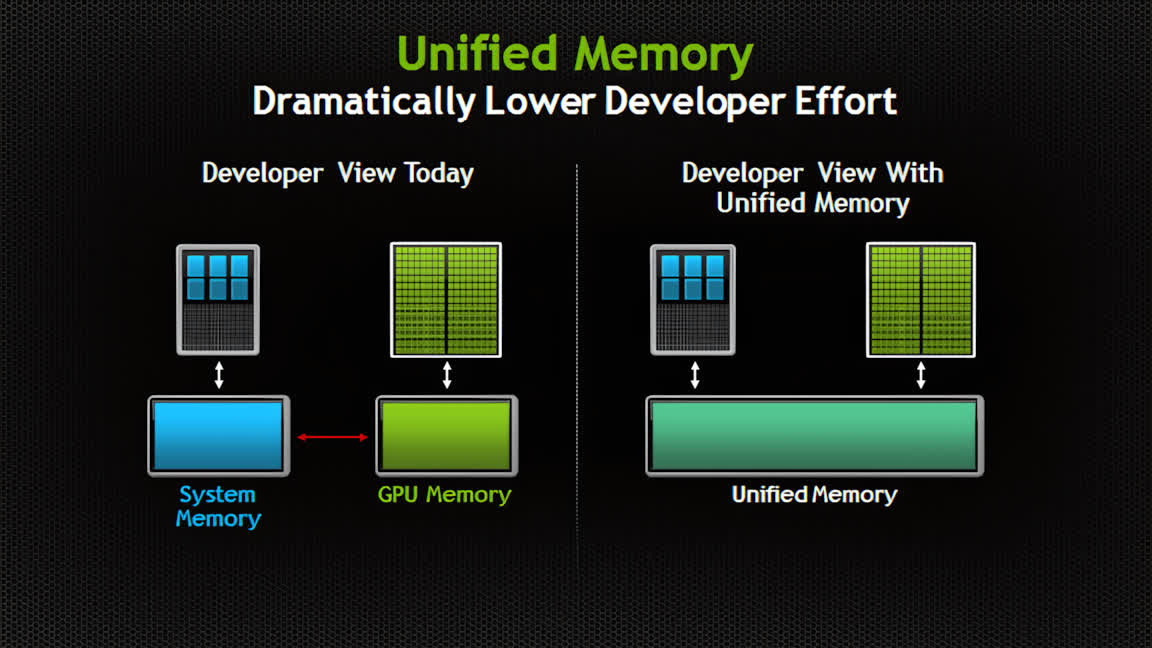
Unified memory has traditionally shown up in Macs, some laptops, handheld gaming PCs, and other systems built around integrated rather than discrete graphics.
Depending on the workload, performance on these systems can vary significantly compared to discrete GPUs with dedicated VRAM, and while GPU-heavy tasks can pull from system memory when they run short, doing so usually comes with a steep performance penalty.
Since running local AI models demands large amounts of fast memory, high-end GPUs once reserved mainly for gaming have become popular tools for AI work. Meanwhile, PCs built from the ground up for local models have featured progressively larger unified memory pools. Macs configured with 24GB of unified RAM or more have faced shortages amid the local AI boom, and Microsoft and Nvidia have answered that shift with RTX Spark devices offering up to 128GB.

Nvidia's dominance in GPUs owes a lot to software, not just silicon – CUDA programming, DLSS upscaling, Reflex latency reduction, and the broader RTX suite have become real selling points on top of raw hardware. Carrying that same software stack into the integrated-graphics space gives RTX Spark a built-in edge over AMD, Qualcomm, and Intel, none of which can match Nvidia's software ecosystem on AI or gaming performance yet.
When it unveiled the RTX Spark chip, Nvidia already touted it as carrying more addressable memory than any of its GPUs. Because IntelligentCarveout would let users route a large share of that 128GB pool toward graphics and AI tasks, RTX Spark's GPU could end up with access to far more memory than even the RTX 5090's 32GB of dedicated VRAM – though that shared, LPDDR5x-based pool is considerably slower than the RTX 5090's GDDR7, so it's a capacity advantage rather than a speed one.