
In context: Ahead of the much-awaited Call of Duty: Modern Warfare 4 launch on October 22, Activision has published a detailed report on how the global video game cheat economy has evolved into a multi-billion-dollar business spanning subscription services, cheat reskins, illicit accounts, and spoofing hardware, supported by an organized network of hackers, resellers, and distributors.
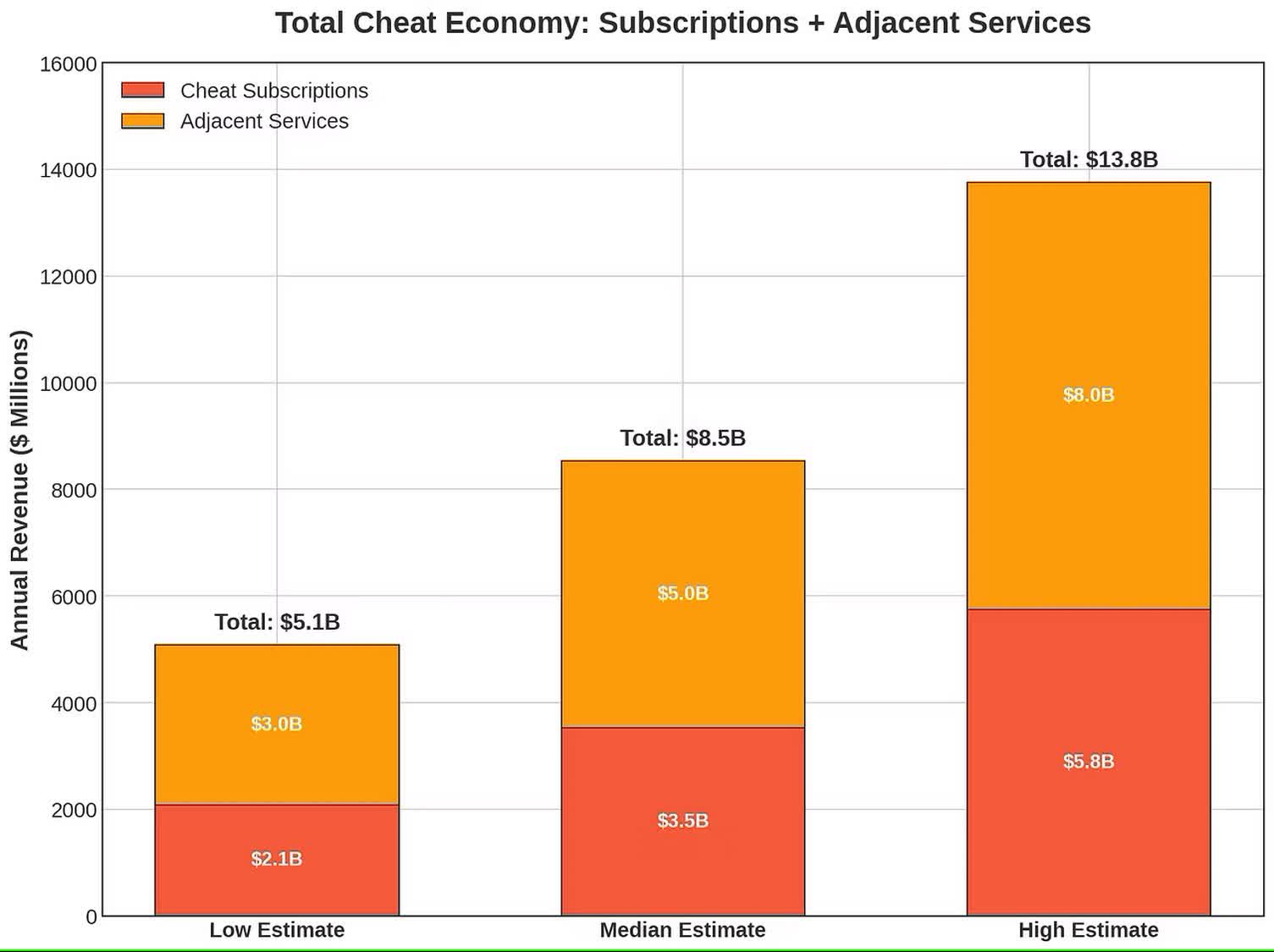
The company also cited a recent study by threat intelligence firm Intorqa, which claims the cheat economy generates between $5.1 billion and $13.8 billion every year, with the median estimate being around $8.5 billion. The study claims that the cheat economy is made up of two revenue streams: subscription software and a wide network of supporting tools and services.
According to the research data, cheat subscriptions for just 15 popular titles generate around $3.5 billion per year, while account trading, boosting services, hardware ID spoofers, and other tools that are largely sold through organized distributor networks account for at least another $5 billion.
As part of its anti-cheat operations in collaboration with federal and local law enforcement agencies, Activision has reportedly disrupted 375 reseller operations, issued more than 80 cease-and-desist notices, and shut down 31 primary cheat vendors.
The company also recently released a video showing bodycam footage of an alleged Call of Duty cheat maker being served a cease-and-desist order at their Ohio residence.
– Call of Duty (@CallofDuty) August 28, 2026
Due to the complexity, time, and cost involved in detecting and eliminating cheating in online multiplayer games, Activision says that its Ricochet Anti-Cheat technology does not try to catch one cheater at a time. Instead, it combines "detection, account security, TPM 2.0 enforcement, deep investigations, and legal action" to combat the cheating ecosystem.
The company added that it has adopted a multi-layered approach to counter cheating, whereby each layer targets one of the three pillars of the market: software- and hardware-based cheats, replacement accounts, and evasion tools such as spoofers. Activision is also working with law enforcement to dismantle distribution networks and catch the people operating them.
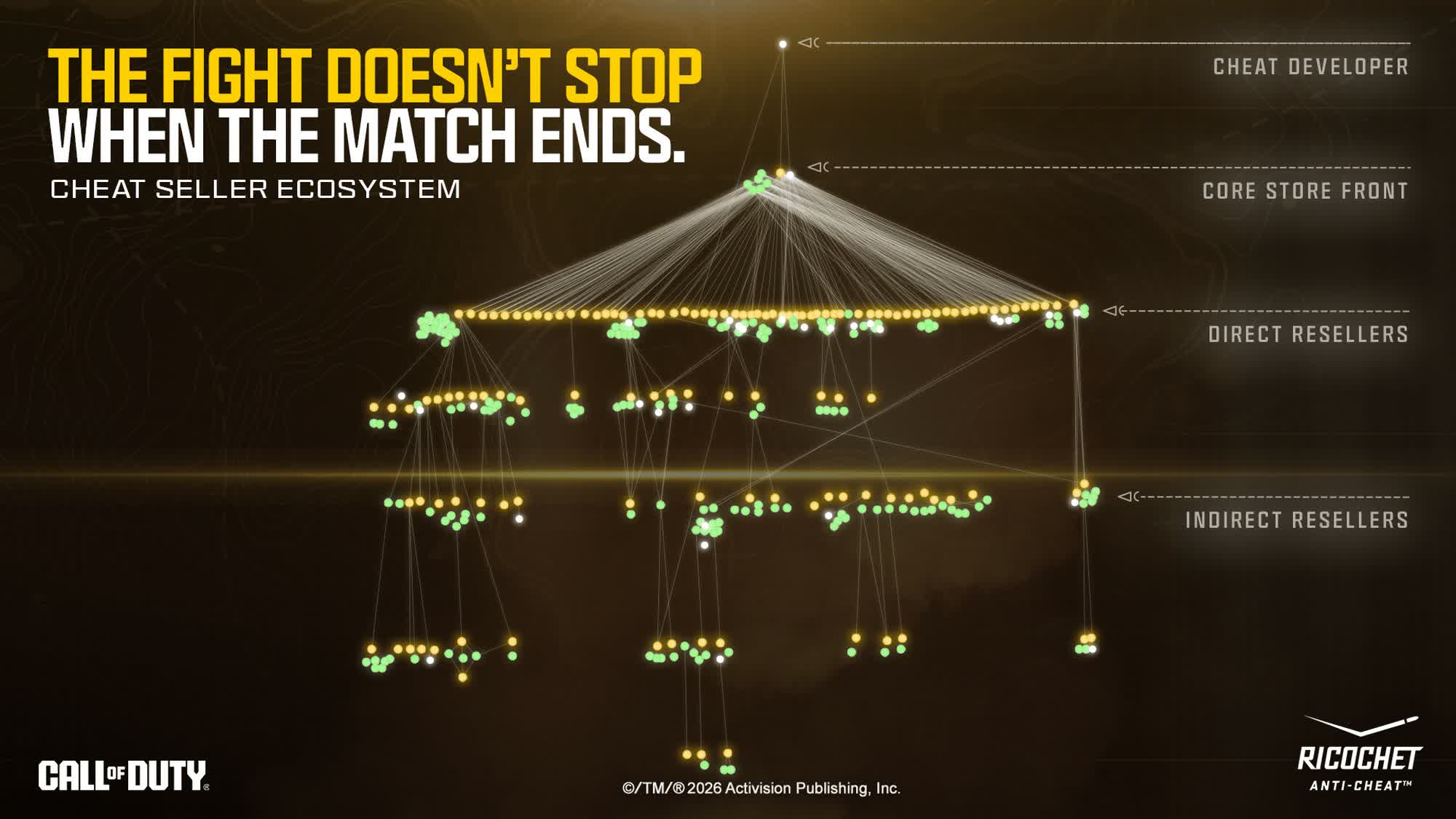
Explaining the scale and scope of the modern cheating economy, Activision noted that cheating tools include aimbots, wallhacks, rage cheats, unlock tools, DMA-based cheating hardware, and external devices designed to manipulate gameplay, such as Cronus, XIM, and Titan.
Account theft has also become big business, with one out of three gamers reporting that their accounts were hacked within the last two years. According to Activision, the ongoing bans on cheating accounts have created a massive demand for stolen accounts, aged accounts, Ranked Play-ready accounts, and boosting services.
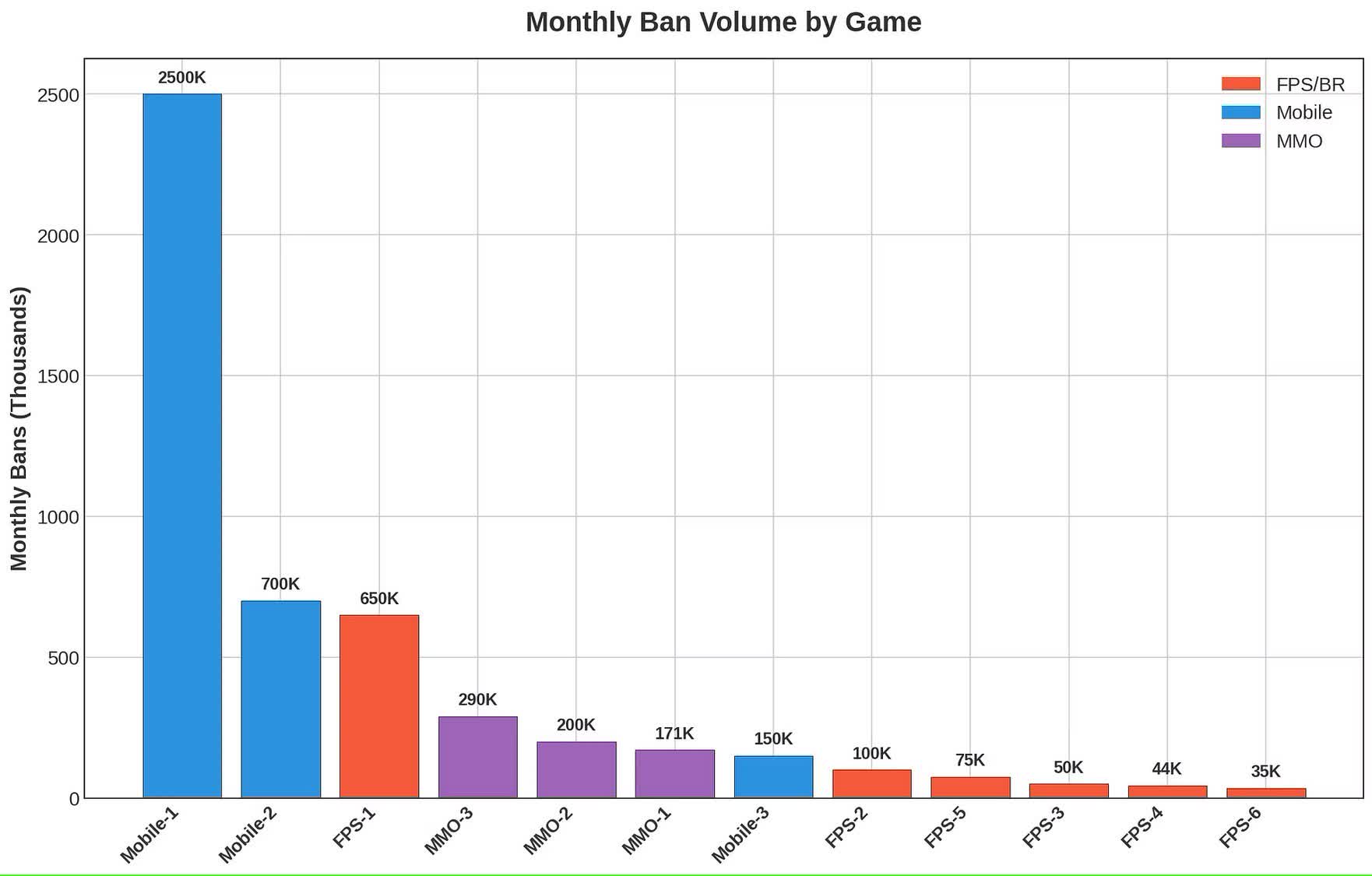
Hardware-based spoofers, evasion tools, and related services are also being sold as part of a thriving online ecosystem helping cheaters evade bans. Activision says it is using "behavioral and technical detections" to thwart spoofers, adding that it issued more than 70,000 new hardware bans in August as part of its ongoing fight against this practice.