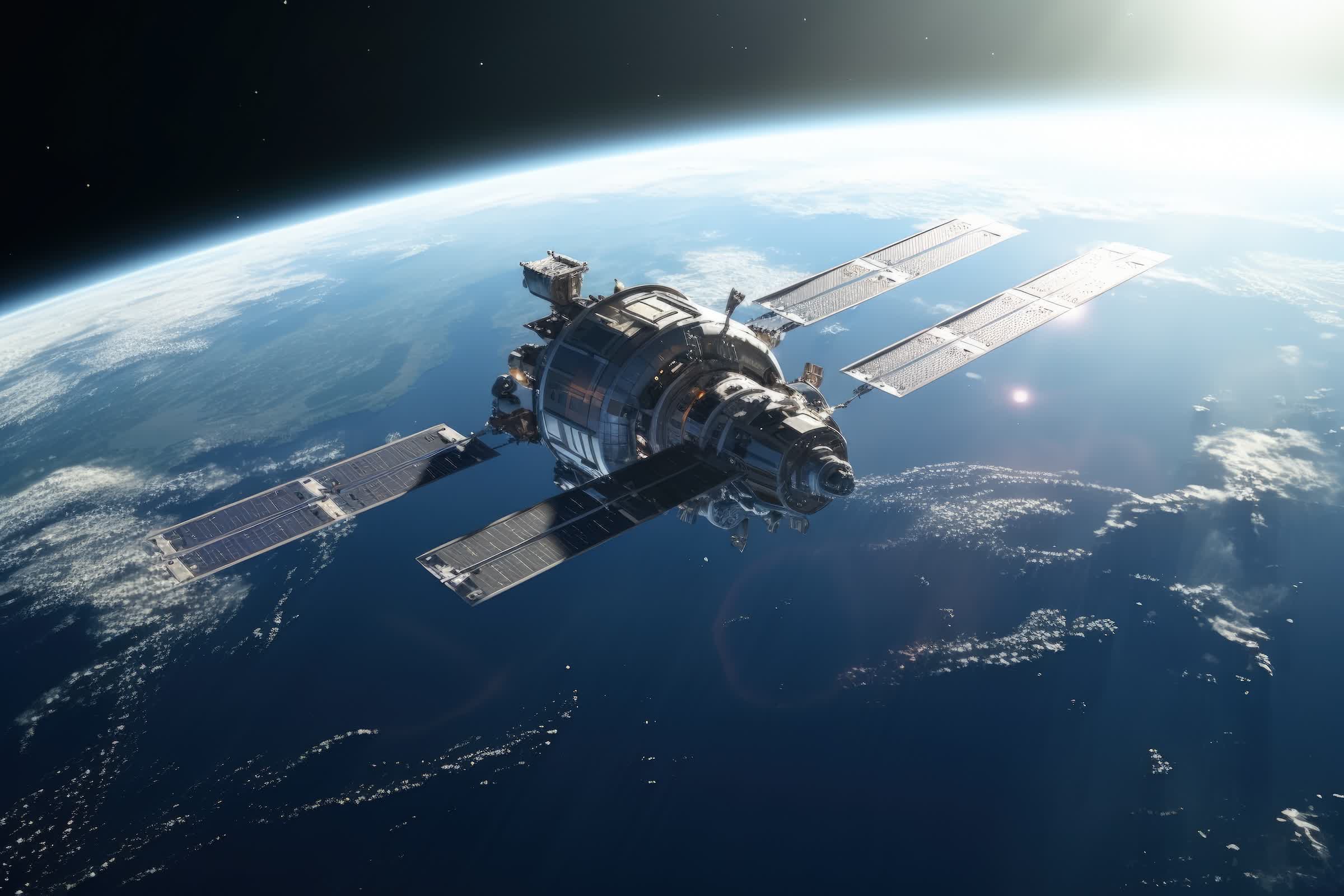
Highly anticipated: Google plans to launch an experimental satellite carrying AI chips next month, taking its first step toward testing whether AI computing can operate reliably in orbit. The satellite, called MVP, is scheduled to launch aboard a SpaceX Falcon 9 rocket from Vandenberg Space Force Base in California. It will be the first orbital test of Project Suncatcher, Google's effort to explore whether networks of solar-powered satellites could function as space-based data centers for AI workloads.
MVP is not a data center. It is a small test platform carrying four of Google's tensor processing units, or TPUs. The chips provide roughly the computing capacity of a single data-center server. Solar panels will produce about one kilowatt of electricity, enough to operate the processors and handle short AI requests.
The mission will test two major technical challenges: radiation and heat.
Radiation in space can interfere with computer chips by causing what engineers call bit flips. A bit flip changes stored binary information from zero to one, or vice versa. That can create errors in software or calculations.
Google began testing its chips against radiation in February 2025 at the Crocker Nuclear Laboratory in Davis, California. Researchers used a cyclotron to expose the processors to radiation intended to simulate about five years of exposure in space. Google found that restarting the chips could usually correct the bit flips.
Heat presents a separate challenge. AI chips produce a great deal of heat while performing calculations, but spacecraft cannot rely on fans because there is no air in space.
Google designed a cooling system that moves heat away from the TPUs through multiple layers of material. The chips sit on a motherboard and connect to sheets of thermal interface material. Aluminum and copper layers draw heat away from the components, while a radiator panel releases it into space.
The system will not run continuously. Travis Beals, Google's senior director of product management for Project Suncatcher, told The New York Times that the chips can run for about 15 minutes before they need to shut down and cool. During those periods, the satellite can process short requests for Gemini, Google's AI system.
Technicians recently completed vibration testing on the satellite in San Francisco. The work was intended to determine whether the hardware could survive the stresses of launch. The team inspected the solar panels, marked screws to see whether they shifted, and shook the satellite to test its internal components. The chips remained intact, and the screws did not loosen.
Google is treating the launch as an early experiment rather than the beginning of a commercial service. The satellite is expected to operate for one year, although it could remain in orbit for up to six years before eventually falling back through the atmosphere and burning up.
"We don't expect, to be perfectly frank, that we'll have anything usefully operational in the next few years," said James Manyika, Google's senior vice president for research.
The concept has drawn attention as AI companies face increasing power requirements for their data centers. Moving computing hardware into orbit could give operators access to solar energy without requiring additional land, water, or electricity infrastructure on Earth. Still, the engineering and financial obstacles are significant.
Google began exploring the idea after Blaise Agüera y Arcas, a company vice president and AI researcher, raised the possibility of space-based computing. The company later worked with Planet Labs, a satellite-imaging company in which Google has invested, to prepare the test mission.
Google initially planned to launch two satellites in 2027. It accelerated the schedule by installing its hardware in an existing Planet Labs satellite. The company has not disclosed how much it is spending on the project.
Google is preparing to launch two more satellites next year and has developed concepts for formations of more than 80 spacecraft that could work together on AI requests. It is also considering a custom satellite as long as a soccer field.