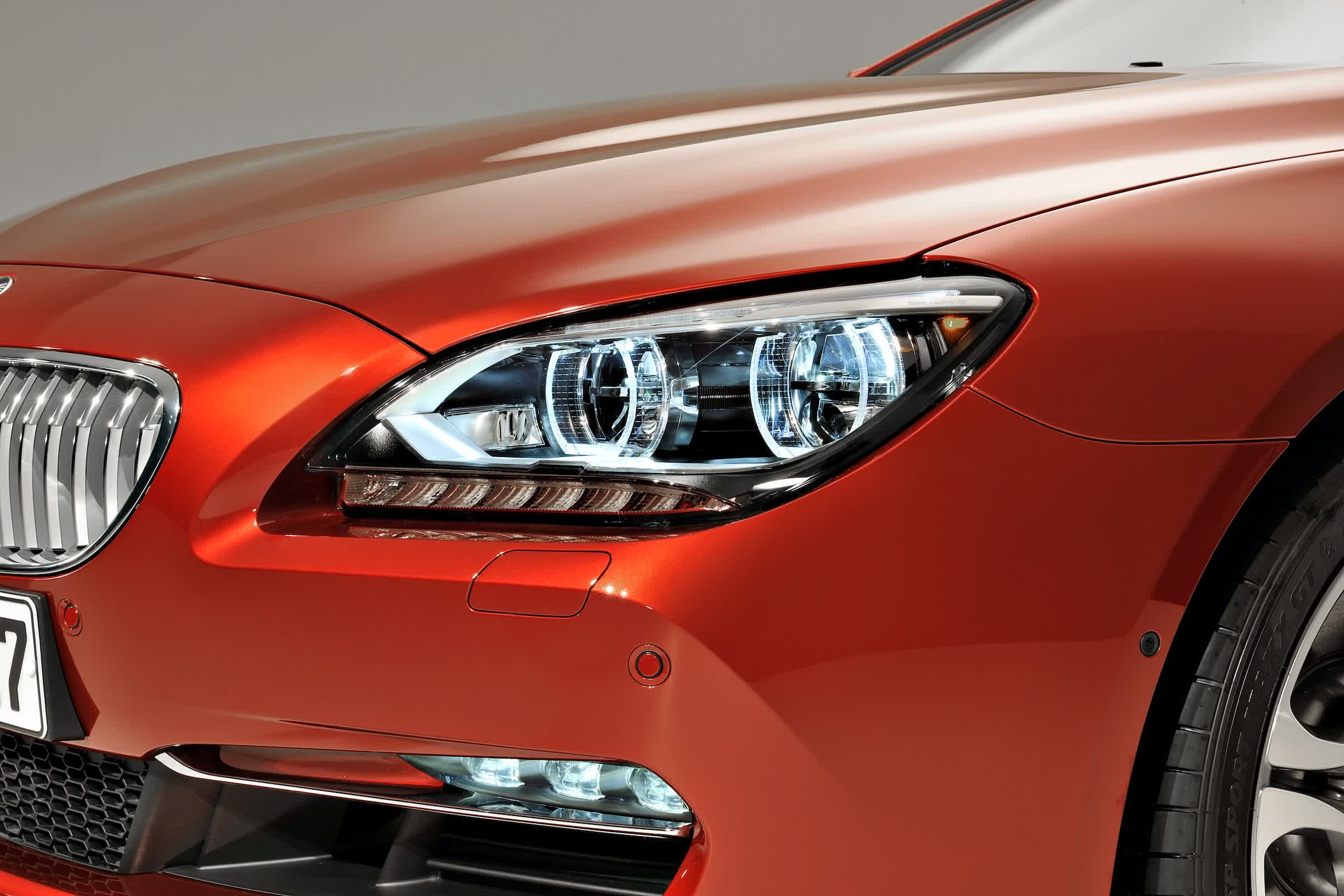
Something to look forward to: Adaptive headlights are starting to reach the US market, giving drivers more light on dark roads without blasting oncoming traffic with high beams. Known as adaptive driving beams, or ADBs, these systems use cameras, sensors, and software to control groups of LEDs inside the headlamps. However, the technology's broader rollout will depend on automakers' ability to meet strict US standards and turn sophisticated lighting hardware into reliable, regulation-compliant software.
Rather than switching between high and low beams, ADBs can dim or shut off only the parts of the beam that would reach another driver's eyes while keeping the rest of the road illuminated. That can be especially useful on rural two-lane roads and curves, where standard low beams often provide limited range. The Federal Highway Administration has found that half of traffic deaths occur at night, although only about one-quarter of driving takes place after dark.
The technology has been available in Europe and Asia for years. US regulations kept it off American roads until the NHTSA updated its lighting rules in 2022. Even then, automakers had to do more than activate a feature already built into their headlights. They had to demonstrate that their systems met the agency's detailed performance requirements.
The rules are stricter than those used in many other markets, according to Carlos Montes, Rivian's senior manager of lighting systems.
"I implemented ADB at Jaguar/Land Rover in my previous life," he told The New York Times. "When I came to America, the requirements were much more strict. Instead of individually subjective results, NHTSA wants measurable criteria, a defined pass/fail benchmark that's clear for everybody. There are certainly advantages to that approach, but it's much harder to engineer."
For automakers, the challenge is largely software. An ADB system has to process information from cameras, steering-angle sensors, accelerometers, and, in some cases, GPS data. It must recognize cars ahead and oncoming traffic, account for road shape, and decide which LED segments to dim in real time.
Rivian is making the technology available across its lineup, including the upcoming R2 SUV. Its refreshed R1 vehicles use lighting hardware and software supplied by OPmobility. For the R2, Rivian developed its lighting-control logic and ADB software in-house. The company can improve beam performance through over-the-air updates.
Tesla has enabled adaptive lighting on the Model 3, Model Y, Model S, and Model X. Audi said the 2027 Q9 SUV will offer smart headlights. Volvo plans to bring the feature to the US in the 2027 EX60, while Mercedes-Benz will offer it on the 2027 S-Class.
Some automakers have already sold US vehicles with matrix-style headlights that can control multiple LED segments. But federal limits meant the systems could not operate at full capability while the vehicle was moving. In many cases, the hardware was used mainly for welcome and departure animations.
Those vehicles may not need new headlamp assemblies to gain adaptive-beam functions. In theory, manufacturers could enable them through software updates, although each system would still have to comply with US rules. Tesla has done that with several models. Porsche has not yet done so.
A Porsche representative said the company was "evaluating technical solutions to be able to implement this feature based on the specific regulations required in our market and will share more information in due course."
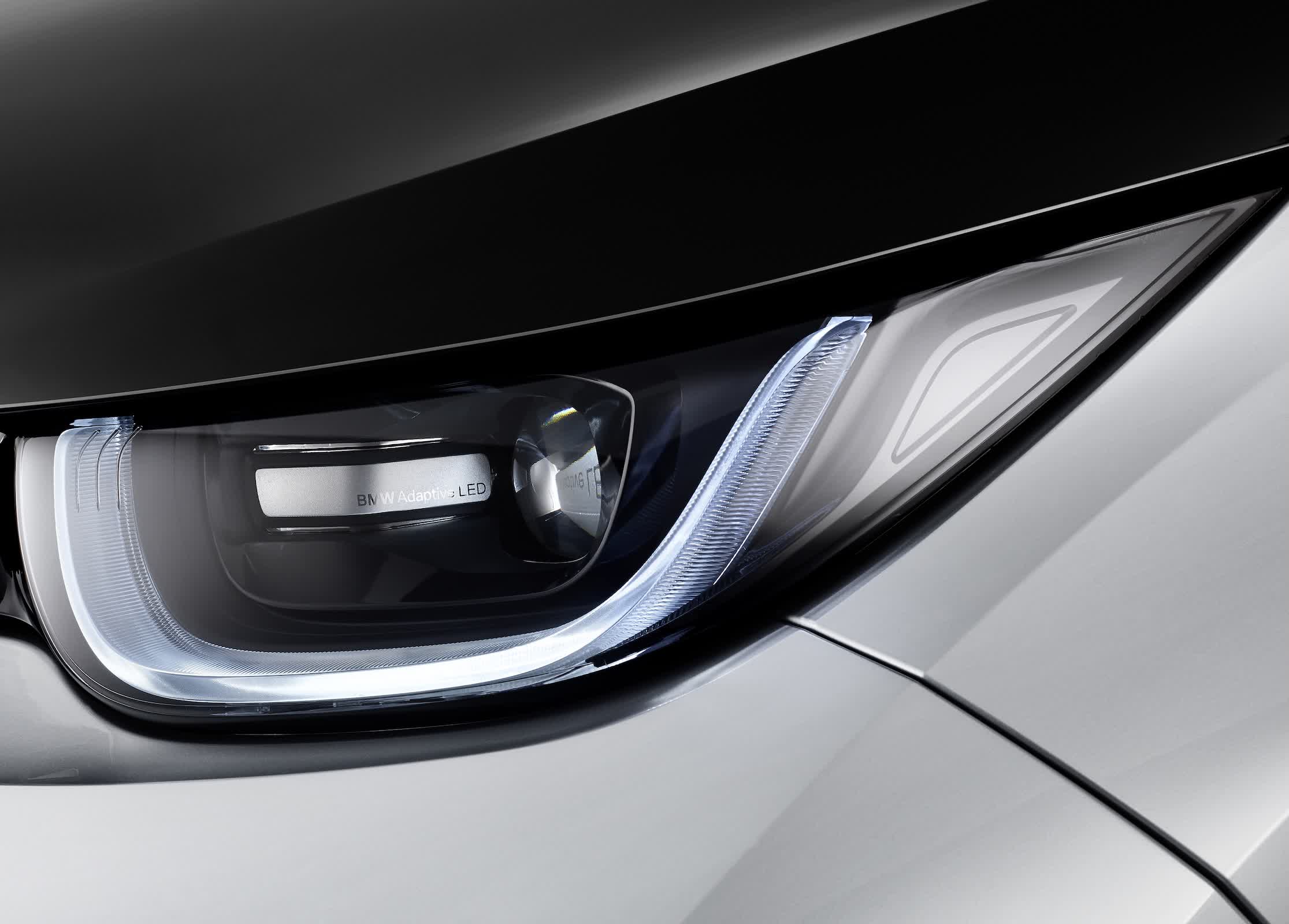
The underlying technology could support more than glare-free high beams. Automakers have explored linking headlights with navigation systems so the lamps can project arrows or warnings onto the road. Audi has demonstrated laser matrix lighting that can display messages such as "stop" on pavement to warn pedestrians, cyclists, and approaching drivers. Those features are not yet widely available in the US.
Adaptive headlights arrive as drivers continue to complain about glare from modern vehicles. LED headlights have a whiter color than halogen bulbs and can look harsher, even when they meet federal standards. Aftermarket lamps that do not meet those standards are often a bigger problem.
Sean Ruston of NHTSA said "the agency has previously acted to have such devices removed from platforms like Amazon and will continue to do so."
"Drivers operating with non-compliant headlamps can face penalties," he added, "including escalating fines and driver's license suspensions."
Adaptive beams will initially be concentrated in more expensive vehicles. But the technology is likely to spread as LED lighting, cameras, and vehicle software become more common. For drivers, the main benefit is simple: better visibility without making the road worse for everyone else.