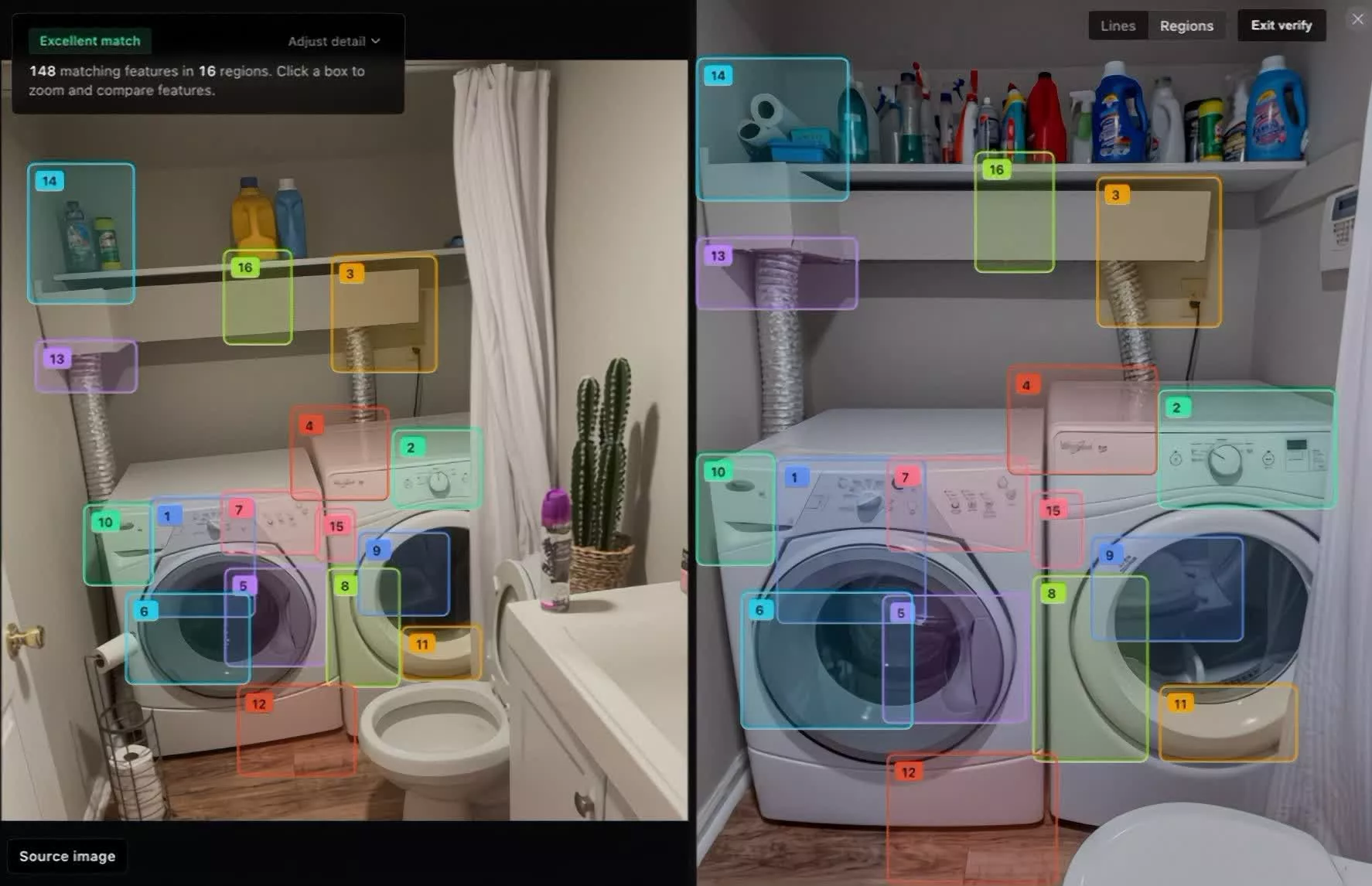
A hot potato: AI has been helping police forces across the US over the last few years, for better and for worse. The latest use of the technology allows law enforcement to input an interior photo of a home and have the AI figure out the location, though there are some caveats.
The tool, which is called Raven, is being used by the Los Angeles Police Department and Miami-Dade Sheriff's Office (MDSO), reports 404 Media. Made by a company called Graylark Technologies, Raven had been called GeoSpy before its new home-identification features were added.
The limitation is that Raven can't just identify any home in the world solely from an interior photo. Its abilities appear limited to certain properties. Graylark CEO Daniel Heinen demonstrated its power in a LinkedIn post, showing how a regional search can be carried out on something as simple as a photo of a washing machine and dryer.
While Heinen doesn't mention it in the post, 404 Media confirmed that the language generated in the results directly quotes listings on Airbnb and short-term rental site Vrbo.
It's noted that this isn't a simple reverse image search. Raven picks out distinctive details in a photo and uses them to find likely matches from the same property on sites such as Airbnb, even when the images differ.
Heinen wrote that short-term rentals can be used as locations for human trafficking and exploitation, making Raven a useful tool for police. "For investigators working trafficking and exploitation cases, that connection can turn an unidentified room into a location lead they can verify and pursue," he wrote.
Another demonstration video suggested that Raven was pulling photo data from real estate marketplace Zillow.
GeoSpy was trained on millions of images from around the world and designed to identify distinct geographical markers such as architecture and soil. Raven extends that ability to buildings.
As with pretty much every use of AI for law enforcement purposes, Raven is raising privacy questions. Airbnb said it has technical safeguards in place to try to limit automated data collection from its site and was reviewing the case. Zillow said scraping data is against its terms of use, adding that it pursues legal avenues when necessary. Vrbo did not respond to questions for comment.
The use of AI-imbued surveillance technology such as Flock by police has drawn considerable backlash against the companies behind these systems.
Something else that Flock and Raven have in common is that when the latter was first launched as GeoSpy and widely available to the public, some people in the company's Discord server asked for help stalking women. Graylark then restricted the tool to enterprise and government users. Meanwhile, dozens of police officers have been accused of using Flock and other license-plate readers to stalk women.