Winners & losers: In what will come as a surprise to nobody, the latest CPU-Z hardware survey has illustrated how having more than 16GB of RAM in a PC is increasingly becoming a luxury. With the AI-driven memory crisis continuing to push DRAM prices through the roof, the number of people with 32GB and 64GB configurations is falling, while DDR4 is making a comeback.
The latest CPU-Z Validator statistics come from hardware configurations users submit to CPU-Z's online Validator database, so it doesn't represent retail sales or all PCs. However, it gives us an idea of what the landscape looks like.
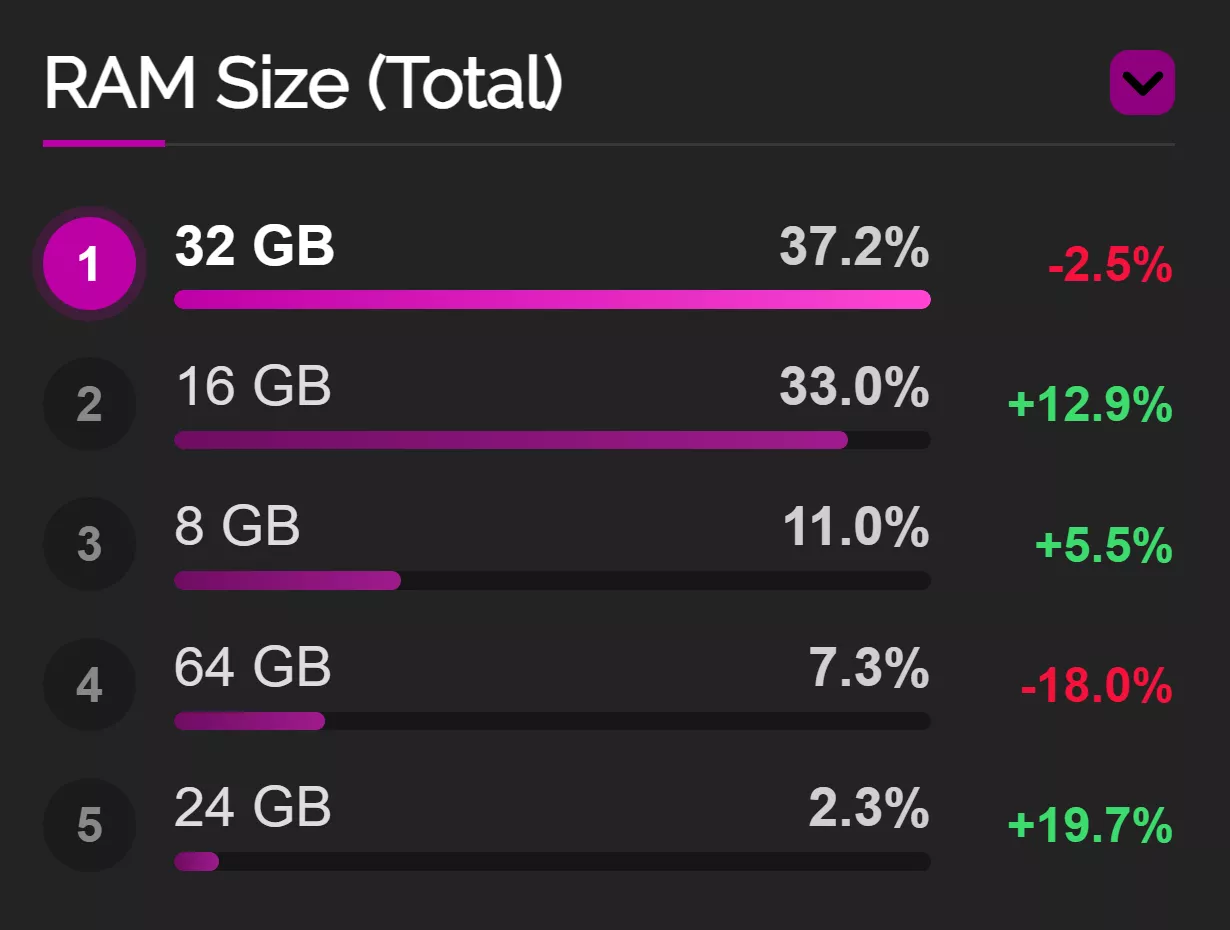
The headline takeaway is that, for the first time ever, RAM capacity on PCs has declined year-over-year. Over the last 3 months, the number of systems with 32GB of RAM is down 2.5%, while the number with 64GB of RAM is down 18%.
During the same period, there's been an increase in PCs with smaller amounts of memory. 16GB was up 12.9%, 8GB jumped 5.5%, and 24GB was up 19.7%. Although 32GB remains the most popular capacity (37.2%), 16GB is now just 4.2 points behind the leader.
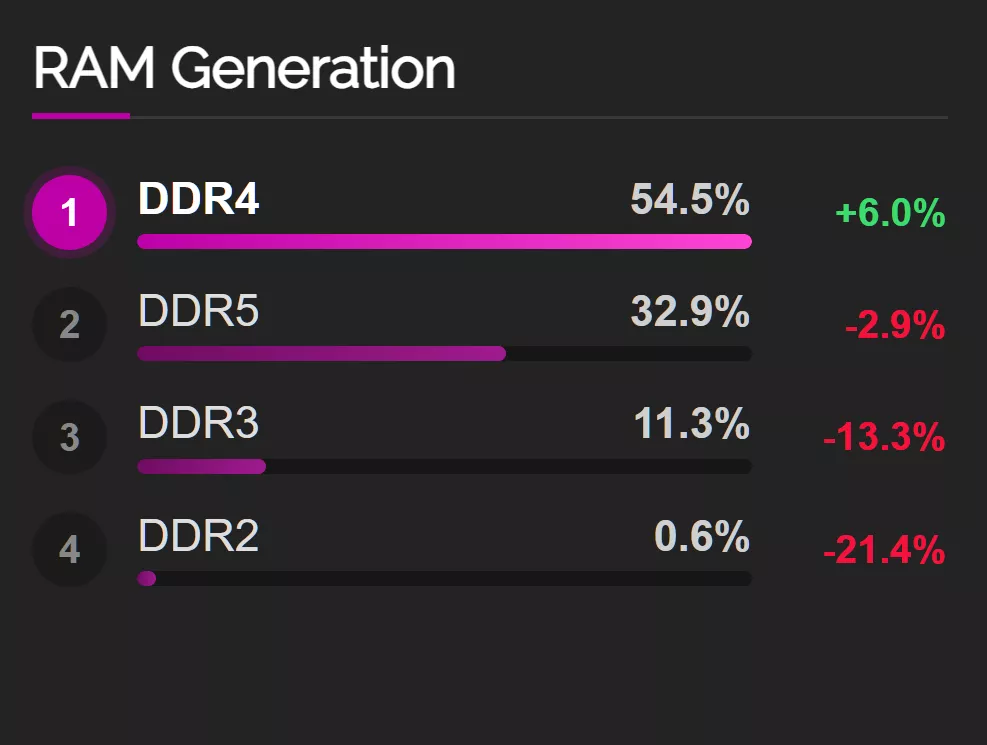
Another sign of the times is the RAM Generation chart. The number of PCs with last-generation DDR4 increased 6% YoY to 54.4%, cementing its place at the top. The current-gen DDR5, in second place, was down 2.9% to 32.9%. Both RAM generations have shot up in price, but DDR4 is still the cheaper of the two.
It's a similar story on the Steam survey. Participants with 32GB of RAM declined 5.1% last month, while those with 16GB, the most common configuration, increased 3.6%.
While there are an increasing number of signs that the AI bubble is looking shaky, companies continue to warn that the situation could get even worse.
Last week, RAM maker TeamGroup CEO Chen Ching-wen said RAM prices will keep climbing for many months, and that the IT industry will endure its worst chip shortage from the final quarter of 2026 through the end of the second quarter next year.
We're seeing the impact of this RAM crisis everywhere. From the 16GB Raspberry Pi 5 now costing triple its launch price to a Nintendo chip supplier quitting the ROM business, the situation is a depressing sight for consumers. It's also why Microsoft keeps improving the performance of 8GB PCs. Elsewhere, AMD has decided it's no longer a gaming-focused firm but a data center-first company, according to CEO Lisa Su.